
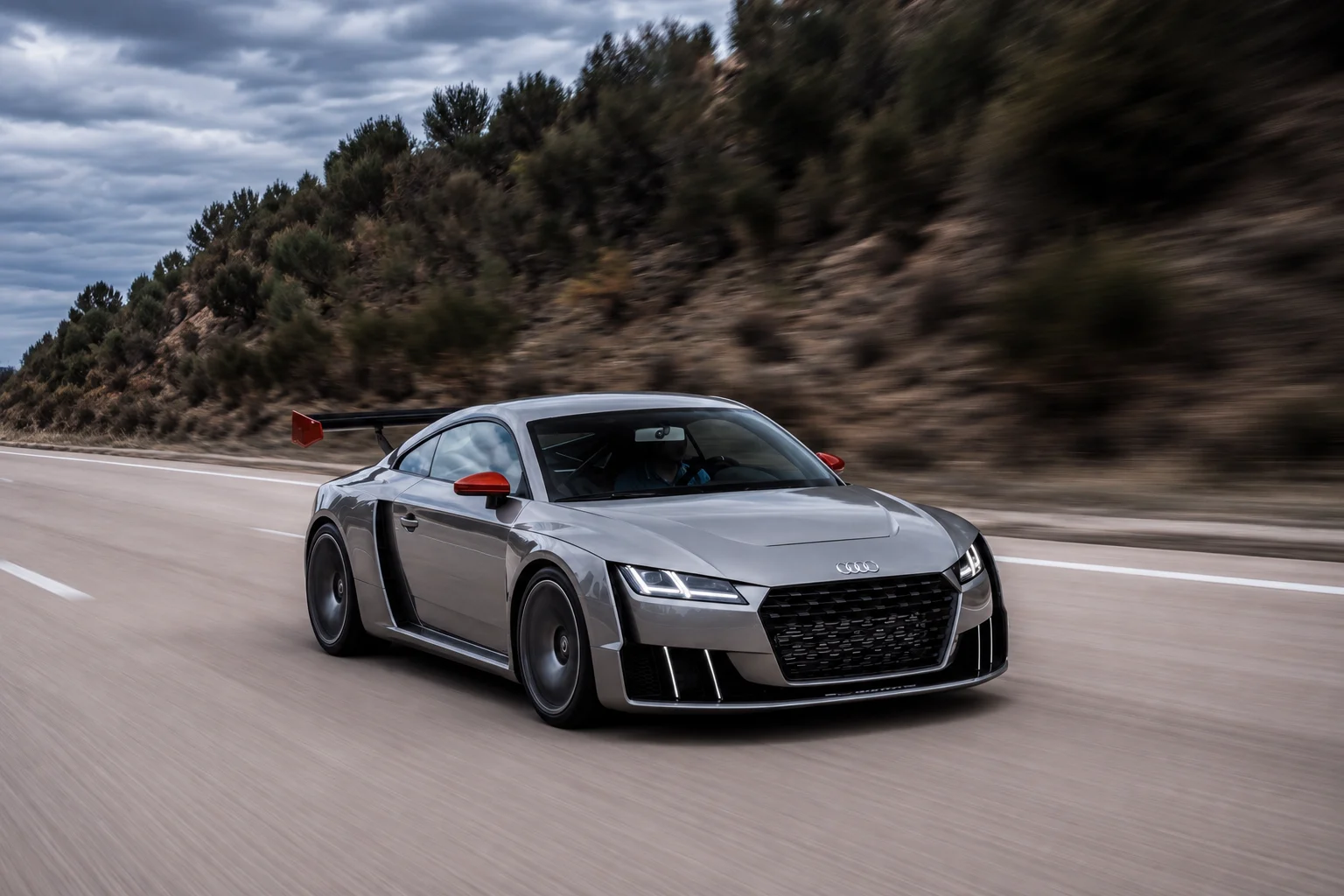
The Audi TT has held a special place in the sports car world since it first rolled out of Audi’s design studios in the late 1990s. With its unmistakable Bauhaus-inspired silhouette, compact proportions, and a driving character that blends everyday usability with genuine sporting intent, the Audi TT has built a loyal following that spans generations.
This guide walks through every angle of the Audi TT you’re likely researching, from performance variants to pricing by model year to where you can actually find one for sale today.
A Brief History of the Audi TT
Audi introduced the TT concept car at the 1995 Frankfurt Motor Show, and the reaction was immediate. The design, penned under the direction of Freeman Thomas and Peter Schreyer, drew inspiration from the Bauhaus movement: clean lines, minimal ornamentation, and a focus on pure geometric form. The name “TT” itself pays homage to the Tourist Trophy motorcycle races held on the Isle of Man, where NSU, a brand later absorbed into the Auto Union group that became Audi, had a storied racing history.
The production version arrived in 1998, built on the Volkswagen Group’s A4 platform, shared with the Golf and Audi A3. It was available first as a coupe, followed shortly after by the roadster in 1999. That first generation, known internally as the Typ 8N, became an instant design icon, appearing in museums and design retrospectives as much as on roads.
Since then, the TT has gone through three full generations:
- Mk1 (Typ 8N): 1998–2006. The original, defined by its rounded, almost bubble-like design language
- Mk2 (Typ 8J): 2006–2014. A sharper, more aggressive redesign with improved dynamics and the introduction of the first TT RS variant
- Mk3 (Typ 8S): 2014–2023. The final generation, featuring Audi’s Virtual Cockpit digital instrument cluster, a lighter chassis, and the most powerful TT RS ever built
Audi officially ended TT production in 2023, meaning every Mk3 built represents the last of the breed. This has already started to influence resale values, particularly for well-optioned RS models and low-mileage convertible examples.
Few sports cars manage to stay visually relevant for more than two decades, yet the TT still turns heads even now that production has ended. The original design brief leaned heavily on Bauhaus principles, an early-20th-century movement that valued function over ornamentation and treated geometric simplicity as a form of beauty in its own right. That philosophy carried through every generation:
- Circular and rounded surfaces dominate the Mk1, evoking the shape of a helmet or a piece of industrial design rather than a traditional car body
- Sharper creases and a more aggressive stance define the Mk2, reflecting the broader automotive shift toward assertive styling in the mid-2000s
- A wider, lower, and more technologically integrated appearance characterizes the Mk3, with details like illuminated rings and sequential turn signals reinforcing the brand’s premium positioning
- A minimalist interior approach, most notably the Virtual Cockpit system on the Mk3, which eliminated the traditional central infotainment screen in favor of a fully digital instrument cluster
This consistency of vision across nearly 25 years of production is a big part of why the nameplate holds such strong brand recognition today, and why interest in finding one for sale has only grown since production ended.
Audi TT RS: The Five-Cylinder Performance Flagship
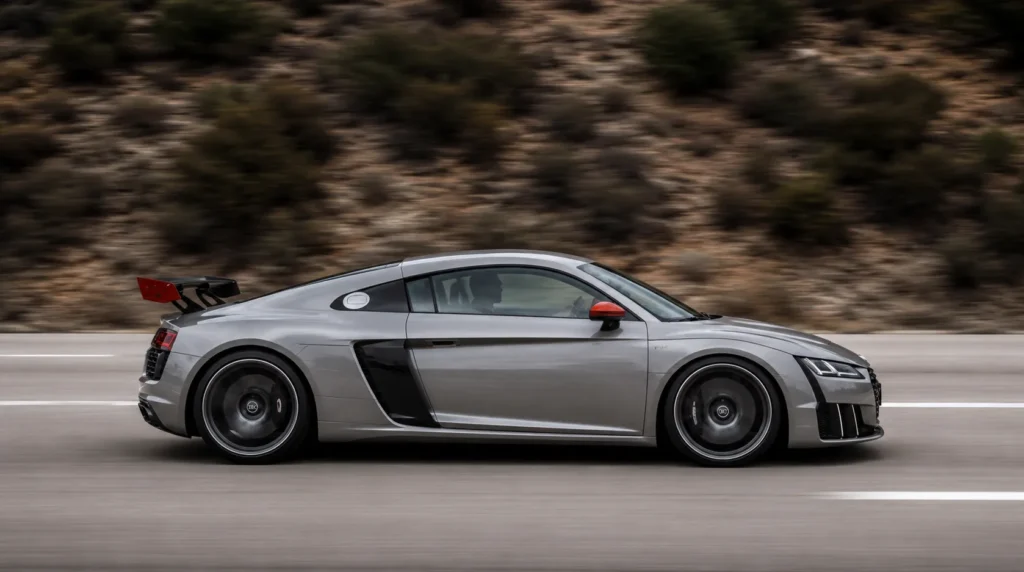
The Audi TT RS is the performance flagship of the entire lineup, and it’s a genuinely special car. Rather than using a four-cylinder engine like the rest of the range, the TT RS is powered by Audi’s legendary 2.5-liter turbocharged inline-five-cylinder engine, the same basic architecture found in the Audi RS3. This engine produces a distinctive five-cylinder growl that has become one of the car’s signature traits.
Key highlights of the Audi TT RS include:
- A 2.5-liter turbocharged inline-five engine producing around 394 to 400 horsepower depending on model year
- Standard quattro all-wheel drive for maximum grip
- 0-60 mph acceleration in roughly 3.6 seconds
- A top speed electronically limited to 155 mph (174 mph with the optional dynamic package)
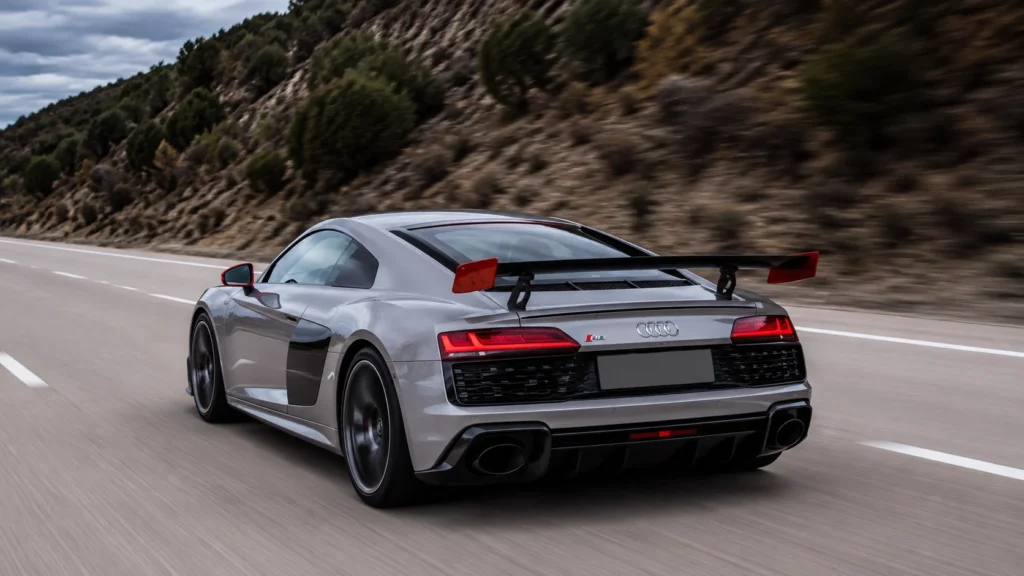
- Unique styling elements including a fixed rear wing, quad exhaust tips, and RS-specific badging
- Available in both coupe and convertible (roadster) body styles
Audi’s history with five-cylinder engines dates back to the original Audi Quattro rally car of the 1980s, a machine that dominated the World Rally Championship and helped establish Audi’s performance reputation. The modern 2.5-liter TFSI engine used in the TT RS pays direct homage to that heritage, and engineers reportedly tuned the exhaust note specifically to recall the character of those earlier five-cylinder units.
Beyond nostalgia, the engine offers genuine engineering advantages:
- Excellent power density, producing output figures that rival larger six-cylinder engines from a smaller, lighter package
- A unique firing order that creates the distinctive off-beat exhaust note enthusiasts have come to love
- Strong tuning potential, with the aftermarket community having extracted significantly more power from the stock turbocharger and internals on modified examples
- Reasonable efficiency for the performance on offer, aided by direct injection and advanced turbocharging technology
The TT RS is genuinely quick by any modern standard, capable of embarrassing cars costing twice as much, and this reputation alone drives much of the demand you’ll see across the used market.
Where to Find an Audi TT for Sale
When searching for an Audi TT for sale, consider casting a wide net across multiple channels:
- Franchised Audi dealerships often have certified pre-owned inventory with extended warranty options, which adds peace of mind for buyers concerned about repair costs
- Independent used car dealers specializing in European or performance vehicles frequently carry well-maintained examples, sometimes at more competitive prices than franchised dealers
- Online marketplaces dedicated to enthusiast and performance vehicles tend to attract sellers who have kept detailed maintenance records
- Audi owner forums and clubs can be a valuable resource for finding privately sold cars with a documented ownership history, since sellers in these communities tend to be genuine enthusiasts
- Auction platforms occasionally list rare variants or final-edition models, though these require careful due diligence since in-person inspection isn’t always possible before bidding
Wherever you shop, always arrange a pre-purchase inspection from a qualified independent mechanic familiar with Audi’s turbocharged and quattro-equipped vehicles. This single step can save you from expensive surprises down the road.
A few extra tips worth keeping in mind while browsing listings:
- Compare mileage against age rather than looking at price alone. A higher-mileage car with meticulous service records can be a better buy than a low-mileage neglected one
- Look closely at listing photos for tire wear patterns, which can hint at alignment or suspension issues
- Ask sellers directly whether the timing belt, chain tensioners, or DSG service intervals have been addressed
- Don’t rule out slightly older model years if they come with stronger documentation and lower total ownership risk
What to Expect When Shopping for an Audi TT RS for Sale
If you’re specifically searching for an Audi TT RS for sale, expect to pay a meaningful premium over the standard TT for:
- Lower mileage examples (under 20,000 miles)
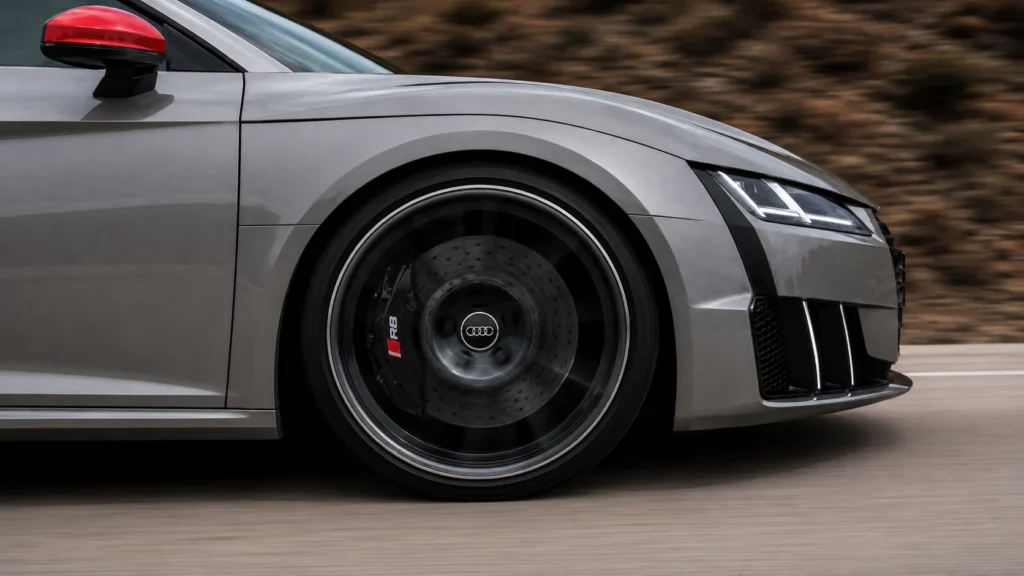
- Cars equipped with the Dynamic Package (raises the top speed limiter and includes larger brakes)
- Matte or unique exterior colors like Nardo Gray or Sepang Blue
- Well-documented service history, particularly timing and carbon buildup maintenance on the five-cylinder engine
- Manual transmission examples, where available, which tend to command enthusiast interest
Several factors keep TT RS listings commanding strong prices relative to the rest of the lineup:
- The five-cylinder engine is genuinely unique in the current automotive landscape, and enthusiasts place a premium on that mechanical distinctiveness
- Limited production numbers compared to the base TT and TTS mean fewer examples exist on the used market
- Strong performance credentials, including class-leading acceleration figures that rival dedicated supercars from a decade prior
- Quattro all-wheel drive as standard equipment, which appeals to buyers in colder climates who still want serious performance
- Discontinuation of the entire TT nameplate, which has already started to create a “last of its kind” collector mentality among Audi enthusiasts
Because demand is high and supply is comparatively limited, be prepared to move quickly on well-priced, well-documented listings, since desirable configurations don’t tend to sit on the market for long.
Audi TT Convertible: Open-Top Driving Without Compromise
The Audi TT convertible offers the same design language and mechanical options as the coupe but with a fabric power-operated soft top. Unlike some convertibles that compromise significantly on rigidity, the TT’s convertible platform was engineered from the outset to minimize cowl shake and maintain sharp handling.
The convertible body style was offered across nearly every trim level, including the TT, TTS, and TT RS, meaning you can get the drop-top experience whether you want a comfortable cruiser or a screaming five-cylinder performance car.
Key advantages of the convertible body style include:
- An even more engaging soundtrack from the engine with the top down
- Minimal compromise in structural rigidity thanks to Audi’s reinforced roadster platform
- A quick-folding soft top that operates in around 10 seconds, even at low speeds
- Nearly identical performance figures to the coupe, with only a marginal weight penalty
During any inspection, cycle the convertible top mechanism multiple times to confirm smooth operation with no hesitation or unusual sounds, since top-related repairs can be costly if neglected.
Buying a Used Audi TT: A Practical Checklist
Shopping for a used Audi TT can be a rewarding experience, but like any used performance car purchase, it pays to go in informed. Here’s a practical checklist to work through before you commit.
Mechanical considerations:
- Timing chain tensioners on earlier turbocharged four-cylinder engines have been a known point of concern; ask for service records confirming any related updates
- Carbon buildup on direct-injection engines (common across the TT, TTS, and TT RS) can affect performance over time; ask if a walnut-blasting service has ever been performed
- DSG dual-clutch transmission fluid and filter changes should be documented at recommended intervals; neglected DSG maintenance is one of the more expensive repairs to catch up on
- Quattro drivetrain components, including the rear differential, should be inspected for fluid leaks or unusual noises during a test drive
- Convertible top mechanisms, where applicable, should be cycled multiple times during inspection
Documentation and history:
- Request a full vehicle history report to check for accident damage, title issues, or odometer discrepancies
- Ask for maintenance records, ideally showing consistent servicing at authorized Audi dealers or reputable independent specialists
- Confirm whether the car is still under any remaining factory or extended warranty coverage
- For RS models specifically, verify whether major services like spark plug replacement and coolant flushes have been completed
Trim and options to prioritize:
- Magnetic Ride adaptive suspension significantly improves ride quality and handling balance
- Bang & Olufsen sound system is a popular upgrade that adds real value to the ownership experience
- Virtual Cockpit digital instrument cluster (standard on Mk3 models) is a genuine highlight of the driving experience
- Quattro all-wheel drive, where optional, adds both resale value and year-round usability
Audi TT Roadster: The Same Icon, Top Down
The Audi TT roadster is Audi’s own name for the convertible body style, and the two terms are used interchangeably across markets and marketing materials. The roadster made its debut in 1999, shortly after the original coupe launched in 1998, and it has remained part of every subsequent generation.
A few things worth knowing if you’re specifically shopping for a roadster:
- Production numbers have consistently been lower than the coupe across every generation, meaning fewer used examples exist on the market
- The roadster was offered across the full trim spectrum (TT, TTS, and TT RS), so you don’t have to sacrifice performance to get the open-top experience
- Structural reinforcements built into the roadster platform help it maintain handling composure close to that of the coupe
- Because of lower supply, well-optioned roadster listings can command a modest premium over equivalent coupes
If open-top motoring matters to you, be patient. The right roadster listing, especially in RS trim, may take a little longer to find than a comparable coupe.
Audi TT Price: What to Expect by Year and Trim
One of the most common questions buyers have is simply: what does an Audi TT actually cost? The answer depends heavily on model year, trim, mileage, and condition. Below is a general breakdown to help frame your expectations.
| Model / Year | Approximate Price Range (Used) | Notes |
| Audi TT Mk1 (1998–2006) | $4,000 – $10,000 | Entry point into TT ownership; condition varies widely |
| Audi TT Mk2 (2006–2014) | $6,000 – $15,000 | Improved reliability over Mk1; good value segment |
| Audi TT Mk3 Base/TTS (2015–2020) | $18,000 – $32,000 | Digital cockpit, modern tech, strong daily driver candidate |
| 2021 Audi TT | $32,000 – $42,000 | Later production, often well-optioned |
| 2022 Audi TT | $36,000 – $46,000 | Near-final model year, lower mileage typical |
| 2023 Audi TT | $40,000 – $50,000+ | Final model year; collector interest emerging |
| Audi TT RS (2018–2020) | $45,000 – $60,000 | Inline-five engine, quattro AWD |
| 2022 Audi TT RS | $55,000 – $70,000 | Late-production RS, often loaded with options |
| Audi TT RS Convertible | $55,000 – $75,000 | Roadster body adds a premium over coupe |
Note: These figures are general market estimates and will vary by region, mileage, condition, and specific options. Always verify current listings and get a professional inspection before purchasing.
When it comes to the last new pricing before production ended, MSRPs were roughly:
- Audi TT Coupe: starting around $46,000
- Audi TT Roadster: starting around $49,500
- Audi TTS: starting around $54,000
- Audi TT RS: starting around $64,000 for the coupe, with the convertible commanding a few thousand dollars more
Since Audi has discontinued the model, new TTs are no longer available directly from dealers in most markets, which pushes buyers toward the used and certified pre-owned market, and increasingly toward dealer overstock or final-run allocation units where available.
2021 Audi TT: A Sweet Spot for Value and Features
The 2021 Audi TT continued largely unchanged from the facelifted Mk3 design introduced a few years earlier. Highlights included:
- Refreshed front and rear styling with sharper LED lighting signatures
- Virtual Cockpit as standard equipment across the range
- Continued availability of both TT and TTS trims, with TT RS as the range-topper
- Strong reliability reputation by this point in the production cycle, as most early Mk3 issues had been addressed
For buyers seeking a balance between modern features and value, this model year is often a sweet spot: young enough to feel current, but typically priced lower than 2022 or 2023 examples.
2022 Audi TT: A Mature, Well-Sorted Model Year
The 2022 Audi TT represented a mature, well-sorted version of the platform. By this stage:
- Audi had confirmed the TT’s discontinuation was approaching, which began to generate increased buyer interest in securing a unit before production ended
- Special editions and unique color options became more prevalent as Audi wound down the model
- Overall build quality and reliability were at their peak for the generation, benefiting from years of running production refinement
Buyers who want late-model tech and styling without paying the full premium of the final 2023 model year often find the 2022 cars represent strong relative value.
2023 Audi TT: The Final Model Year
The 2023 Audi TT marked the final model year of production. These cars carry genuine “last call” significance:
- Final Edition trims were offered in select markets, often featuring unique badging, colors, and interior treatments
- Lower total production numbers compared to earlier years in the generation
- Increasing collector interest, particularly for RS-badged variants
- Generally the highest asking prices on the used market among Mk3-generation cars, reflecting both low mileage and the discontinuation premium
If you want the newest possible example with the least amount of prior wear, this is the model year to prioritize, though expect to pay accordingly.
Understanding Audi TT RS Price and What Drives It
Because the TT RS price carries a significant premium over the standard TT, it’s worth breaking down exactly what you’re paying for and why values have held up so well.
Pricing for the TT RS is shaped by several distinct factors:
- Engine rarity: the five-cylinder unit is unlike anything else currently offered at this price point, and that mechanical distinctiveness commands a premium
- Lower production volumes relative to the base TT and TTS
- Strong resale performance, with well-kept examples often retaining value better than comparable four-cylinder performance coupes
- Discontinuation effect, as the entire TT nameplate has ended production, pushing collector interest and pricing upward for the range-topping variant
Expect meaningful price variation based on mileage, options, and body style, with convertible and low-mileage manual-adjacent configurations sitting at the top of the market.
2022 Audi TT RS: One of the Strongest Picks in the Model’s History
The 2022 Audi TT RS became a particularly popular choice for enthusiasts wanting to secure one of the last true analog-feeling performance Audis before the brand’s broader shift toward electrification. By this model year:
- The car had benefited from several years of running production refinement, making it one of the most dialed-in versions of the TT RS
- Special colorways and option packages were increasingly common as Audi began winding down the model
- Awareness of the approaching discontinuation had already started pushing buyer interest and resale values upward
- Both coupe and convertible body styles remained available, giving buyers a genuine choice in how they wanted to experience the car
For buyers who want the full TT RS experience with modern equipment and strong residual value potential, the 2022 model year is widely regarded as one of the strongest picks in the car’s history.
Finding an Audi TT Convertible for Sale
If you’re specifically hunting for an Audi TT convertible for sale, particularly in RS specification, be prepared for a smaller pool of listings compared to the coupe, since roadster production numbers were consistently lower across every generation.
A few practical tips when shopping specifically for a convertible:
- Expect to search a bit longer or wider geographically, since inventory is thinner than for coupes
- Prioritize sellers who can demonstrate the top has been serviced or at least inspected regularly, since neglected mechanisms can be expensive to repair
- Ask about storage conditions, since convertibles kept outdoors long-term are more prone to weatherstripping wear and fabric top degradation
- Factor in a modest price premium over an equivalent coupe, particularly for RS trim, given lower supply and continued strong demand
Patience tends to pay off here. The right convertible listing, especially a well-documented RS, is worth waiting for rather than settling on the first one you find.
Is There an Audi TT 2025 Model?
A common search query is Audi TT 2025, and it’s worth addressing directly: Audi officially ended production of the TT in 2023, meaning there is no new 2025 model year TT being built. The nameplate has been retired as Audi shifts its lineup toward electric vehicles and SUVs, which now represent the bulk of the brand’s sales volume globally.
That said, industry speculation has periodically suggested Audi could revive the TT nameplate in some form in the future, potentially as an electric performance model, though nothing has been officially confirmed. For now, anyone searching for an Audi TT 2025 should understand they are looking at one of the following:
- A leftover, unsold final-year unit still being sold as new by a dealer (increasingly rare)
- A nearly-new 2023 model year car with very low mileage
- Speculative future concepts that have not been confirmed for production
If preserving the classic TT experience matters to you, the smart move is securing a well-maintained final-generation car now, while good examples are still available on the used market.
Audi TT vs. TTS vs. TT RS: Which Should You Buy?
Choosing between the standard TT, the TTS, and the TT RS ultimately comes down to your priorities. Here’s a straightforward comparison to help guide your decision.
| Factor | Audi TT | Audi TTS | Audi TT RS |
| Engine | 2.0L turbo inline-4 | 2.0L turbo inline-4 (tuned) | 2.5L turbo inline-5 |
| Approx. Horsepower | 220–230 hp | 288 hp | 394–400 hp |
| 0-60 mph | ~5.3 seconds | ~4.6 seconds | ~3.6 seconds |
| Drivetrain | FWD or quattro AWD | Quattro AWD standard | Quattro AWD standard |
| Daily Usability | Excellent | Very good | Good, firmer ride |
| Typical Buyer | Style-focused daily driver | Enthusiast wanting balance | Performance-first buyer |
| Relative Price Premium | Baseline | +15–20% over base TT | +50–80% over base TT |
If your priority is simply enjoying Audi’s iconic design and a comfortable, engaging daily driver, the base TT remains an excellent choice. If you want more performance without moving into RS territory, the TTS strikes a nice middle ground. But if outright speed, a distinctive engine note, and bragging rights matter most, nothing in the range comes close to the TT RS.
Historically, the TT has also competed against rivals like the BMW 2 Series, the Mercedes-Benz SLC, and, at a higher price point, the Porsche 718 Cayman and Boxster. Here’s a broad sense of how the lineup compares:
| Comparison Point | Audi TT / TTS | BMW 2 Series | Porsche 718 |
| Driving Character | Balanced, grippy (quattro) | Rear-wheel drive, playful | Mid-engine, most precise handling |
| Daily Usability | Very good | Good | Good, less cargo space |
| Interior Technology | Excellent (Virtual Cockpit) | Good | Good, more driver-focused |
| Resale Value Trend | Stable, RS models appreciating | Moderate depreciation | Strong, especially manual cars |
The TT RS in particular carved out a niche few rivals could match: genuine supercar-embarrassing acceleration, all-weather usability thanks to quattro, and a five-cylinder engine note unlike anything else on the market at a comparable price point. That combination is a major reason resale values on well-kept RS examples have remained comparatively resilient.
Negotiating the Right Price on a Used Audi TT
Whether you’re eyeing a modest early-generation coupe or a well-optioned RS, going in with a clear negotiating strategy can save you a meaningful amount of money. Consider the following approach:
- Research comparable listings in your region before making an offer, paying attention to mileage, trim, and options rather than just asking price
- Factor in upcoming maintenance costs, such as an overdue DSG service or approaching timing component inspection, and use these as leverage in negotiations
- Get a pre-purchase inspection first, then use any findings, even minor ones, as a basis for a reasonable price adjustment
- Be patient, especially with rarer variants like a convertible RS, since rushing into a purchase on a low-volume model often means overpaying
- Consider timing, as end-of-month or end-of-quarter dealership sales targets can sometimes create room for better pricing, particularly on certified pre-owned inventory
- Ask about remaining warranty coverage, since a car with several months or years of coverage remaining is worth a premium over an otherwise identical example with no warranty left
Private sellers, particularly enthusiasts who have kept meticulous records, often price fairly but expect buyers to recognize the value of that documentation. Dealership pricing, on the other hand, tends to have more built-in room for negotiation, especially on cars that have been sitting on the lot longer than average.
Ownership Costs to Budget For
Beyond the purchase price, prospective owners should budget realistically for ongoing costs:
- Insurance: Sports coupes and roadsters, particularly the TT RS, often carry higher premiums than comparable sedans due to performance ratings
- Fuel: The turbocharged inline-four models offer reasonably efficient fuel economy for the segment, while the TT RS will use noticeably more fuel under spirited driving
- Tires: Performance-oriented rubber, especially on TTS and TT RS models running larger wheels, wears faster and costs more to replace than standard all-season tires
- Routine maintenance: Oil changes, brake service, and DSG transmission fluid changes should be factored into an annual budget, particularly once the car is out of any factory warranty
- Specialized repairs: Because the TT shares components with other Volkswagen Group vehicles but also carries unique parts, sourcing certain components can take longer and cost more than mainstream brands
Tips for First-Time Audi TT Owners
If this will be your first Audi TT, whether a base model or a fully loaded RS, a little preparation goes a long way toward a smooth ownership experience.
- Join an owner’s community or forum before or shortly after purchase, since these groups are invaluable for troubleshooting, maintenance advice, and sourcing hard-to-find parts
- Establish a relationship with an independent Audi specialist, since dealership labor rates can be significantly higher for routine maintenance once the factory warranty expires
- Keep detailed maintenance records from day one, both for your own peace of mind and to protect resale value down the line
- Learn the quirks of your specific generation, since Mk1, Mk2, and Mk3 cars each have their own known maintenance items and common failure points
- Budget for tires and brakes proactively, particularly if you opted for a TTS or TT RS, since these components wear faster under spirited driving
- Consider an extended warranty if buying a car near the end of its factory coverage, especially for RS models where certain repairs can be costly outside of warranty
Final Thoughts
The Audi TT leaves behind a genuinely significant legacy in the world of compact sports cars. From the design-forward original Mk1 to the technologically advanced and thoroughly quick final-generation TT RS, the nameplate consistently delivered a distinctive blend of style, everyday usability, and, particularly in RS form, genuine performance credibility.
With production officially ended, well-maintained examples from the closing model years are likely to hold their value well, and desirable RS variants may even appreciate over time as the model’s status as a modern classic solidifies. Take your time, do your research, get a proper pre-purchase inspection, and you’ll be well positioned to enjoy one of the most distinctive sports cars Audi has ever built.
FAQs
Q. Is the Audi TT a good first sports car?
A. Yes. The base TT in particular strikes a good balance between approachable handling, everyday comfort, and enough performance to feel genuinely engaging without being intimidating for newer enthusiast drivers.
Q. How reliable is the Audi TT RS?
A. Generally, the TT RS has developed a strong reputation for reliability when properly maintained, though the inline-five engine benefits from attentive care around carbon buildup and timing components, as with most modern turbocharged engines.
Q. What is the difference between the Audi TT roadster and Audi TT convertible?
A. These terms refer to the exact same body style. Audi has used both names somewhat interchangeably across markets and marketing materials. Both describe the fabric soft-top version of the TT.
Q. Why did Audi discontinue the TT?
A. Audi has shifted resources toward electric vehicles and its growing SUV lineup, and TT sales volumes had declined relative to the brand’s broader portfolio, making the business case for continuing the low-volume sports coupe increasingly difficult to justify.
Q. Is a used Audi TT expensive to maintain?
A. Costs are moderate compared to exotic sports cars but higher than mainstream economy vehicles. Budgeting for routine European car maintenance, along with occasional larger services, is wise for any prospective owner.