
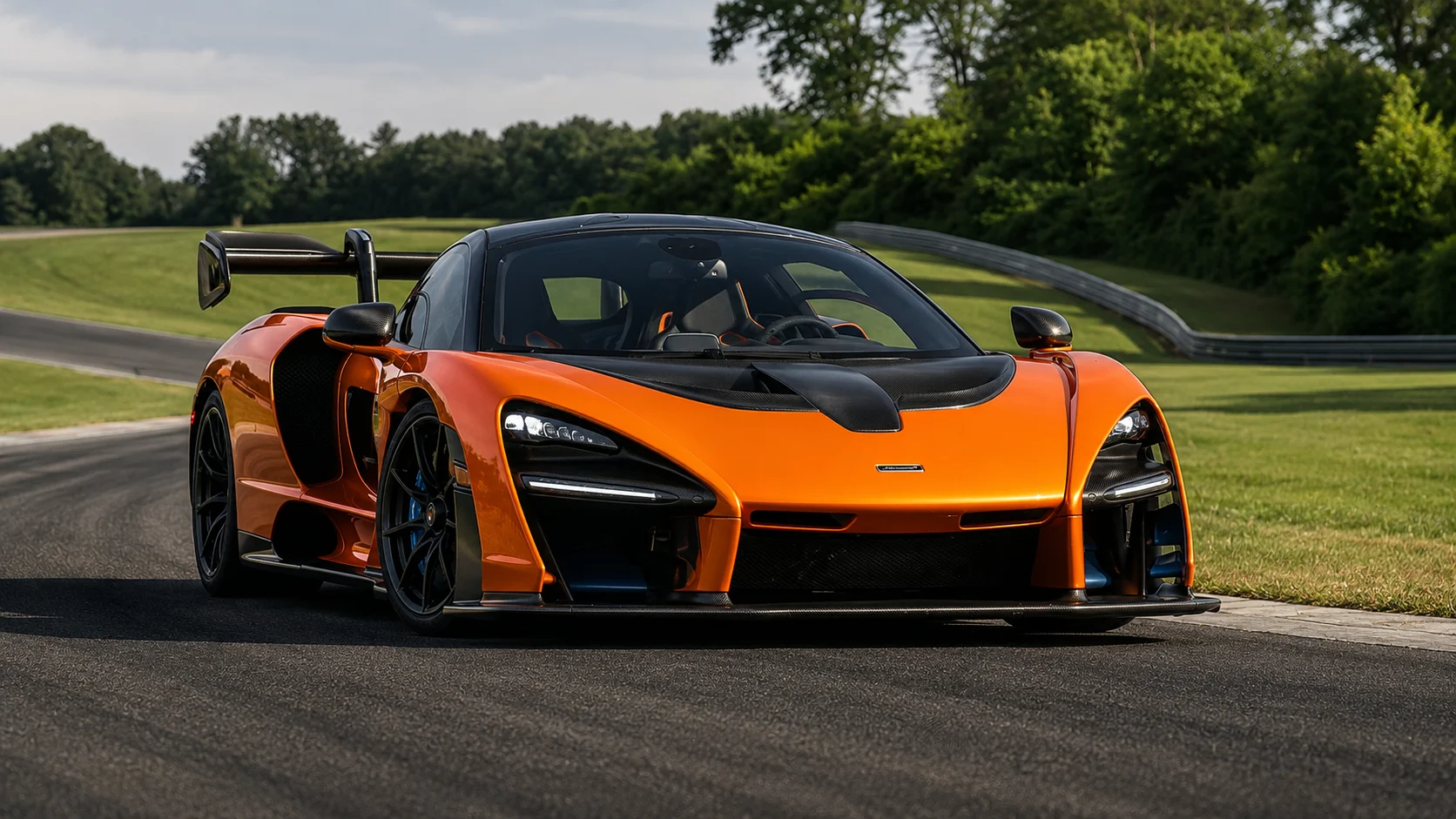
As far as we know, the McLaren Senna is still one of the most extreme road-legal track cars ever built, and there’s still interest in it years after production ended. If you’re looking for a McLaren Senna 2026 buying guide, chances are you already know this isn’t a car you’ll find sitting on a dealer lot with a fresh window sticker. McLaren built only 500 Senna coupes and 75 track-only Senna GTRs, all of which sold out to original allocation holders before the first car even left the factory. Every McLaren Senna in 2026 is a resale, but that hasn’t stopped it from being one of the most talked-about hypercars on the used and collector markets.
In this Autocram review we’ll go through everything you should know about the McLaren Senna in 2026: its engine, interior, wheels, performance, current price on the secondary market, how it stacks up against its competitors, and what owners and reviewers actually say about living with one.
McLaren Senna Overview
| Category | Details |
| Body Style | 2-door track-focused hypercar |
| Engine | 4.0L twin-turbo V8 |
| Power / Torque | 789 hp / 590 lb-ft |
| Transmission | 7-speed SSG dual-clutch, RWD |
| 0–60 mph | 2.7 seconds |
| Top Speed | 208 mph |
| Curb Weight | ~2,641 lbs (dry) |
| Seating Capacity | 2 |
| Production | 500 coupes + 75 GTR (2018–2019, sold out) |
| Original MSRP (Coupe) | $958,000 / AED 3,517,500 |
| Original MSRP (GTR) | $1,400,000 / AED 5,141,500 |
| 2026 Market Price Range | $850,000 – $1,500,000+ (varies by specification, mileage, and provenance) |
| Availability | Resale/collector market only — no new units in production |
A Quick Recap: What Is the McLaren Senna?
The McLaren Senna, named after three-time Formula 1 world champion Ayrton Senna, was introduced in 2017 and first built between 2018 and 2019 as part of the McLaren Ultimate Series (the P1 and more recently the W1). Unlike the P1, which combined hybrid power with everyday usability, the Senna was one-dimensional in its goals: lap times. So McLaren stripped away all comfort features in order to save weight and gain aerodynamic efficiency; the result is a car that looks and drives like it escaped from a race paddock.
That single-minded focus is why the mclaren senna performance 2026 still generates so much buzz in the lead-up to 2026. It wasn’t built to be the fastest in a straight line or the most powerful McLaren ever made. It was designed to be the most track-ready McLaren road car in history, and it has been.
McLaren Senna Design and Exterior
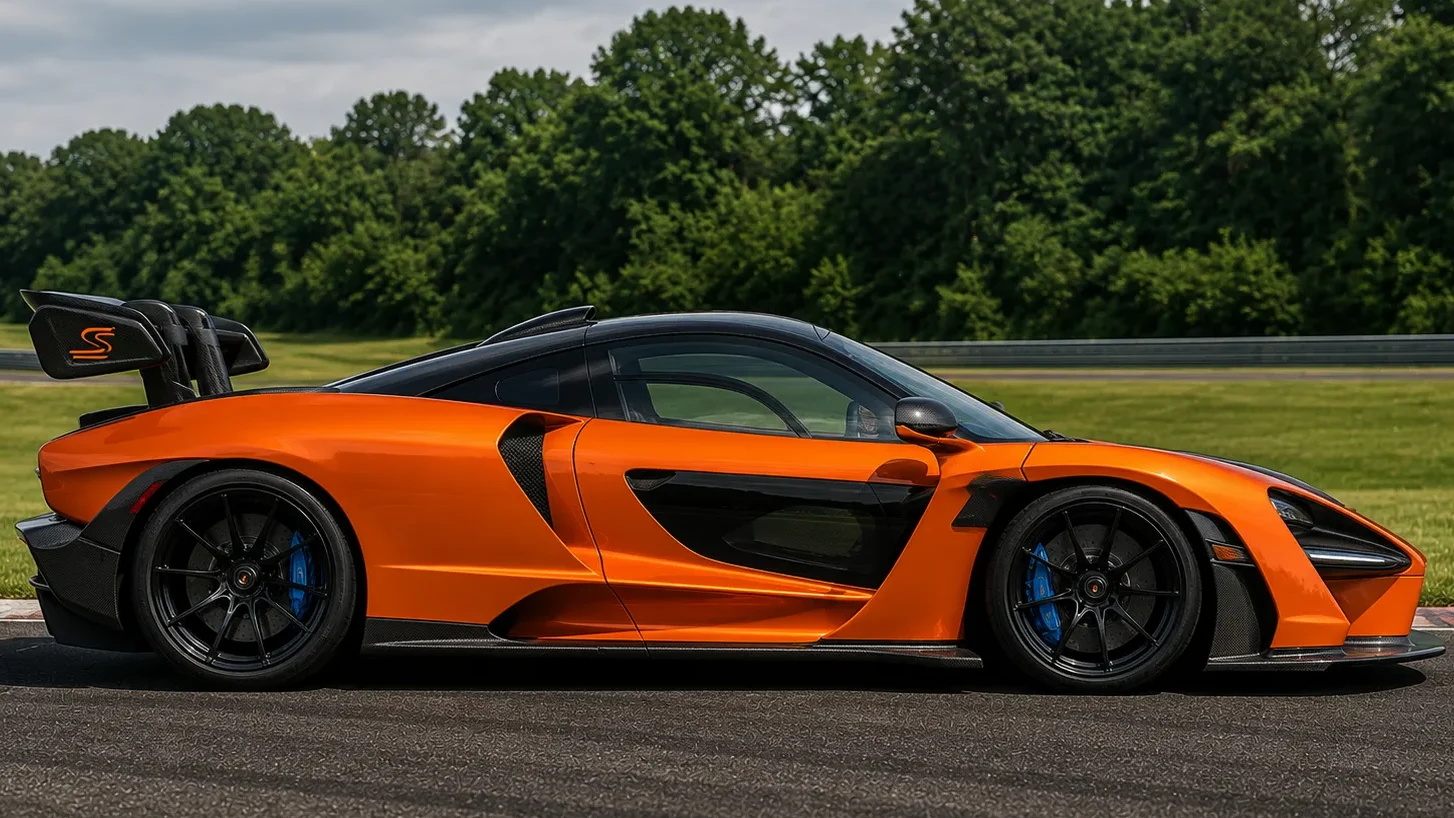
There’s no mistaking a McLaren Senna for anything else on the road, and that’s by design— literally. All vents, wings and flicks on the bodywork are there to manage airflow, not to look aggressive for its own sake, though it certainly achieves both.
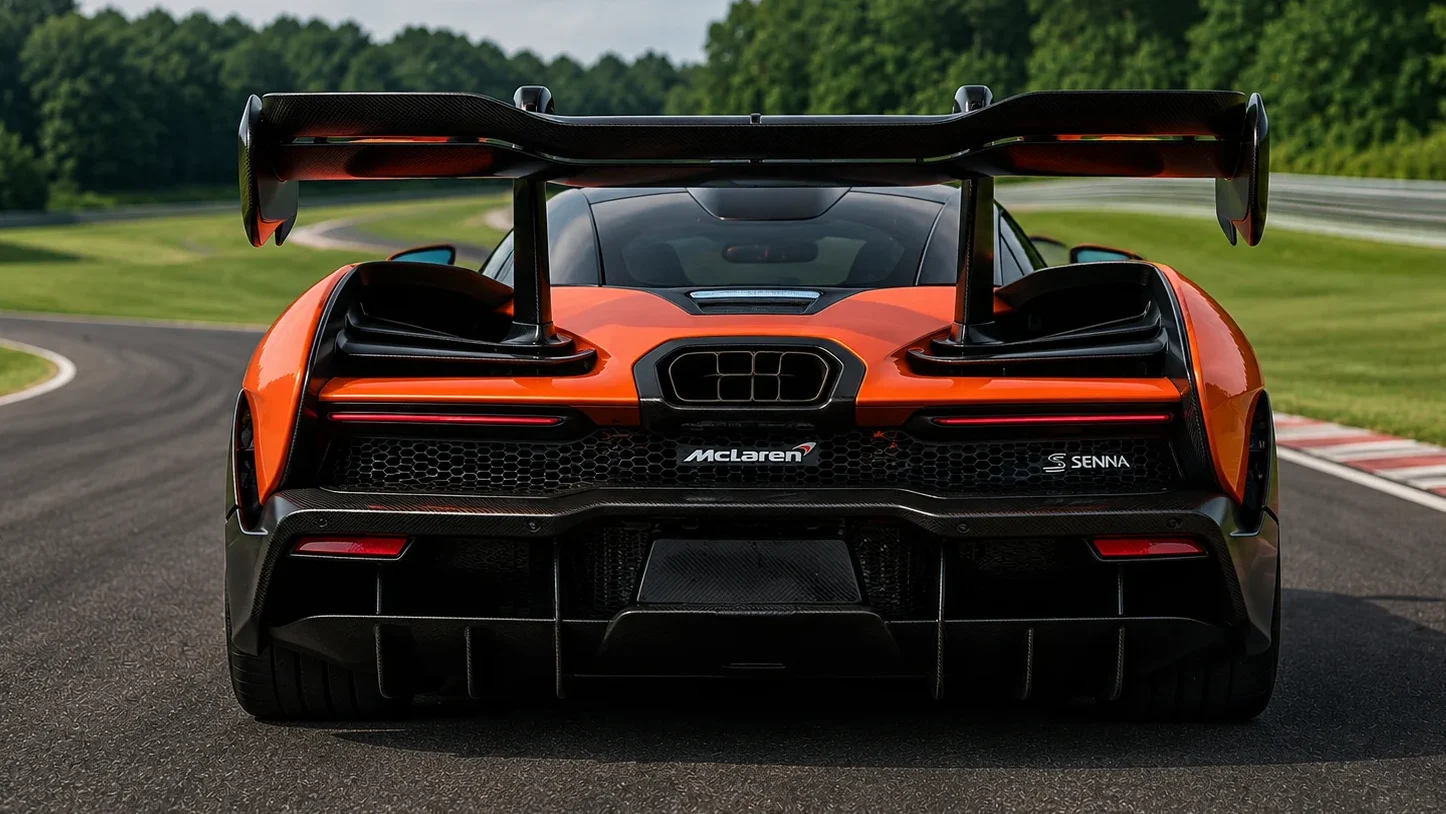
The most obvious visual signature is the huge rear wing, mounted high on swan-neck supports so that it doesn’t disrupt airflow underneath it the way a traditional wing mount would. Up front, a deep splitter and aggressive front bumper work with a pair of dive planes on each front fender to balance downforce between the axles. Look closely at the hood and you’ll notice a large NACA-style vent designed to cool the front brakes while controlling pressure buildup under the nose.
The Senna’s silhouette is also notably narrower and more angular than other McLarens of its era, thanks to the large underbody tunnels that funnel air into the rear diffuser. McLaren even left some body panels unpainted on the lightweight-spec cars, exposing raw carbon fiber weave to shed a few more pounds of paint and primer.
Buyers could specify the Senna through McLaren Special Operations (MSO), which provided bespoke paint finishes, exposed carbon packages and unique livery designs; no two Sennas on the road will look alike. For collectors in 2026 interested in a McLaren Senna for sale 2026, an MSO specification car with a rare exterior configuration will have an obvious premium over standard versions simply because there were so few examples built to a particular configuration.
McLaren Senna Engine 2026 and Performance
At the heart of every McLaren Senna is a 4.0-liter twin-turbocharged V8, the M840TR inside the car. This is not an engine that originated with the 720S, but for the Senna, it was rebuilt by mclaren senna top speed 2026 to provide a lower crankcase and new turbochargers as well as a custom exhaust system that exhales hot gases through vents just below the rear windshield.
McLaren Senna engine specifications:
- Engine: 4.0L twin-turbo V8
- Power: 789 horsepower (800 PS)
- Torque: 590 lb-ft (800 Nm)
- Drivetrain: Rear-wheel drive
- 0-60 mph: 2.7 seconds
- 0-124 mph: 6.8 seconds
- Top speed: 208 mph (limited by aero, not power)
For context on the McLaren Senna performance, that 0-60 lap puts it in the same category as some of the world’s most powerful hypercars, which tells you everything about how much McLaren was interested in weight loss and downforce as opposed to raw horsepower. The Senna can generate up to 1,764 pounds of downforce at speed, which is more than double the McLaren 720S due to its massive rear wing, dive planes, and underbody diffuser.
Reviewers have pointed to the Senna’s engine note as one of its most polarizing features. It’s not the melodic scream you’d expect from a hypercar; it’s raw, mechanical, and turbo-heavy, a product that some news outlets have termed functional, not emotional. That’s a fair trade-off for someone who built a car around lap times rather than showmanship.
McLaren Senna Interior 2026
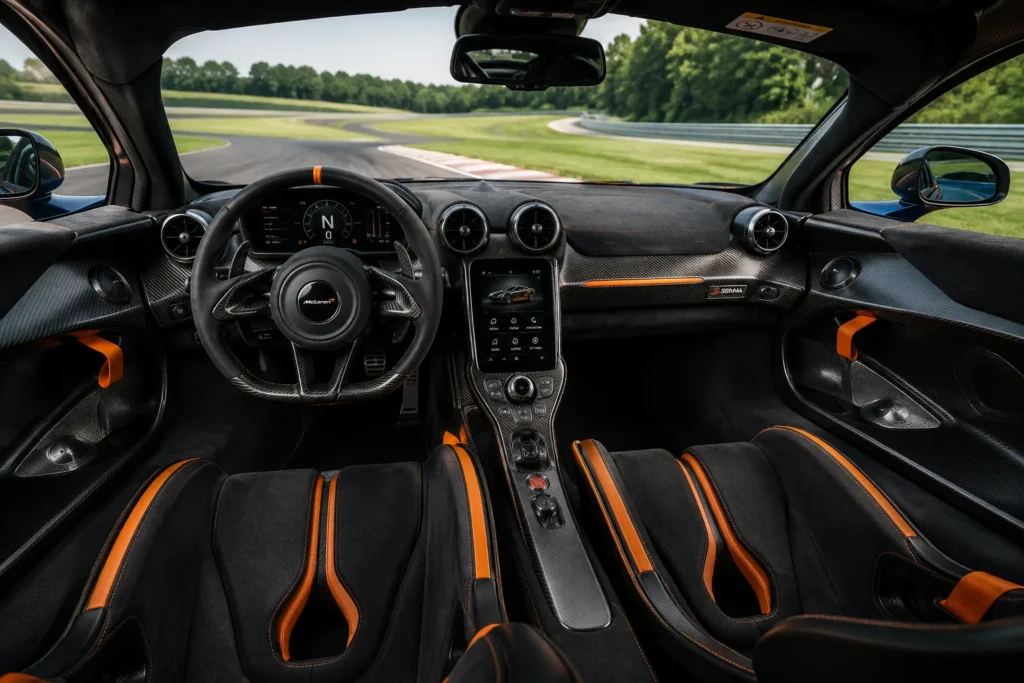
If you are looking for luxury in the McLaren Senna interior, you may need to recalibrate your expectations. This is probably the most Spartan cabin McLaren has built since the original F1. Carbon fiber is everywhere: the door panels, the seats, and the center tunnel, and McLaren left much of it exposed and unpainted to save weight.
The features of the McLaren Senna interior include:
- Fixed-back carbon fiber racing seats (a lighter, optional set was available for even more weight savings).
- Digital instrument cluster that flips up and out of the driver’s view in the truck so it doesn’t obstruct forward visibility.
- Door-mounted window switches and mirror controls were moved off the center console to save space and weight.
- Low sound deadening, the road noise is much more acute than in a typical grand tourer.
- Optional air conditioning and infotainment system, yes, optional, because McLaren designed a lighter “track-focused” package that removed both to save a few more pounds.
- Perspex panels in the door and lower doors provide the occupants with a view of the front wheels in motion.
It’s an interior built for function first. There’s no ambient lighting show, no soft touch everything, and no cupholders that beg to be used. Reviewers from outlets like Car and Driver have commented that although the cabin is tight and utilitarian compared to competitors like the Ferrari LaFerrari, that’s precisely the point: every gram that’s taken out of the interior is a gram that is not slowing the car down on a circuit.
McLaren Senna Features 2026
In addition to the cabin, the McLaren Senna features list reads like a checklist of race car engineering translated for road use:
- Active aerodynamics, including a hydraulically actuated rear wing that automatically adapts under speed, braking, and cornering loads.
- Carbon-ceramic brakes, based on McLaren’s P1 with the brake-by-wire system to keep the pedal in place.
- Double-wishbone suspension with hydraulically attached dampers (no anti-roll bars) to ensure a strong cornering feeling and firmness over bumps.
- Drop-down door cards and lightened glass for certain configurations.
- Carbon fiber monocage II chassis, the same one used on the Super Series and Ultimate Series cars in the McLaren family.
- Dihedral doors with an integrated cutout in the roof and door panel to improve visibility and ease of entry despite the low ride height.
These aren’t features that go out to show off at a stoplight. They are the building blocks of a car that is meant to be driven hard, repeatedly, without heat soak, brake fade, or chassis flex compromising lap times.
McLaren Senna Wheels 2026
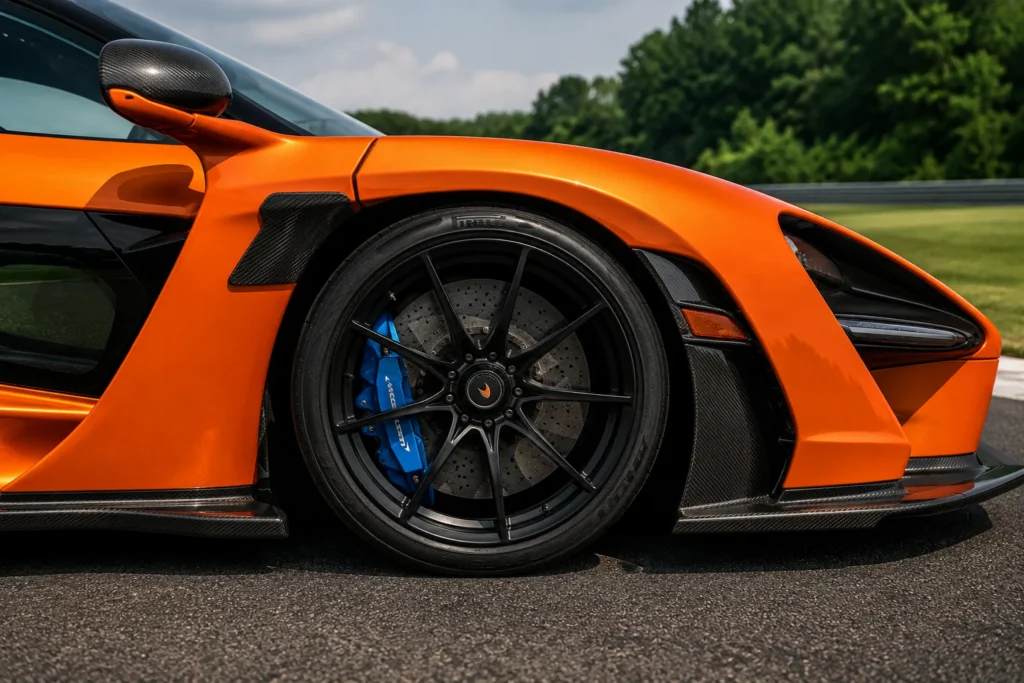
The McLaren Senna wheels are a functional part of the car’s aerodynamic and braking package and not just a styling choice. The standard wheels are lightweight forged alloys, 19 inches up front and 20 inches in the rear, framed by bespoke Pirelli P Zero Trofeo R tires that are designed for weight distribution and downforce.
The wheel has a five-spoke pattern with cutouts that channel air toward the brakes for cooling, which is a must for how often this car was designed to be driven at the limit on track days. Lightweight center-lock wheels were also available, saving extra unsprung weight and improving acceleration and handling response.
McLaren Senna Specifications 2026
| Specification | Detail |
| Engine | 4.0L twin-turbo V8 |
| Power | 789 hp |
| Torque | 590 lb-ft |
| Transmission | 7-speed SSG dual-clutch |
| 0–60 mph | 2.7 seconds |
| Top Speed | 208 mph |
| Curb Weight | Approx. 2,641 lbs (dry) |
| Power-to-Weight Ratio | Roughly 668 hp per ton |
| Maximum Downforce | 1,764 lbs |
| Production Units | 500 coupes + 75 GTR track variants |
| Production Years | 2018–2019 |
We have the McLaren Senna specifications in full for those looking to buy the sports car in 2026. That power-to-weight ratio is the most important one here. The Senna is lighter than most sports sedans, despite its 800 horsepower, and so it is now more likely to race in lap times that rival cars with much more power.
McLaren Senna Price 2026
It is here where things get interesting for anyone in 2026 looking up McLaren Senna price information. When new, the Senna coupe had an MSRP of around $958,000 and the track-only Senna GTR was about $1.4 million. But it is worth noting that those figures are not what buyers really paid. McLaren allocated cars to high-value customers, and most of the original customers bought them at sticker prices, not accounting for dealer markups and options.
McLaren Senna price (USD & AED):
| Category | Price (USD) | Price (AED) |
| Original MSRP – Coupe | $958,000 | AED 3,517,500 |
| Original MSRP – Senna GTR | $1,400,000 | AED 5,141,500 |
| 2026 Market – Higher-Mileage / Track-Used Coupe | $850,000 – $950,000 | AED 3,121,500 – 3,489,000 |
| 2026 Market – Low-Mileage, Well-Documented Coupe | $1,100,000 – $1,300,000 | AED 4,039,800 – 4,774,500 |
| 2026 Market – Desirable Spec (MSO Paint, Lightweight Pack) | $1,300,000 – $1,500,000+ | AED 4,774,500 – 5,508,000+ |
| 2026 Market – Senna GTR (Track-Only) | $1,600,000 – $2,200,000+ | AED 5,875,700 – 8,079,700+ |
The AED figures are approximate, with 1 USD = 3.67 AED. Actual conversion and market prices fluctuate, so we would prefer to take them as estimates rather than fixed quotes.
By 2026 the McLaren Senna price on the collector market tells a different story depending on condition, mileage, and provenance:
- Low mileage, well-documented examples have traditionally sold far above their original MSRP, often in the $1.1–$1.3 million (AED 4.04M–4.77M) range at auction, in particular for cars with desirable spec combinations (MSO paint, lightweight packages or low delivery mileage).
- Higher mileage or track-used examples typically trade closer to or even lower than the original MSRP, depending on the history of maintenance and any obvious wear on the carbon fiber body panels.
- Senna GTR examples, being track-only and even rarer, are charged far more than the standard coupe when they are available, often far above $1.6 million (AED 5.87M+).
If you’re looking for a McLaren Senna for sale in 2026, you should be working with specialist hypercar dealers, McLaren-certified pre-owned channels, or major auction houses like RM Sotheby’s and Gooding & Company rather than a standard dealership. In markets such as Dubai and Abu Dhabi, boutique exotic car dealerships in Dubai and Abu Dhabi often list Senna units at a price in AED to suit the local buyer base. With the low supply, patience with a broker and access to private sales can be much more valuable than browsing public listings.
Like any collector hypercar, pricing is influenced by the broader market for limited-production exotics and currency exchange rates, so any specific number should be treated as a snapshot and not a guarantee; always check the current asking price with a highly skilled dealer or auction house before making a decision.
McLaren Senna Reviews 2026: What Critics Say
McLaren Senna reviews from various media have all praised the raw circuit capability and admitted it’s a fiercely uncompromising ownership experience.
Car and Driver’s testing demonstrated the Senna’s cornering grip and braking capability to be truly otherworldly and showed that the car generates lateral forces that make most other road-legal cars feel sluggish by comparison. Their reviewers also said, even though the ride quality is extremely compliant; for something this track-centric, it needs a driver comfortable with a stripped-out, loud cabin.
Some media outlets, like CarBuzz, emphasized the visual drama of the car’s design, the vents, the wing, and the exposed carbon as functional rather than purely aesthetic, and that theme is prevalent with almost every professional review of the Senna. Unlike some hypercars that put styling first and function second, virtually every visual element on the Senna serves an aerodynamic or cooling function.
The consensus across McLaren Senna reviews is remarkably consistent: this is one of the most powerful track-focused hypercars ever sold to the public, but it’s not for buyers who want a comfortable daily driver or a car that is all about cabin refinement.
McLaren Senna Comparison: How It Stacks Up
When shoppers research a McLaren Senna comparison, they are usually comparing it to a small handful of similarly track-obsessed hypercars from the same era:
- Ferrari FXX-K / Ferrari LaFerrari: More road-friendly refinement and a hybrid V12 setup, but generally less track-focused in outright setup than the Senna.
- Aston Martin Valkyrie: Far more extreme in concept (F1-derived aero and a naturally aspirated V12), but with a much higher price point and even more limited production.
- Porsche 911 GT2 RS: More attainable and arguably more usable day-to-day, but not in the same performance tier in terms of downforce or outright lap times.
- McLaren P1: The Senna’s own stablemate, but built around hybrid power and a more GT-oriented character rather than pure track focus.
The car is often referred to as the most purpose-built for lap times among all McLaren Senna competitors and less about comfort or daily usability than anything else in its class. That singular focus is both its greatest strength and why it’s not the right choice for buyers who want more of the full ownership experience.
Ownership and Maintenance Costs
When buying a McLaren Senna in 2026, it is not just about the cost of the car itself; continuing ownership costs are a significant factor for anyone who is interested in one. As with most low-volume hypercars, parts availability, specialized labor, and insurance all come at a premium when compared to a mainstream sports car.
In a few things prospective owners should budget for:
- Servicing: The maintenance must be done by McLaren-certified professionals, and as the Senna’s specialized parts are not easily available for any other McLaren vehicle, parts for general use (such as the 720S) can be a longer process to purchase.
- Tires: The bespoke Pirelli P Zero Trofeo R tires are suited for track use and wear quickly, and replacement tires are far more expensive than the standard performance tires.
- Insurance: Because of the car’s rarity and value, the car insurance premiums are typically handled through specialist collector-car insurers rather than standard auto insurance companies.
- Storage and climate control: Many owners store their Senna in climate-controlled facilities to protect the extensive exposed carbon fiber bodywork from UV and humidity damage, particularly in hotter climates like the Middle East.
- Depreciation risk: A well-kept Senna is not a car you’d expect to lose value, and in most cases, it’s appreciated, but buyers should still factor in the possibility of value fluctuation tied to the broader collector car market.
None of this is unusual for a car in this segment, but it is worth factoring into the total cost of ownership beyond whatever number appears on the McLaren Senna price tag at the time of purchase.
Is the McLaren Senna Worth It in 2026?
If you are considering a McLaren Senna in 2026, it really depends on what you want from a hypercar. As a track weapon, it remains among the best road-legal cars McLaren has produced, and its scarcity has meant that values have generally held up well since production ended. As a status symbol or GT car for long-distance comfort, it isn’t quite so good for that, and it’s not going to suit people who are used to daily-driver experience.
For collectors, the combination of limited production, motorsport pedigree, and the Ayrton Senna name still makes this one of the more desirable modern McLarens on the resale market. For track-day enthusiasts with the budget, few road-legal cars offer this level of purpose-built capability.
Final Thoughts
The McLaren Senna isn’t a car that tries to be everything for everyone, and so it still deserves to be in the limelight almost a decade after it was built. Its engine, aerodynamics, and stripped-down interior all serve a single purpose: making it one of the fastest road-legal cars around a circuit. You can make your decision about whether a McLaren Senna should be in your garage if you’re interested in it, whether you’re tracking the collector market or you’re looking for a McLaren Senna for sale; understanding what makes this car tick and what it deliberately sacrifices is essential before deciding if it belongs in your garage.
The specifications and reviews cited in this section are Car and Driver and CarBuzz. Pricing rates are based on historical MSRP and market trends; always check with a certified dealer and auction house before buying.
FAQs
Q. Will McLaren produce Senna in 2026?
A. No. McLaren built 500 Senna coupes and 75 Senna GTR track cars from 2018 to 2019. We have no new generation Senna in production, and all vehicles in 2026 are resales.
Q. How much horsepower does the McLaren Senna have?
A. The Senna’s 4.0-liter twin-turbo V8 produces 789 horsepower and 590 lb-ft of torque.
Q. How fast is the McLaren Senna top speed?
A. The McLaren Senna has a top speed of 208 mph, which is limited by its aerodynamic package rather than by engine output.
Q. How much does a McLaren Senna price in 2026?
A. The Original MSRP was around $958,000 for the coupe and roughly $1.4 million for the GTR. 2026 collector market prices vary significantly based on mileage, spec, and provenance, with well-kept examples often trading above original MSRP.
Q. How is the McLaren Senna different from the McLaren P1?
A. The P1 is a hybrid hypercar with a more road-friendly design and GT-style comfort in mind, while the Senna strips away comfort features in favor of maximum downforce and lap-time performance.