
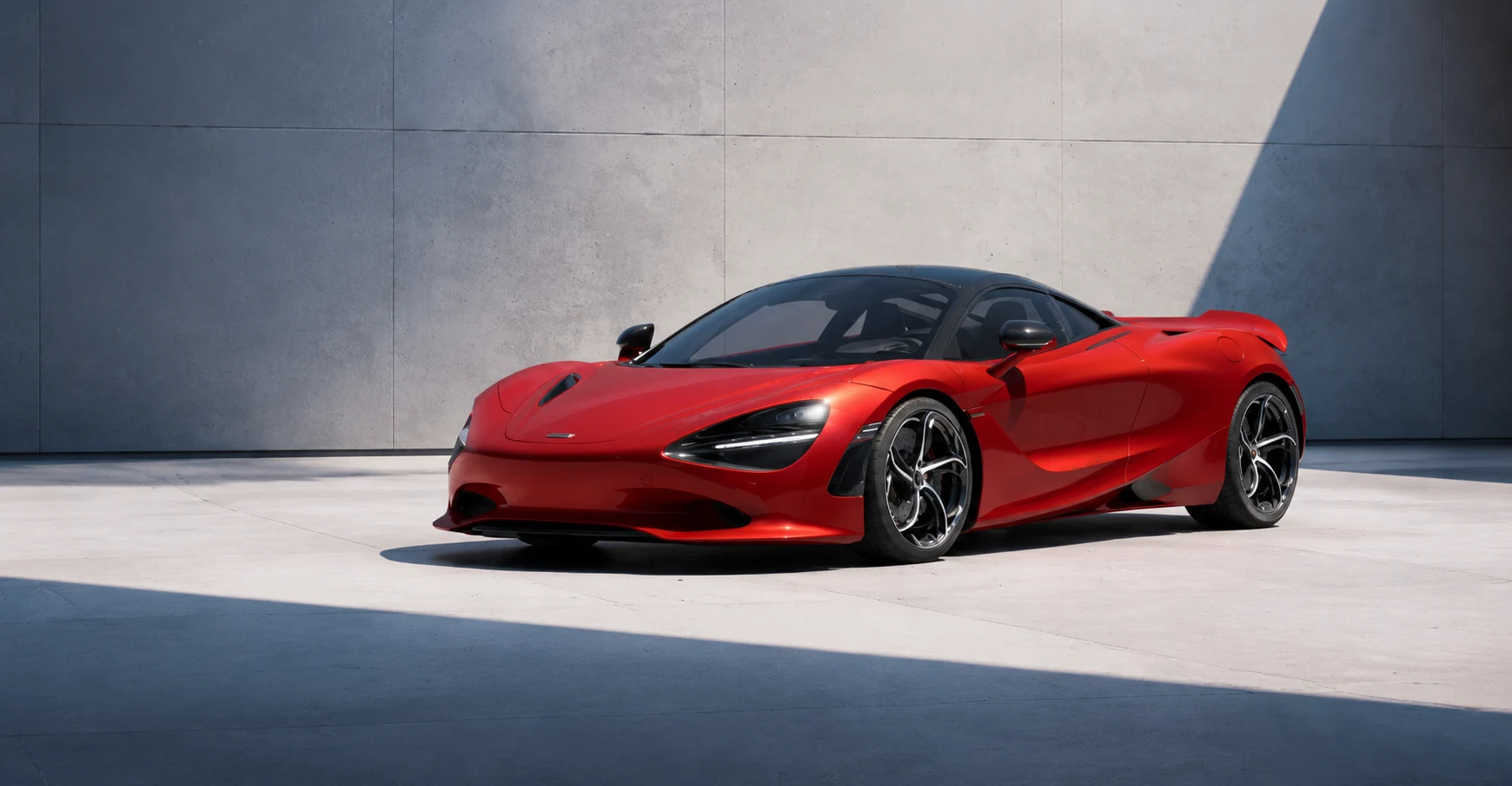
Some supercars try to do everything. The McLaren 750S does one thing very well and does it better than anything else on the market: it connects you to the road. No hybrid system, no all-wheel drive, no rear seats pretending to be useful. Just a twin-turbo V8, carbon fiber and a chassis that reads your inputs like it can see them coming.
The McLaren 750S was the successor to the much-loved 720S, and instead of reinventing that car, McLaren sharpened it. About 30 percent of the parts are new or changing. The rest stuck around because it didn’t really need to be fixed. The formula is the same for 2026, and that restraint in a market that is moving toward electrified everything is part of the appeal.
The pricing of the McLaren 750S in US dollars and AED, the interior, features, wheels, specifications, top speed, and what reviewers actually think of it. This should cover almost everything you want to know before calling a dealer if you’re looking to buy a McLaren 750S now.
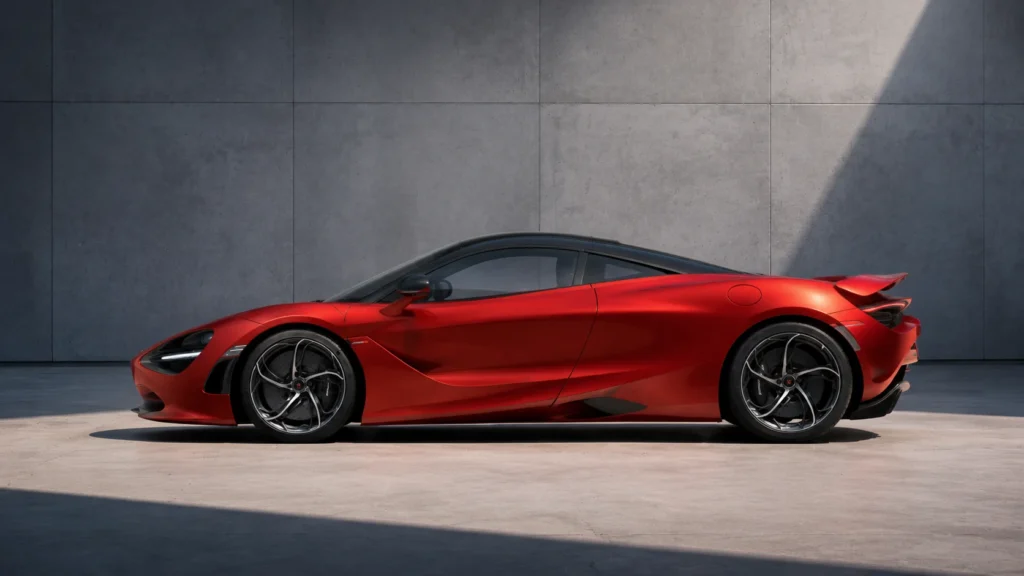
McLaren 750S Price 2026: USD and AED
| Model | Price (USD, Est.) | Price (AED, Est.) |
| McLaren 750S Coupe | From around $352,000 | From around AED 1,292,000 |
| McLaren 750S Spider | From around $374,000 | From around AED 1,373,000 |
Note: Actual prices may vary depending on options, customization, taxes, and market availability. Current listings show the McLaren 750S starting around $359,600 in the US and AED 1.25M+ in the UAE market.
A few things to understand about the McLaren 750S price 2026 figures before it becomes gospel to take them as gospel:
First, these are starting prices. Almost nobody buys a base 750S. McLaren’s MSO (McLaren Special Operations) division exists to relieve buyers of extra money, and it does that job well. Carbon fiber exterior packs, the optional carbon-shelled racing seats from the Senna, a sports exhaust, special paint, and the electrochromic folding roof on the Spider all have the power to drive a nice and well-optioned car above $450,000 (about AED 1,650,000) without much effort. Cars crossing the half-million mark are not rare.
Second, prices in the UAE vary with import route and specification. Official dealer cars in Dubai and Abu Dhabi typically land between AED 1.3 million and AED 1.7 million depending on options, though a few less-used examples might drop below. The AED figures above are based on an exchange rate of roughly 3.67 dirhams to the dollar, so you look at that as a planning number rather than a quote.
Third, if you’re browsing McLaren 750S for sale listings, the used market is worth a serious look. Early 2024 and 2025 cars with delivery miles sell below their original sticker, which is unusual for a car this new and this well-reviewed. Supercar depreciation is brutal, and for once it works in the buyer’s favor.
For context against competitors, a Ferrari 296 GTB starts at around $340,000, a Lamborghini Revuelto at over $600,000, and a Porsche 911 Turbo S at around $240,000. The 750S is an expensive company and, on a per-dollar basis, embarrasses most of it.
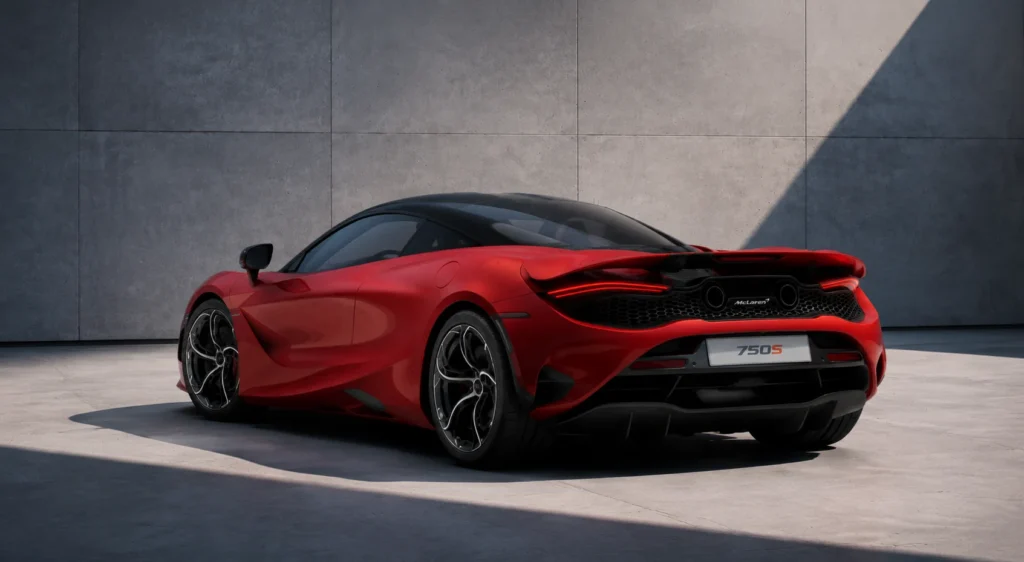
McLaren 750S Engine 2026: The M840T V8
The heart of the car is the M840T, a 4.0-liter twin-turbocharged V8 behind the seats. The 750S has 740 horsepower (750 PS, which is where the name comes from) and 590 lb-ft of torque. That is a 30-horsepower boost from the old 720S, and it’s thanks to the lighter pistons, the higher-flow fuel pump borrowed from the Senna, and the turbo tuning.
Power goes only to the rear wheels, through a 7-speed dual-clutch gearbox with shorter final drive than the 720S. The shorter gearing is more important than the additional horsepower in daily driving. The car feels more urgent everywhere, not just at the top of the rev range.
Some McLaren 750S engine details are worth knowing:
- Displacement: 3,994 cc with a flat-plane crankshaft, making it rev fast and hard even if the voice is more industrial than operatic.
- Redline: 8,500 rpm.
- Output: 740 hp at 7,500 rpm, 590 lb-ft at 5,500 rpm.
- Dry weight: as low as 2,815 lbs (1,277 kg) at the lightest spec, making it the lightest series production car in its class.
- Power-to-weight: around 587 hp per tonne, better than anything this side of a hypercar.
There is no hybrid assistance and no plans for it on this platform. Whether that’s a bug or a feature depends on your worldview, but the weight savings are real. The 750S undercuts the Ferrari 296 GTB by well over 100 kg.
The engine’s character is, however, at odds with itself in one particular way: turbo lag. Below 3,000 rpm, the car breathes in before it shoves. It’s old-school charm, some reviewers say, a moment of anticipation before the violence starts. And others wish for the instant torque-fill a hybrid provides.
McLaren 750S Performance 2026: The Numbers
Here is where the spec sheet becomes no longer a spec sheet but a warning label.
| Metric | Figure |
| 0–60 mph | 2.7 seconds (claimed; testers have achieved better) |
| 0–100 mph | ~5.2 seconds |
| 0–124 mph (200 km/h) | 7.2 seconds |
| Quarter Mile | 10.1 seconds (Car and Driver recorded 9.9 seconds at 148 mph) |
| Top Speed | 206 mph (332 km/h) |
| Braking (124–0 mph) | 118 meters |
Read that quarter mile figure again. Independent testing has put the 750S into the nines, territory that used to belong to million-dollar hypercars such as the Porsche 918 Spyder. A rear-wheel-drive car with no electric assistance shouldn’t launch this hard, yet McLaren’s launch control manages wheelspin so cleverly that it does.
The McLaren 750S’ 206 mph top speed is almost the least interesting number here. Plenty of cars now go 200 mph. What separates the 750S is how it behaves in the corners. The hydraulic steering (yes, hydraulic, in 2026, when almost every competitor has gone electric) takes the road surface and makes it feel like what other supercars filter out. Reviewers say it is the best steering in production.
The suspension is McLaren’s Proactive Chassis Control III, a linked-hydraulic system that skips conventional anti-roll bars entirely. The party trick: it can offer genuine ride comfort on broken pavement and body control on track from the same hardware. In Comfort mode, the 750S rides better than some luxury sedans, which sounds like an exaggeration until you drive one over a bad road.
The braking hardware comes from the Senna on cars with the optional carbon-ceramic upgrade, with monobloc calipers and a brake booster tuned for pedal feel. The standing airbrake rises under hard braking to add downforce over the rear axle, which you can watch happen in the mirror, and that never stops being entertaining.
McLaren 750S Interior 2026: Driver First, Everything Else Second
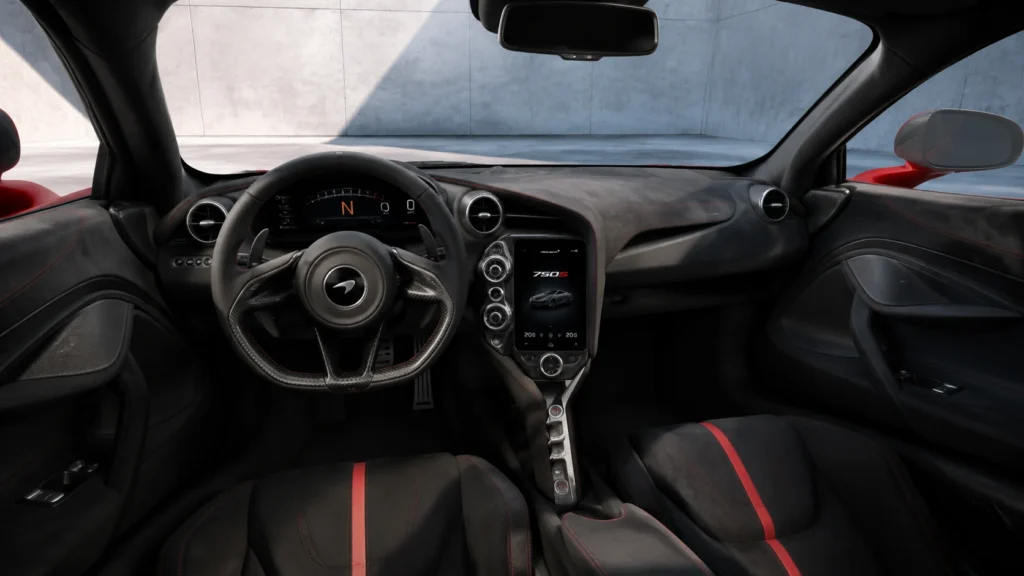
The McLaren 750S interior is obvious from the moment the dihedral doors open. That’s a cockpit that’s about driving position and everything else competes for the space left over.
The core of the McLaren 750S interior 2026 experience:
The instrument display moves with the steering column. The slim digital cluster is mounted to the column, and when you adjust the wheel, the gauges follow. It’s great sightlines for every driver, and it’s so simple you wonder why everyone doesn’t do it.
The controls you actually do use live on the cluster housing. Powertrain and handling mode rockers are sitting on the wheel rim right at finger’s reach to take you from comfort to sport to track without letting go. The steering wheel itself is round, thin-rimmed, and completely free of buttons. McLaren refuses to put controls on the wheel, and after ten minutes you know why: nothing stops your grip.
Visibility is absurd for the class. The glasshouse canopy, thin pillars and low scuttle give you a view out that no Lamborghini has offered in decades. You can place the car within centimeters, which turns out to matter both on track and in a Dubai Mall parking structure.
The infotainment is good, and that is the honest word. The 8-inch portrait touchscreen handles media and navigation, and Apple CarPlay is standard (a small victory; the 720S never got it). Android Auto is absent. The graphics won’t worry Mercedes, and nobody buys this car for the screen.
Seat options are the comfortable heated memory seats available in the Senna as well as carbon-fiber racing shells in the Senna, which are lighter and hold you like a hand around a chess piece. The shells are great to race on track and are well-suited for road use, but consider before you spec them if your daily route is one of speed bumps. The Spider deserves a special mention. The retractable hardtop folds in 11 seconds at up to 31 mph, and because the carbon Monocage II-S tub itself needs no extra bracing, the Spider gains only 49 kg over the coupe. It gives up nothing measurable in stiffness. Most convertible supercars require sacrifice; this one doesn’t.
Storage is what you’d expect: a front trunk that swallows a weekend bag or two, some space behind the seats in the coupe, and an interior with barely enough cubbies for a phone and a wallet. Practicality was never the pitch.
McLaren 750S Features 2026
The features list tells you what kind of car this is. The McLaren 750S features 2026 highlights:
- McLaren Control Launcher: a physical button (marked with a speedy-kiwi logo) that saves your favorite combination of aero, handling, powertrain, and transmission settings, then recalls them with one press. Simple idea, executed well.
- Variable Drift Control: Adjusts how much slide the stability control allows, so you can explore the car’s balance with a safety net whose height you choose.
- Active airbrake: the rear wing deploys for braking stability and adjusts for downforce; the 750S wing is 20 percent larger than the 720S unit.
- Nose lift: raises the front end in about four seconds (the old car took ten), which owners will use daily and appreciate every time.
- Sports exhaust option: a center-exit design that gives the V8 a harder-edged voice. Reviewers say it transforms the car’s character and is worth the money.
- Vehicle lift and 360-degree cameras: because a six-figure carbon splitter deserves protection. MSO personalization: essentially unlimited paint, trim, and carbon options if the standard configurator feels restrictive.
Driver-assistance tech is deliberately thin. You get the basics required by law and not much more. No lane centering, no adaptive cruise theatrics on most builds. McLaren assumes the person holding the wheel wants to hold the wheel.
McLaren 750S Wheels, Tires, and Brakes
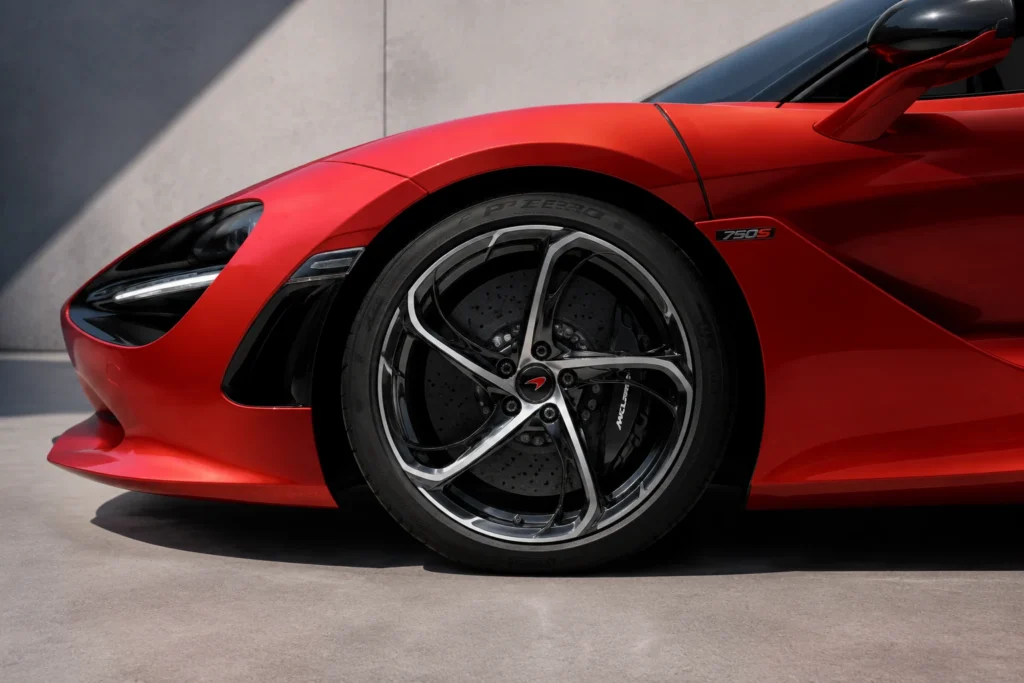
The McLaren 750S wheels are part of the weight story. Standard fitment is a set of ultra-lightweight forged alloys, 19 inches up front and 20 at the rear, and they’re the lightest wheels McLaren has ever put on a series-production car. Together with other measures, they contribute to the 30 kg the 750S sheds versus the 720S.
Tire choice is Pirelli, with three levels of commitment:
- P Zero for everyday use.
- P Zero Corsa as the standard performance fitment (245/35R19 front, 305/30R20 rear).
- P Zero Trofeo R for buyers who plan real track time.
On wheels are carbon-ceramic discs, with the optional Senna-based braking package with stiffer monobloc calipers and better fade resistance. If you have a budget and you are looking for one performance option, most owners and reviewers point to this or to the sports exhaust.
Ten-spoke and five-spoke designs are available through MSO in different finishes and gloss or satin carbon aero details around the arches frame them nicely. The wheels look good. More importantly, they weigh almost nothing, which is very McLaren: Even the styling decisions answer to the scales.
McLaren 750S Specifications 2026 at a Glance
For the spec-sheet readers, the full McLaren 750S specifications are in one table:
| Specification | Detail |
| Engine | 4.0L twin-turbo V8 (M840T) |
| Power | 740 hp @ 7,500 rpm |
| Torque | 590 lb-ft @ 5,500 rpm |
| Transmission | 7-speed dual-clutch, RWD |
| 0–60 mph | 2.7 seconds (claimed) |
| Top Speed | 206 mph / 332 km/h |
| Dry Weight | From 2,815 lbs / 1,277 kg |
| Chassis | Carbon fiber Monocage II (II-S for Spider) |
| Suspension | Proactive Chassis Control III, linked hydraulic |
| Steering | Electro-hydraulic power assist |
| Brakes | Carbon-ceramic discs, optional Senna package |
| Wheels | 19″ front / 20″ rear forged alloy |
| Fuel Economy (EPA) | ~15 mpg city / 19 mpg highway |
| Seating | 2 seats |
| Body Styles | Coupe, Spider |
McLaren 750S Reviews: What the Critics Say
A quick comparison of the McLaren 750S reviews of the big outlets shows a clear trend: this might be the most universally praised supercar of its generation.
Car and Driver named it as one of their 10Best and also did a 9.9-second quarter mile in testing and said acceleration put “your eyeballs against your brain.” Their long-standing praise of the steering and chassis carried through to the 720S, and it’s even more impressive.
Top Gear went further, naming the 750S its Car of the Year and even saying it may be the last and best pure and unassisted V8 supercar. The absence of hybrid weight, in their reading, isn’t a limitation. It’s the whole point.
Edmunds praised the bandwidth, a car that can lap a circuit at a truly frightening pace and then ride home in comfort, with the caveat that the interior tech trails rivals and the options list inflates the price quickly.
The consistent threads across McLaren 750S reviews (2026 and prior):
What everyone loves: the steering (which is known to be the best in any production car); the ride-and-handling balance; the shattering acceleration; visibility; and the sense that the whole car was engineered by people who drive.
What has been criticized: infotainment that seems to be a generation old, no Android Auto, a noticeable turbo lag below 3,000 rpm, an engine note that is effective rather than operatic, and options pricing that requires a sense of humor.
The verdict, distilled: if you want the most engaging driver’s car in the segment, this is it. If you want the best sound, buy the Lamborghini. If you want the best tech, buy the Ferrari. The 750S wins on the thing that probably matters most in a car like this: how it feels from the driver’s seat.
McLaren 750S vs the Competition
We quickly check against the cars that are most frequently cross-shopped:
Ferrari 296 GTB: hybrid V6, 819 hp, more theater, more tech, heavier. The Ferrari feels more like an event; the McLaren feels more like a tool sharpened to a point. There’s pricing just like before options.
Lamborghini Revuelto: V12 hybrid drama at nearly double the price. Different mission completely.
Porsche 911 Turbo S: cheaper, easier to live with, all-weather capable, and nowhere near as special. The sensible choice, which is exactly why some buyers walk past it.
The 750S is the lightest and most communicative of the group. In an era when supercars gain screens and kilograms with every generation, that’s its moat.
Should You Buy a McLaren 750S in 2026?
If you’re shopping at this level, the question isn’t whether the 750S is good. Every review, every comparison test, every owner forum says the same thing. The question is whether its particular brand of goodness matches what you want.
Buy the 750S if you care about steering feel, ride quality, and the sensation of driving more than you care about badge theater or infotainment screens. The Spider could be a good option, even if you’re in the UAE or any place where the climate allows open-top driving eight months a year, and the performance penalty is almost zero, so it’s a great one.
If you are looking for a McLaren 750S for sale on the used market, consider a new one before starting your order. Early cars are at or below the original MSRP, and a barely driven 2024 or 2025 example would be the best money in the whole supercar market right now.
And if you do buy one, spec the sports exhaust. So the reviewers speak with one voice on this.
Prices and specifications reflect publicly available information as of mid-2026 and may vary by market and build date. Always confirm current figures with an authorized McLaren dealer.
FAQs
Q. How much will the McLaren 750S cost in 2026?
A. The coupe starts at around $352,000 USD (around AED 1,292,000) and the Spider at around $374,000 USD (around AED 1,373,000). The typical optioned cars cost $400,000 to $500,000 USD (AED 1.47 million to 1.84 million). The price is different for the market, options, and dealer, so do check with a McLaren retailer.
Q. What is the McLaren 750S top speed and 0-60 time?
A. The top speed is 206 mph (332 km/h). McLaren claims 0-60 mph in 2.7 seconds, but independent testers have been able to prove it is faster by running a quarter mile in 9.9 seconds. It’s one of the quickest-accelerating rear-wheel-drive production cars ever tested.
Q. Is the McLaren 750S a hybrid?
A. No. The 750S is a pure combustion 4.0-liter twin-turbo V8 with 740 hp and no electric assistance. That keeps dry weight as low as 2,815 lbs, making it the lightest car in its class and, according to many reviewers, one of the last great analog supercars.
Q. What are the differences between the McLaren 750S and 720S?
A. About 30 percent of components have been changed. The 750S gains 30 hp (740 vs 710), shorter gearing for stronger acceleration, a wider front track, updated Proactive Chassis Control III suspension, a 20 percent larger rear wing, a faster nose lift, Apple CarPlay, and a column-mounted instrument display. It’s an evolution, but everyone says the sum is definitely sharper.
Q. Is the McLaren 750S reliable and expensive to maintain?
A. It’s a hand-built supercar, so budget accordingly: annual servicing typically runs a few thousand dollars, and consumables like carbon-ceramic-friendly tires and brakes are costly. McLaren’s reliability reputation has improved meaningfully over the past decade, and the M840T engine family has a solid track record. A McLaren extended warranty is popular with owners and worth pricing into any purchase, new or used.