
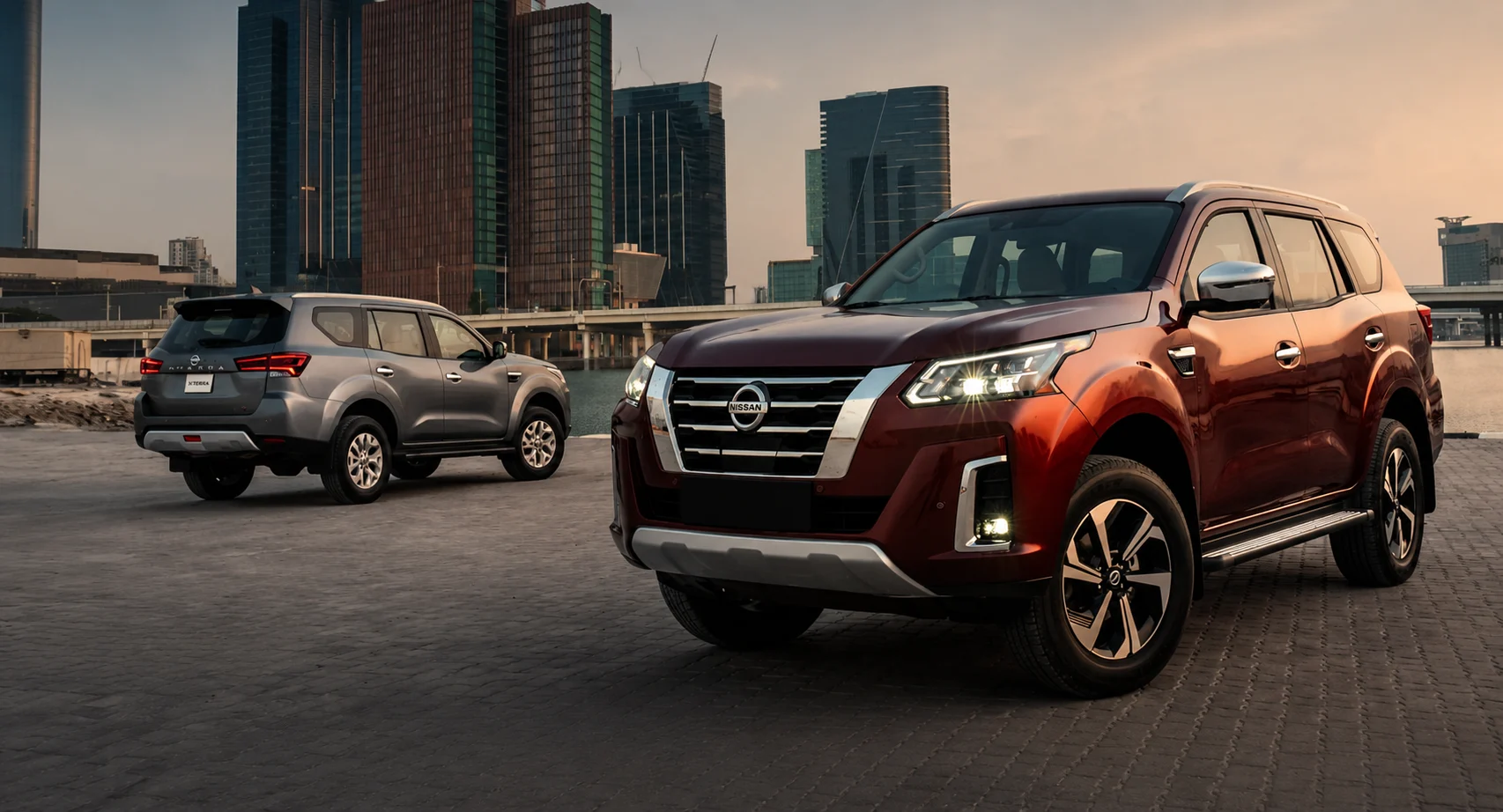
Some SUVs are remembered. The Nissan Xterra gets missed. Eleven years after the last one rolled off the line in Smyrna, Tennessee, owners are still daily-driving them, forums are still arguing about the best tire size for a Pro-4X, and used prices refuse to fall the way used prices are supposed to. And in April 2026, Nissan made it official: the Xterra is coming back, on a proper body-on-frame platform, with a V6 and a V6 hybrid, priced under $40,000 (about AED 147,000).
And that announcement is the perfect excuse to look back at the whole story. This review will cover every era of the Xterra from the 2000 original to the 2015 swan song, the Middle East-only X-Terra that kept the badge alive, and everything we know about the 2028 Nissan Xterra revival. If you’re looking for a used Nissan Xterra, waiting for the new one, or just want to know why this boxy old truck inspires such loyalty, this is the deep dive.
Why the Nissan Xterra Earned Its Cult Following
Nissan launched the Xterra in 1999 as a 2000 model with one of the most honest slogans in automotive history: “Everything you need, nothing you don’t.” That wasn’t marketing fluff. It was the actual engineering brief. Take the Frontier pickup’s ladder frame, drop a boxy five-seat body on it, add a roof rack with a built-in gear basket, a first-aid kit molded into the tailgate, and sell it cheap to people who spend weekends covered in mud or river water.
The formula worked immediately. The Xterra was Motor Trend’s Sport/Utility of the Year in 2000 and in 2005 when the second generation finally arrived. Nowhere else in the market could you get a genuine truck-based 4×4 for compact-crossover money.
Then the market changed. Buyers gravitated to soft, car-based crossovers, fuel prices went up and the Xterra’s thirsty V6 and truck ride became liabilities on paper. Nissan discontinued it after the 2015 model year because it didn’t have the money to update it to new safety and emissions rules. Sales that year were a fraction of what the Toyota 4Runner was doing, which stings in hindsight because the 4Runner is still selling in huge numbers now. Nissan walked away from a segment before it exploded. The company is now admitting that.
First Generation (2000–2004): The Original Adventure Machine
The 2000 Nissan Xterra was built on the Frontier’s WD22 platform, and it hid nothing about its truck roots. The rear seat was higher than the front (Nissan called it stadium seating), the rear roofline rose up to make room for it, and that step gave the Xterra a silhouette you could identify from three blocks away.
Engines. The base models were a 2.4-liter four-cylinder with 143 horsepower; honest, but slow. The one to have was the 3.3-liter VG33E V6 with 170 horsepower and 200 lb-ft of torque. Nissan did something wonderfully unhinged in 2002 and added a supercharged version of that V6, which added 210 horsepower and 246 lb-ft of torque. A supercharged body-on-frame compact SUV with a manual transmission. Nobody builds anything like that today.
The 2002 refresh. The 2002 Nissan Xterra had a bolder front end with a bigger hood bulge, better interior materials, and more power at the front as well. That update was carried out in the 2003 Nissan Xterra and 2004 Nissan Xterra with minor equipment changes, and clean examples of these years are still the ones that collectors seek all the time, especially supercharged SE models.
First-gen strengths: simplicity, cheap parts, a frame that shrugs off abuse. Weaknesses: modest power in base form, a bouncy ride, and rust in the usual truck spots if the vehicle lived in a snowy climate. Check the frame and rear wheel arches before buying any 2000 Nissan Xterra or 2001 Nissan Xterra; the mechanicals will likely outlive the metal.
Second Generation (2005–2015): Peak Xterra
The 2005 Nissan Xterra was a project of Nissan’s F-Alpha platform, which was shared with the Frontier, Pathfinder, and Titan. This is the Xterra most people picture, and it is the one that built the reputation.
The engine. All second-generation Xterras used the 4.0-liter VQ40DE V6. At launch, it was 265 horsepower and 284 lb-ft of torque, but from 2009 onward, the official rating settled at 261 horsepower and 281 lb-ft, due to the changes in testing standards, not the performance. The only choice for buyers was a 6-speed manual or 5-speed automatic. That engine is the heart of the Xterra story: strong low-end torque, a proven timing chain, and a long-term sailing history that can reach over 200,000 miles.
One thing every used shopper should know is that from 2005 to around 2010, automatic models can experience the infamous radiator failure where coolant mixes with transmission fluid. And they call it the “strawberry milkshake of death.” The solution is cheap insurance (an external transmission cooler and a bypass of the radiator’s internal cooler) and most of the surviving trucks have already had it done. Get receipts.
Model year highlights across the run:
The first years, 2005-2008: The debut years. The 2006 Nissan Xterra and 2007 Nissan Xterra got some new toys and colors; the Off-Road trim would feature Bilstein shocks, a locking rear differential, and hill descent control.
2009-2012: A facelift for the 2009 model introduced a new grille, redesigned interior and off-road trim was now called Pro-4X. The 2010 Nissan Xterra, 2011 Nissan Xterra and 2012 Nissan Xterra are probably the sweet spot of the whole family: new looks, the radiator issue is mostly resolved in later builds, and prices have not yet gone silly.
2013-2015: Final years with some minor updates. The 2015 Nissan Xterra Pro-4X, with its factory skid plates, Bilsteins, roof rack, and locked rear diff, is the most desirable Xterra ever built, and the used market prices it accordingly.
Nissan Xterra Engine and Performance
Let’s talk numbers because the Nissan Xterra’s performance is more respectable than its boxy shape suggests.
The 4.0-liter V6 propelled the roughly 4,300-pound second-gen truck from 0 to 60 mph in about 7.0 to 7.5 seconds, fast for the class in its day and still perfectly adequate now. The Nissan Xterra top speed is electronically limited to around 112 mph (about 180 km/h), which is exactly 112 mph more than anyone buys an Xterra to explore. Towing capacity was about 5,000 pounds when properly equipped, enough for a boat, a pair of dirt bikes, or a small camper.
Fuel economy is the honest weak point. You will expect about 15–16 mpg in the city and about 20 mpg on the highway for a 4×4 automatic. The Xterra was never sorry for this. You were buying a truck.
Off-road is where the spec sheet turns into grins. A part-time 4WD system with a proper low-range transfer case, up to 9.5 inches of ground clearance, a 33.2-degree approach angle, and, for Pro-4X models, an electronic locking rear differential. In stock form, a Pro-4X will follow a Jeep Wrangler further up a trail than most people expect, and with a modest lift and 32- or 33-inch tires, it becomes genuinely hard to stop.
Nissan Xterra Interior: Rubber Floors and Right Priorities
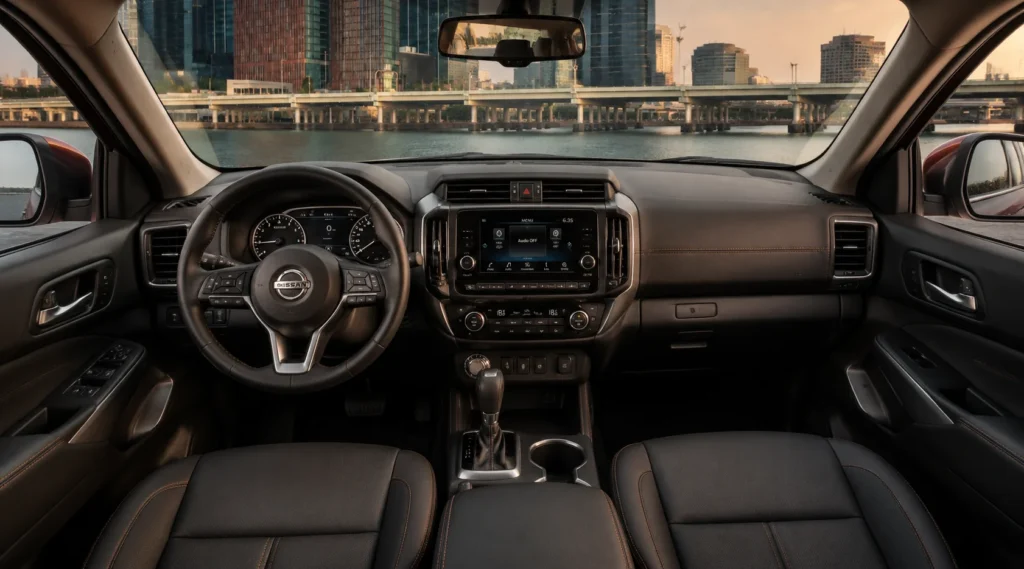
The Nissan Xterra interior was designed by someone who knew that gear is wet, dogs shed and bikes have greasy chains. The second generation offered an available easy-to-clean cargo floor made of hard plastic with tie-down channels (Nissan’s Utili-track system), a rear hatch with separate opening glass, a 110-volt outlet on some trims, and even a bottle-opener molded into the cargo area in some years.
The first aid kit lived in the tailgate. The roof rack had a lidded basket for muddy boots. It was not luxurious, not by any means. Hard plastics everywhere, a simple gauge cluster, and by 2015, the infotainment was a full decade behind the competition. But everything was logically laid out, the controls worked with gloves on, and those cheap plastics have aged better than the soft-touch ones in the more expensive SUVs of the day. Front seats are supportive for long drives; the rear bench is upright but roomy enough for adults, with 65.7 cubic feet of cargo space seats down.
Nissan Xterra Features and Wheels
Key Nissan Xterra features by the end of the run included:
- Standard 4.0L V6 for every trim (no weak base engine to avoid).
- Also available in 4×4 with a 2-speed transfer case and hill descent control.
- Bilstein off-road shocks, electronic locking rear differential, and skid plates for the oil pan, transfer case, and fuel tank.
- Utili-track cargo channel system and easy-clean cargo area.
- Roof rack with gear basket, rated for real loads.
- Bluetooth, Rockford Fosgate audio, and a small touchscreen Nav on later Pro-4X models
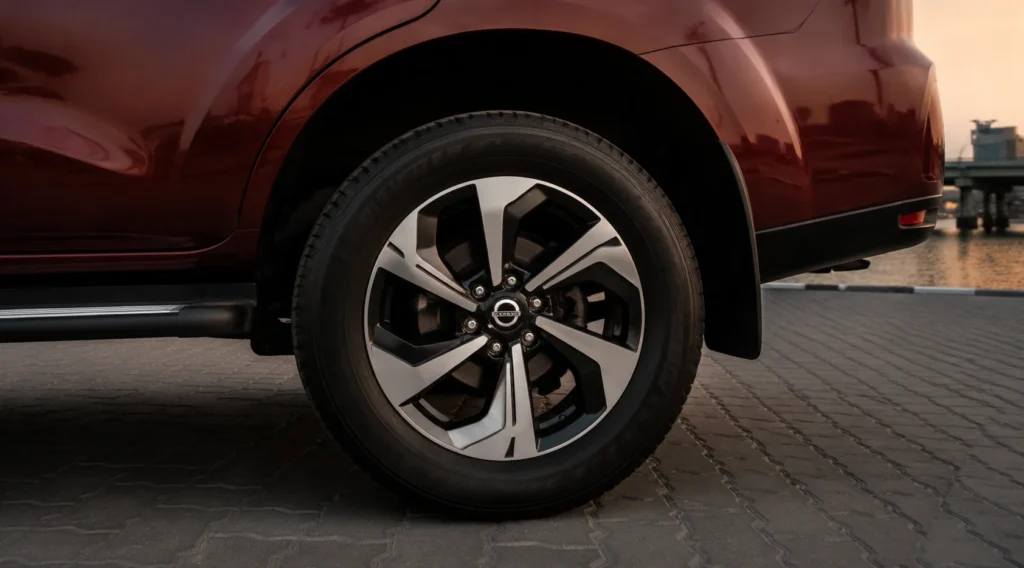
Nissan Xterra wheels ranged from 16-inch steel and alloy wheels on early and base models to 17-inch alloys on later Pro-4X trims, with 265/75R16 or 265/70R17 all-terrain rubber from the factory. The wheel wells swallow 33-inch tires with a small lift, the single most common owner modification, followed closely by rooftop tents and rock sliders. Aftermarket support remains excellent because the Xterra shares so much hardware with the Frontier, which never left production.
Nissan Xterra Specifications (2005–2015 Second Generation)
| Specification | Detail |
| Engine | 4.0L VQ40DE V6 |
| Power | 261–265 hp |
| Torque | 281–284 lb-ft |
| Transmissions | 6-speed manual / 5-speed automatic |
| Drivetrain | RWD or part-time 4WD with low range |
| 0–60 mph | ~7.0–7.5 seconds |
| Top Speed | ~112 mph (180 km/h, limited) |
| Ground Clearance | Up to 9.5 inches |
| Towing Capacity | 5,000 lbs |
| Cargo Space | 65.7 cu ft (seats folded) |
| Fuel Economy | ~15/20 mpg city/highway (4×4 automatic) |
Nissan Xterra Price: What It Cost Then, What It Costs Now
When it launched, the 2000 Nissan Xterra started at around $17,349, which was the whole point. By the last 2015 model year, the range was about $23,660 for a base X to about $31,000 for a loaded Pro-4X.
The used Nissan Xterra market in 2026 looks like this, and it tells you everything about the truck’s reputation:
- 2000–2004 (first gen): around $3,500-$8,000 (AED 12,800–29,400) depending on condition. Supercharged SE models in clean shape are at a premium.
- 2005–2010: around $6,000-$12,000 (AED 22,000-44,000). Check the radiator/transmission history before anything else.
- 2011–2015: around $10,000–$19,000 (AED 36,700–69,800), with pristine low-mileage 2015 Pro-4X examples sometimes going to $22,000 (AED 80,700). That is a remarkable residual value for a truck that cost $31,000 new eleven years ago.
If you are looking at Nissan Xterra for sale listings, the golden rule is condition over year. A rust-free, well-serviced 2008 beats a neglected 2014 every time. Frame rust, transmission fluid color, and service records matter more than the odometer on these trucks.
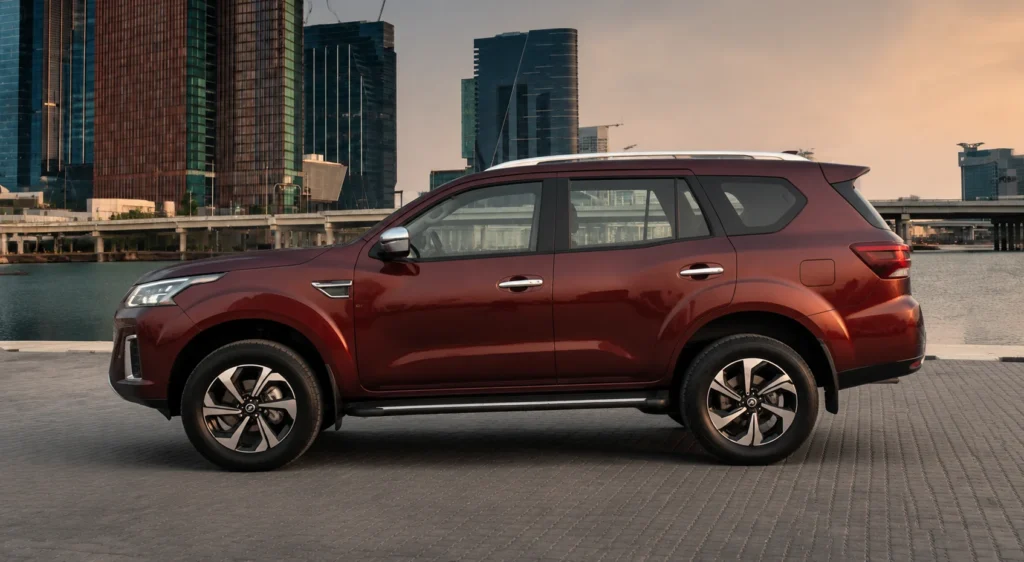
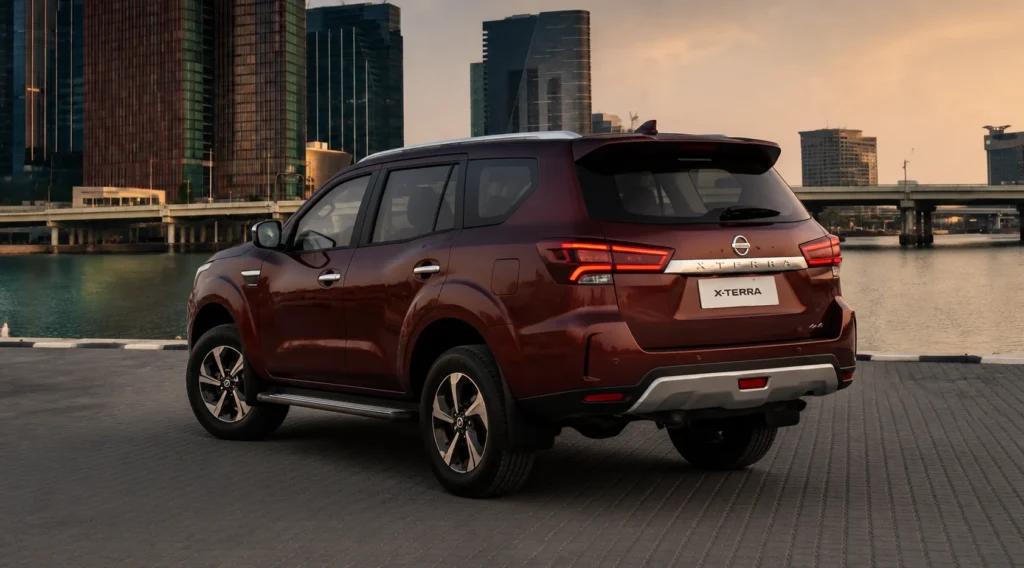
A word for Gulf readers: the Middle East never fully lost the name. Nissan has sold the Xterra (with a hyphen) in the GCC (a seven-seat body-on-frame SUV from the Navara pickup) since 2021 with a 2.5-liter 4-cylinder. In the UAE the 2025-2026 Nissan X-Terra ranges from AED 97,000 to AED 140,000 (around $26,400 to $38,100) depending on trim. It’s a different, more family-oriented machine than the American one, but it kept the badge warm, and we know that name is still around.
The Comeback: 2027 and 2028 Nissan Xterra and the V6 Hybrid
Now the exciting part. Nissan announced in April 2026 that the Xterra is returning after years of new Nissan Xterra renderings, teasers, and rumors. Here is what has been established so far.
It will be a real body-on-frame SUV. Nissan announced the new Xterra as the lead model of a family of up to five U.S.-built vehicles on an all-new ladder frame platform, likely built at the Canton, Mississippi plant alongside the Frontier. No unibody crossover compromise this time. It is aimed squarely at the Toyota 4Runner, Ford Bronco, and Jeep Wrangler.
Nissan Xterra V6 hybrid confirmed. The new truck will come with both standard V6 and V6 hybrid powertrains. Nissan says that the hybrid system is designed for frame-based vehicles and customers who desire real capability and long-range confidence (which means torque and towing are more important than the fuel economy stats). There are reports of a two-speed transfer case with low range and easy factory-supported modification and possibly even removable doors (although we are not sure how that will work).
Price under $40,000. Nissan Americas boss Christian Meunier has publicly committed to a starting price below $40,000 (about AED 147,000), which is below the Bronco and in line with the Wrangler. He even revived the old slogan, promising an Xterra with “everything you need, nothing you don’t.” For context, a base Ford Bronco currently opens above $40,000, so Nissan is deliberately positioning the newcomer as the value play in the segment, just as it did in 2000.
Timing. Nissan is targeting a late 2028 launch, which means the production 2028 Nissan Xterra (or possibly a 2029 model-year vehicle) should be revealed sometime in 2027. So if you have seen “Nissan Xterra 2028 release” chatter online, that is the schedule behind it. The teasers so far show a tall, upright silhouette; a full-width amber light bar; a NISSAN wordmark stamped across the nose; big ground clearance; and a tailgate-mounted spare wheel. Independent renderings based on those teasers look properly rugged, all black pillars, chunky tires, and skid plates.
My take as someone who has driven every generation of this truck: the hybrid angle is the smart differentiator. The 4Runner and Bronco rely on turbocharged four-cylinders now, and a torque-rich V6 hybrid at a lower price could be just the sort of contrarian move that made the original Xterra a hit. The risk is timing. Late 2028 is a long way off and the retro-rugged segment will be crowded by then. Nissan has to nail the execution, not just the nostalgia.
Nissan Xterra Reviews: What Owners and Experts Say
Two decades of Nissan Xterra reviews tell a rather consistent story. Professional testers in the period praised the value, drivetrain, and genuine off-road hardware in place but scored it low on fuel economy, road noise, and a stiff ride. Consumer reviews are even warmer: the average owners satisfaction score on major review sites has always been high, and the most common title was some sort of “still running at 250,000 miles.”
Reliability is the foundation of the reputation. The VQ40 V6 and manual gearbox are bulletproof. The known trouble spots are the early automatic transmission radiator problem mentioned above, timing chain tensioner noise on some 2005-2010 engines, and fuel level sender failures. All are well documented, cheap to fix, and easy to check on a pre-purchase inspection. As a used buy, an Xterra with the radiator fix done is one of the safest 4×4 purchases in the entire secondhand market.
Verdict: A Truck Worth Waiting For, and Worth Buying Today
The Nissan Xterra succeeded because it refused to pretend. It was a truck for people who drive trucks, priced for people who spend their money on kayaks instead of leather seats. That honesty is why a discontinued SUV still holds its value, why the enthusiast community never dissolved, and why Nissan is betting a whole new platform family on the name.
If you need one now, a 2011-2015 Pro-4X is the classic one with a well-sorted 2009-2012 model as a value alternative. If you can wait, the 2028 Nissan Xterra will provide the same recipe with a hybrid twist and a sub-$40,000 (AED 147,000) entry price. And, in the end, the badge means what it always meant: Everything you need, nothing you don’t.
FAQs
Q. How much could a Nissan Xterra cost in 2026?
A. Used American-market Xterras are around $3,500 (AED 12,800) for rough first-generation examples or $19,000–$22,000 (AED 69,800–80,700) for good 2015 Pro-4X models. For UAE customers, the current GCC-market Nissan X-Terra is sold new at about AED 97,000–140,000 ($26,400–38,100). The new 2028 Nissan Xterra is expected to start at about AED 147,000.
Q. When will the new Nissan Xterra arrive?
A. Nissan has announced the return of the Xterra in April 2026, with a likely launch date in late 2028 – likely in 2029 model year. We expect the production reveal to happen in 2027. The Xterra will be made in the United States with a new body-on-frame platform in line with all Nissan and Infiniti models.
Q. Will the new Nissan Xterra be a hybrid?
A. Yes, partly. Nissan has confirmed two powertrains: a regular V6 vehicle and a V6 hybrid for frame-based vehicles, and it has been designed for torque, towing, and long range. There is no plan to launch the Xterra with an electric powertrain at launch.
Q. Is the Nissan Xterra reliable?
A. Very, with an asterisk. The 4.0-liter V6 generally gets 200,000–300,000 miles. The only weak point is the 2005–2010 automatic models, in which the failure of the radiator can contaminate the transmission fluid. Take an example with a documented radiator bypass or external transmission cooler, and the Xterra is one of the most reliable used 4x4s money can buy.
Q. What is the Nissan Xterra’s top speed and towing capacity?
A. The second-generation Xterra is electronically limited to about 112 mph (180 km/h) and goes from zero to 60 mph in about 7.0-7.5 seconds. With proper equipment, it can pull up to 5,000 pounds, enough for boats, campers, and toy haulers, exactly the kind of work that most Xterras have been doing for the past twenty years.