

McLaren just did the one thing nobody expected from Working. It built a supercar you shift yourself. The McLaren 6GT broke cover at 2026 Monterey Car Week as a production-ready concept, and it carries the first true manual gearbox the brand has fitted since the legendary F1 rolled out in 1992. That gap runs 34 years deep.
This is not just another wind tunnel missile chasing a lap record. The McLaren 6GT takes Bruce McLaren’s original road-car dream, the M6GT from the late 1960s, and rebuilds it with six decades of engineering at the helm. And for the international audience in the US and around the Gulf, it is a new, ultra-exclusive version of McLaren, and it’s on top of the daily Artura and 750S.
Here is the full picture: what powers it, what it looks like inside and out, when you can buy one, and what it might cost in US dollars and UAE dirhams.
A Manual McLaren in 2026? Believe It
Today’s modern McLarens have a familiar recipe. Carbon tub, twin-turbo V8, dual-clutch gearbox, design inspired by a fighter jet. The results are beautiful, but they get lumped into one another after a while.
The McLaren 6GT demolishes that script. McLaren describes the driving experience as tactile, analogue, and deeply mechanical. You get hydraulic steering instead of electric assistance. You get machined aluminum switches that you can feel under your fingertips. And most of all, you have a real gear lever poking up from a thin center console, with the linkage left on show so you can see how it works.
A manual McLaren in 2026 sounds almost impossible, but the idea is exciting car enthusiasts. Combining McLaren’s signature performance with a traditional manual gearbox could deliver a more engaging, emotional driving experience, giving drivers greater control and making every acceleration, corner, and gear change feel truly special. It would also preserve the raw connection between driver and machine while standing apart from today’s increasingly automated supercars.
Company boss Nick Collins described the car as a culmination of what the founder pioneered and modernized with modern innovation built into every aspect of it. In a market that is moving toward electric acceleration and software-based performance, McLaren went in the opposite direction. Each shift, every throttle input, and every steering correction is meant to feel physical.
That alone makes the McLaren 6GT one of the most talked-about reveals of the year.
The McLaren 6GT: A Dream That Died in 1970
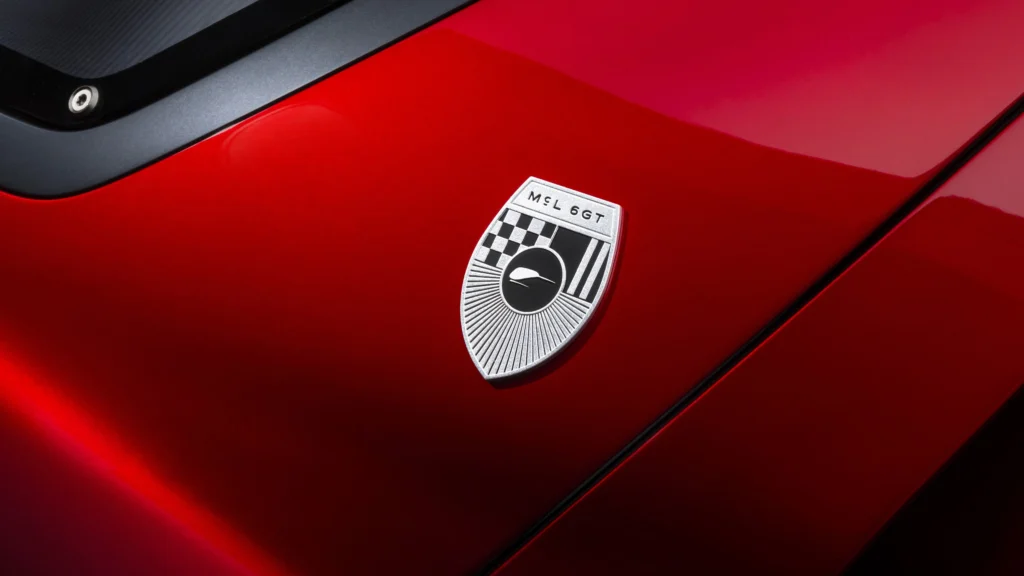
To understand the new car, go back to the late 1960s. Bruce McLaren wanted to create a road-going sports coupe based on his M6A Can-Am racer. He called it the M6GT. The aim was to homologate the car for endurance racing and develop a road car alongside it which would position McLaren as a road-car maker in the mold of Ferrari.
Only a small number were built through McLaren partner Trojan Cars. Bruce drove it himself as a daily car. But a testing accident took his life in 1970 and the project was doomed before it even got to reality. The M6GT became the greatest “what if” of McLaren history.
Fifty-six years later, the McLaren 6GT answers that question. The name links two worlds— McLaren’s racing bloodline and the foundation of its road-car heritage. One quick note for conversation at cars-and-coffee, you pronounce “McL” by saying each letter, not by rhyming it with “pickle.”
Design: Old Soul, Sharp New Skin
Park the McLaren 6GT next to any current McLaren, and you would struggle to believe they share a badge. Where the 750S looks aggressive and aerodynamic, this car looks sculpted and calm.
Front and Profile
The nose is low and drops sharply, similar to the M6A Can-Am car. Vertical headlights flank a modest central intake, with two small lozenge-shaped inlets lending a retro feel. You will notice a cab-forward cabin, a long tail, and a wraparound windscreen that flows into a canopy-style transparent engine cover in the flanks. McLaren gave up the outlandish scoops of past models for subtle, cleaner intakes.
The Kammback Rear
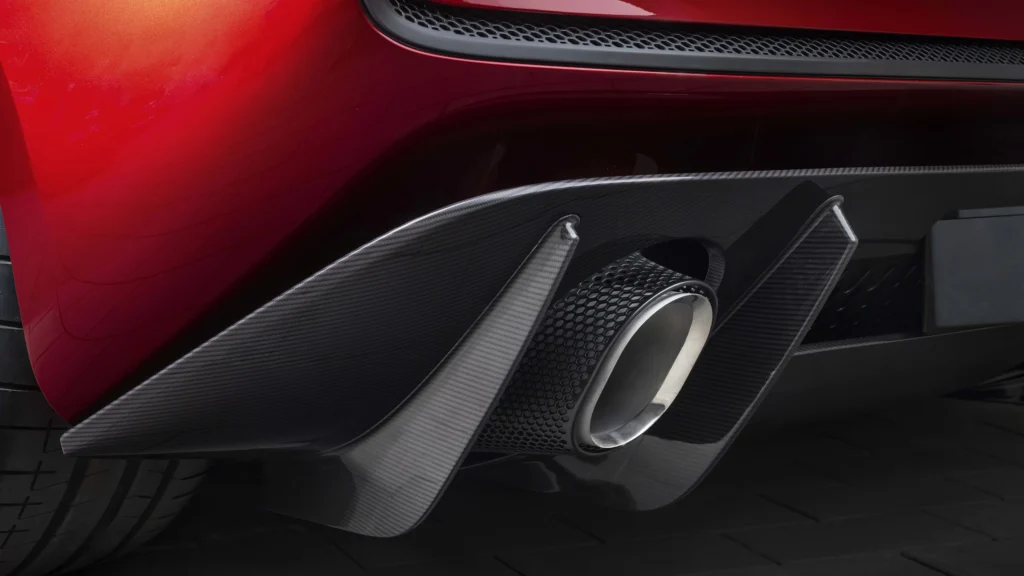
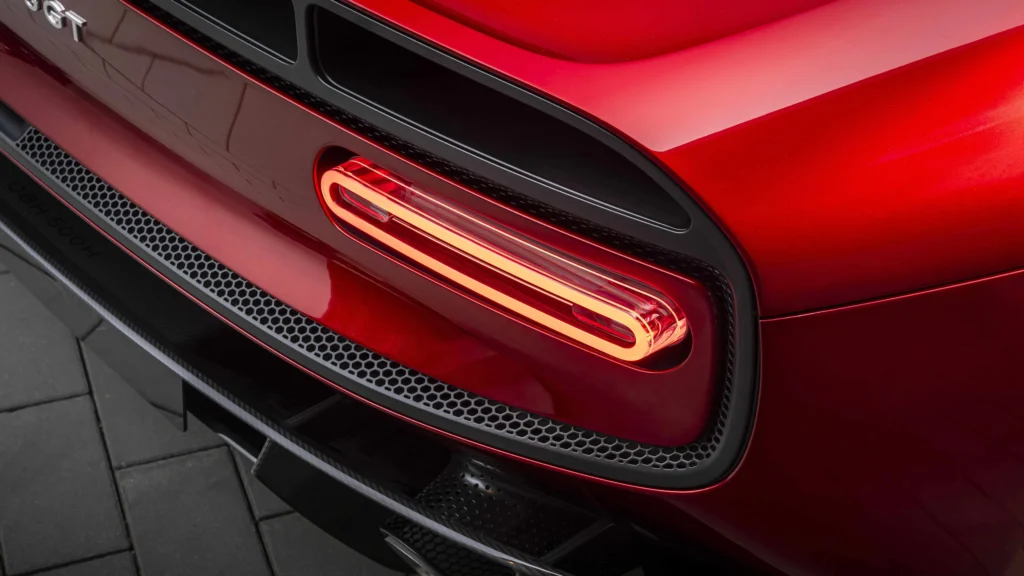
The back end tells the best heritage story. A Kammback design chops the tail off cleanly, a low-drag trick straight out of 1960s prototype racing. Behind the honeycomb mesh lies an arcing spoiler. Slim taillights repeat the lozenge motif, part of what McLaren calls its Racing Loop design element, and vertical tailpipes tuck into a large diffuser.
Heritage Details
Look closer and the Easter eggs accumulate. The red high-metallic paint comes from Bruce McLaren’s own M6GT. A “Speedy Kiwi” emblem, a nod to Bruce’s New Zealand roots, is etched into the fuel filler cap. The roof flows straight into the rear deck, and the greenhouse looks like it’s embedded into the bodywork, not perched on top of it. Every surface reads as one uninterrupted volume.
Step Inside: Where the Analogue Magic Lives
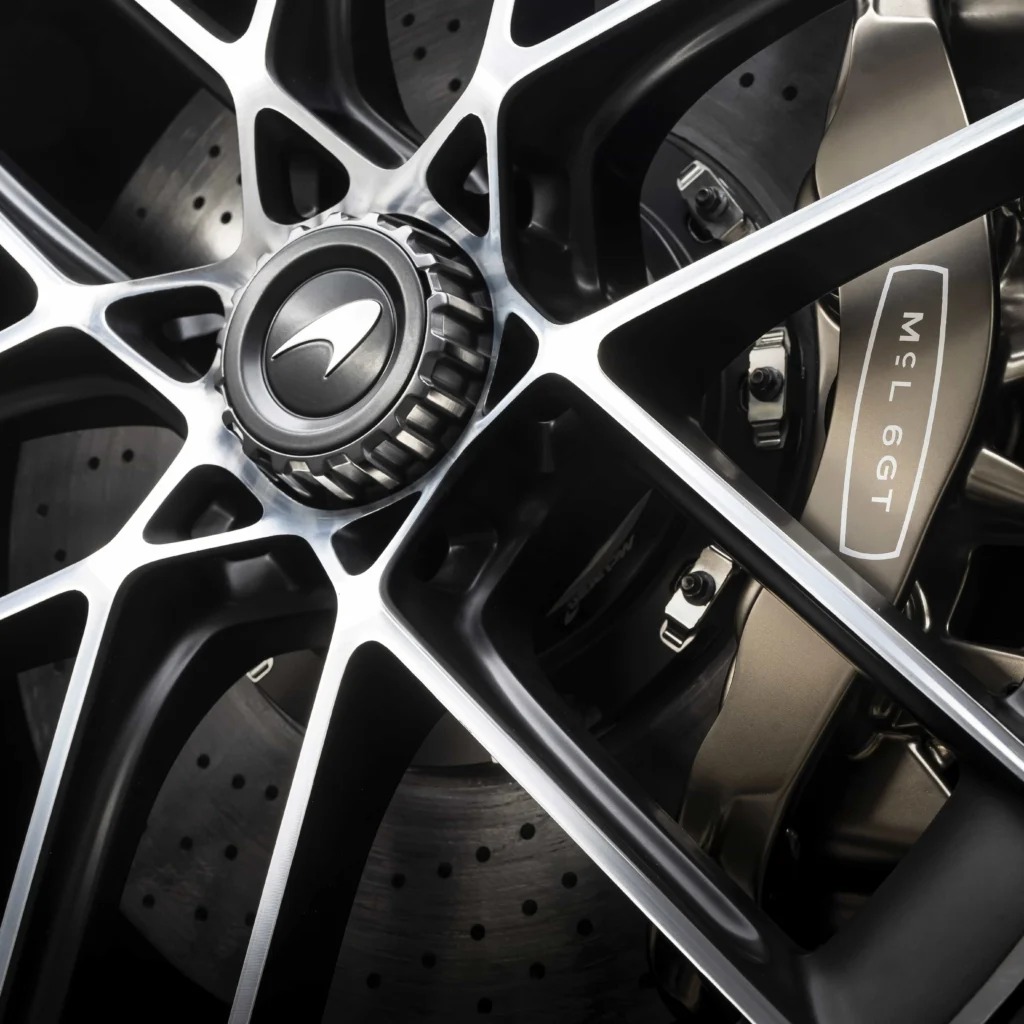
The cabin is where McLaren’s back-to-basics philosophy hits hardest. Forget acres of touchscreens. This interior feels engineered rather than decorated.
The exposed gloss carbon fiber runs through the space to reflect the M6GT and McLaren’s motorsport heritage. You’ll see machined surfaces, exposed Allen bolts, and knurled aluminum controls that encourage a firm twist. McLaren wrapped the seats and panels in box-quilted Alcantara for a touch of craft against all that hard-edged metal.
The star of the show is that gear lever. McLaren designed the shifter for maximum feel and throw; the linkage is visible through the center console so you can see the mechanics in action. Inside, the interior shots reveal a Papaya Orange clutch pedal, a cheeky signature color, and a nice promise: yes, there really is a third pedal.
Digital instruments do appear, since no modern car ships without them, but McLaren reworked the graphics to mimic the analog dials of the original car. The idea holds together from bumper to bumper.
Engine, Gearbox, and Performance
This is where patience comes in. McLaren unveiled the McLaren 6GT as a concept and held back the full spec sheet, so hard numbers on power, torque, and acceleration are not out yet. But the brand confirmed the most important bits.
Powertrain Basics
- Engine: V8 internal combustion, mounted amidships.
- Transmission: Authentic manual gearbox, widely expected to be a six-speed based on the shift pattern shown.
- Drive: Rear-wheel drive.
- Chassis: Latest super-lightweight carbon-fiber monocoque.
- Body: Carbon-fiber panels.
- Steering: Hydraulic assistance.
McLaren is expected to share the McLaren 6GT’s carbon tub and twin-turbo V8 with the range-topping W1 hybrid, though McLaren has stayed quiet on exact outputs. What the company keeps stressing is character over headline stats. In a jab clearly aimed at rivals, McLaren calls the transmission “authentic,” pushing back at automated boxes dressed up as manuals.
What This Means for the Drive
A hydraulically assisted rack, a naturally weighted clutch, and a mechanical shifter add up to a car built around involvement. Expect the McLaren 6GT to trade a few tenths in a straight-line drag race for a driving experience that asks more of you and gives more back. For buyers who grew up worshipping the F1, that trade sounds close to perfect.
Hydraulic steering deserves a special mention. Most rivals moved to electric power steering years ago to save fuel and package driver aids, yet purists still argue that hydraulic setups feed back more texture from the road surface. By choosing the older approach, McLaren tips its hand: the McLaren 6GT chases feel first. Add a rear-drive layout with no front motors muddying the steering, and you get a machine designed to talk to its driver at every corner.
Quick take: McLaren is selling connection, not a spec-sheet knockout. If you want the fastest thing in the showroom, look at the W1. If you want to actually row your own gears in a McLaren, this is the only game in town.
McLaren 6GT Price: USD and AED
Straight talk first. McLaren has not confirmed official pricing. The figures below are estimates based on where this car is in the range and how McLaren priced halo models such as the 2013 P1 and 2020 Speedtail.
The McLaren 6GT is a million-dollar-plus limited edition, they say. Based on that positioning, here is a realistic ballpark for both markets.
| Market | Estimated Price (Starting) | Notes |
| United States | $1.2 million to $2 million+ | Before taxes, options, and destination |
| UAE (Dirham) | AED 4.4 million to AED 7.3 million+ | Converted at roughly AED 3.67 per USD |
| Saudi Arabia | SAR 4.5 million to SAR 7.5 million+ | Excludes VAT and dealer fees |
The dirham peg to the dollar keeps AED conversions steady, so the UAE figure tracks the US figure closely once you apply the exchange rate. Gulf pricing usually ends up higher after local packaging, import duty, and specification differences are added.
Pricing disclaimer: These numbers are estimates only. McLaren has confirmed neither retail price nor delivery timing. Gulf buyers should verify final figures with authorized McLaren dealers in the UAE, Saudi Arabia, Qatar, Kuwait, Bahrain, and Oman, since regional packaging and taxes change the total meaningfully.
Release Date: When Can You Buy One?
McLaren confirmed the McLaren 6GT enters production in 2028. The car shown at Monterey is a running prototype, not a static mock-up, so engineering is well along.
The plans are for a very limited run, with around 500 units expected worldwide. The technical specs, final pricing, and the order process should be clear closer to launch, with more details coming through in 2027. If history is any guide, McLaren will give these cars to established collectors first, so Gulf and US buyers who are interested in one should start the conversation with their dealer early.
How the McLaren 6GT Fits the McLaren Family
The McLaren 6GT doesn’t replace anything. It opens a brand-new, very exclusive tier that goes above the main range (Artura, 750S) and the expanded lineup. Think of it as a spiritual successor to the F1’s driver-first mission rather than a rival to any current model.
Here is where it stands next to key McLaren reference points and one obvious outside rival.
| Model | Gearbox | Layout | Positioning |
| McLaren 6GT | Manual (expected 6-speed) | V8, RWD | New ultra-exclusive tier |
| McLaren F1 (1992) | 6-speed manual | V12, RWD | The original benchmark |
| McLaren W1 | Automated dual-clutch | V8 hybrid, RWD | Halo hypercar |
| McLaren 750S | Automated dual-clutch | V8, RWD | Core supercar |
The takeaway is simple. Given everything McLaren is producing right now, only the McLaren 6GT will let you change gears in the old-fashioned way. That exclusivity, and a production cap below 500, makes it a good collector piece from the moment deliveries start.
Who Is This Car For?
The McLaren 6GT targets a specific buyer. Not anyone seeking the quickest zero-to-sixty time and not someone who wants the biggest power figure to quote at dinner. This car is to be purchased by the driver who is used to the mechanical honesty of older supercars and has the means to own a piece of McLaren history.
In the US, that means the collector garage crowd, the track-day regular, and the F1 devotee who never got to buy the original. In the Gulf, where McLaren has a huge following and where limited editions disappear as fast as they come, the McLaren 6GT should attract serious interest from established collectors in Dubai, Abu Dhabi, Riyadh, and Doha.
Gulf ownership has practical questions to answer, too. Manual gearboxes have become increasingly rare in the region, and city traffic in places like Dubai and Riyadh can turn a clutch pedal into a workout. For a weekend car and collector piece that hardly matters. A McLaren 6GT will spend most of its life on open desert highways and private tracks, which is exactly the road where a manual shines. Heat management is also one of the issues buyers want to consider, but McLaren’s carbon construction and mid-engine cooling should be sufficient to deal with Gulf summers as well as any current model in the range.
The Verdict: A Love Letter to Driving
The McLaren 6GT stands out because it looks back in time while everyone else sprints forward. It swaps a small amount of outright speed for the kind of raw connection that made the F1 immortal. A manual gearbox, hydraulic steering, exposed carbon, and a shifter you might watch move all point to one single objective: putting the driver back at the center of a McLaren.
In 2026, McLaren 6GT buyers in the United States and the Gulf will have something unique in the McLaren 6GT, a genuine analogue supercar from a brand best known for digital precision. The price will be high and the production run will be relatively small, which only heightens the appeal to collectors.
As the power figures, performance, and pricing will not be confirmed yet, we will refer to these numbers as educated estimates, and McLaren will confirm the details when it gets closer to the 2028 launch date. But one thing is certain. When the McLaren 6GT finally hits the road, it will remind everybody why shifting your own gears never really got old.
The McLaren McLaren 6GT specifications, pricing, and availability are unconfirmed at the time of writing and based on McLaren’s official reveal plus industry estimates. Make sure to check all details, especially Gulf-market pricing, with authorized McLaren dealers before making any decision.
FAQs
Q. Could the McLaren 6GT be a real production car or a concept?
A. Both in stages. McLaren announced it at 2026 Monterey Car Week as a production-ready concept and confirmed the production version was going to come in 2028. The car shown is a running prototype and is much more than that.
Q. Does the McLaren 6GT really have a manual gearbox?
A. Yes. It is the first manual transmission of a McLaren since the F1 in 1992. McLaren insists it is true to a real manual transmission that is an authentic manual sending power to the rear wheels and is expected to be a six-speed, not an automated system pretending to be one.
Q. How much will the McLaren 6GT cost in the US and Gulf?
A. McLaren has not confirmed pricing. Based on its position as a limited halo model, estimates start around $1.2 million to $2 million+ in the US, which converts to roughly AED 4.4 million to AED 7.3 million+ in the UAE. Gulf buyers should confirm final figures with local authorized dealers since taxes and regional packaging change the total.
Q. When will the McLaren 6GT be available to buyers in the UAE and Saudi Arabia?
A. Production will begin in 2028. McLaren typically targets existing collectors for limited runs, and with around 500 units planned worldwide, demand in the Gulf will likely exceed supply. Interested buyers in the UAE, Saudi Arabia, Qatar, Kuwait, Bahrain and Oman should register their interest with their dealer as early as possible.
Q. What is the engine of the McLaren 6GT?
A. A V8 internal combustion engine combined with a lightweight carbon-fiber monocoque. McLaren hasn’t released power or torque numbers yet, but many expect the car to share its twin-turbo V8 with the W1. Full performance details will be given out close to the launch in 2028.