
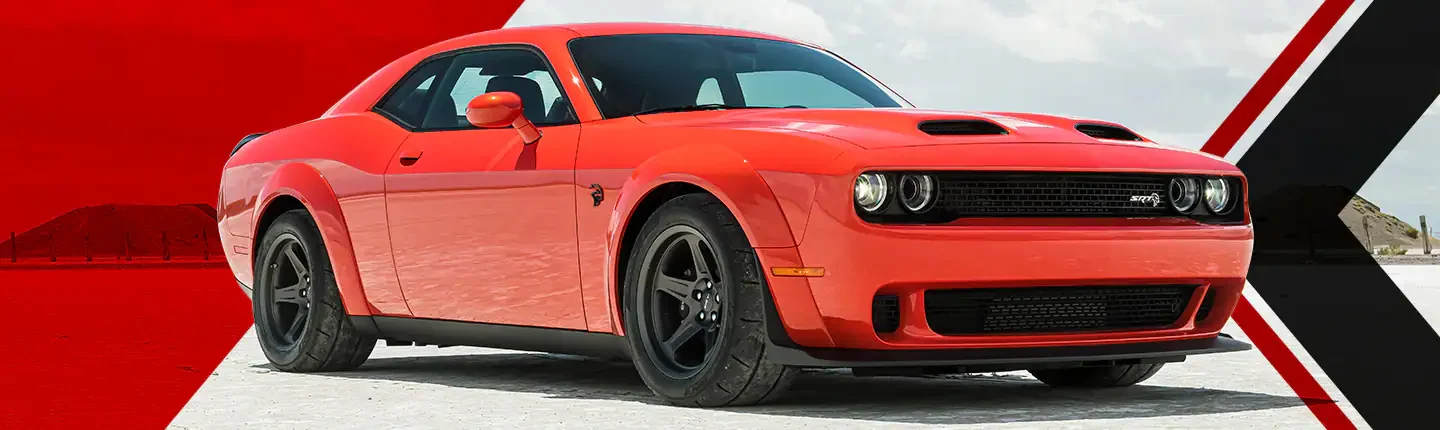
The Dodge Challenger Hellcat earned its reputation in a loud way. Twist the key and a supercharged 6.2-liter HEMI V8 revs to life, and there’s a whine running behind the roar, 700-plus horsepower sitting under your right foot waiting for an excuse. For a decade this car did something few modern machines could do: it made brutal, old-school American power feel accessible, usable, and gloriously unhinged. If you have ever searched “dodge challenger hellcat” hoping to own one, this guide goes through everything: the price of these cars in US dollars and UAE dirhams and the one detail most listings gloss over.
That detail comes first because it changes how you shop.
Is There a 2026 Dodge Challenger Hellcat?
No. Dodge built the last Challenger Hellcat as a 2023 model, and the last cars rolled off the Brampton, Ontario, line at the end of December 2023. There is no 2026 Challenger, and no factory is producing new Hellcat-powered Challengers today. Anything advertised as a “2026 Dodge Challenger Hellcat” is either leftover 2023 dealer stock, a used car, or a listing using the current year for visibility.
And this matters to buyers in America and the Gulf. When you see “2026” attached to a Challenger Hellcat, take it as a shopping year, not a build year. The car itself is a 2015 to 2023 machine.
So what happened? Stellantis retired the supercharged HEMI to satisfy emissions regulations and then put the muscle line under the name of the Charger rather than the Challenger. The 2026 Dodge Charger now runs a twin-turbo 3.0-liter inline-six branded SIXPACK in a 420-horsepower R/T and a 550-horsepower Scat Pack, alongside an all-electric Charger Daytona. The planned 900-plus-horsepower “Banshee” EV, once designed as the spiritual heir to the Hellcat, was canceled before it came into production.
One Hellcat V8 does survive into 2026: the Dodge Durango SRT Hellcat, a 710-horsepower three-row SUV. If you want a brand-new supercharged HEMI from a dealer, that Durango is the only way to get one. The Challenger version is finished.
Short answer for shoppers: Every Challenger Hellcat, you can buy a used or leftover 2023-or-earlier car in 2026. Unless the VIN says otherwise, treat the model year in any ad as the calendar shopping year.
A Short History of the Dodge Hellcat Challenger
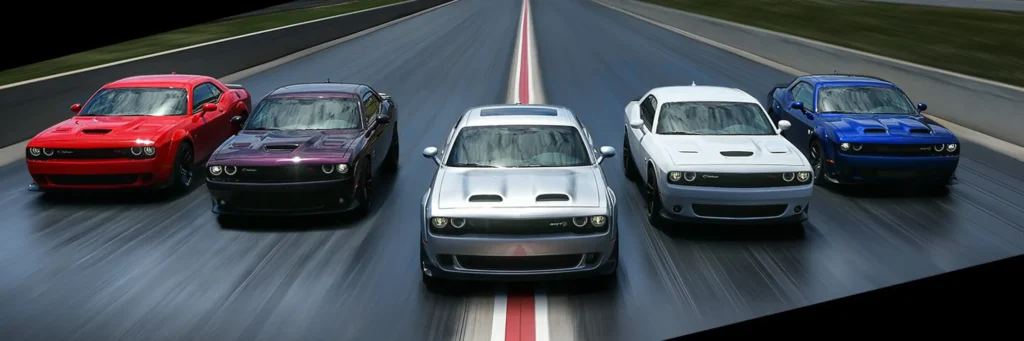
The Dodge Challenger Hellcat name came in 2015 and changed the rules overnight. Dodge got the retro Challenger, a car many had dismissed as a heavy cruiser, and attached a supercharger to its 6.2-liter HEMI to produce 707 horsepower. No mainstream muscle car had ever offered that number to a walk-in buyer. The engineering team worked on this project under the codename Operation Tomcat, and the Hellcat badge is based on the Grumman F6F fighter of the Second World War.
What followed was eight years of one-upmanship. Dodge added the Demon in 2018 with 840 horsepower and a factory drag-radial setup. The Redeye arrived in 2019 and turned the Demon’s engine into a car you could buy off the lot. The Widebody package expanded the stance even more, and, more importantly, it added the grip these cars badly needed. Special editions kept the run alive: the Super Stock, the Jailbreak custom program, and the limited colors that are currently drawing collector interest.
Then the clock ran out. Stellantis confirmed in 2022 that 2023 would be the last year for the supercharged HEMI Challenger and Charger, citing emissions regulations and the compliance costs of building a thirsty V8. Dodge sent the car off with a seven-model “Last Call” series capped by the 1,025-horsepower Demon 170. The nameplate you searched for is now a closed chapter, which is a large part of why interest keeps climbing.
What Makes the Dodge Challenger Hellcat a Beast?
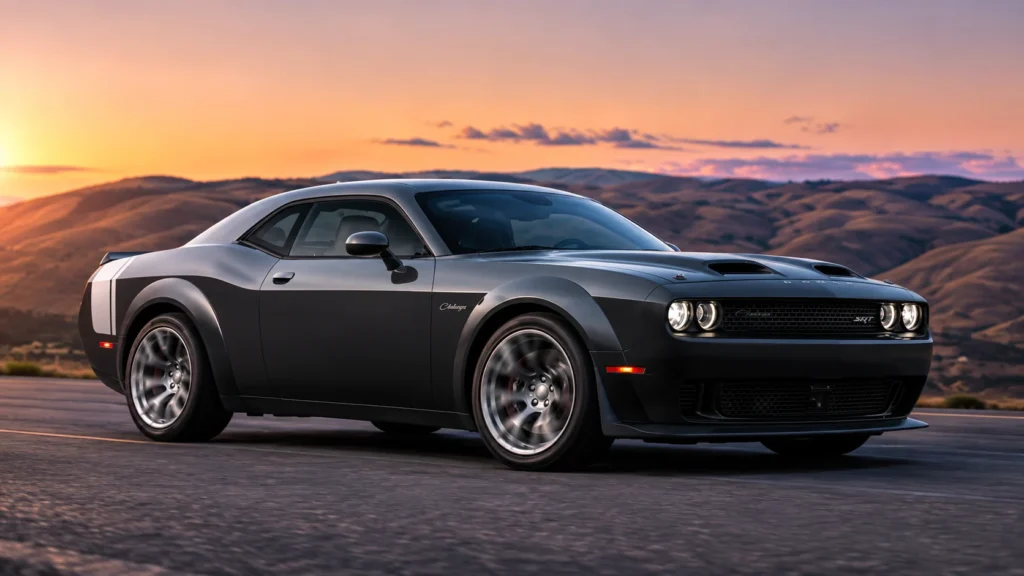
The heart of every Dodge Challenger Hellcat is the supercharged 6.2-liter HEMI V8. Dodge then put a 2.4-liter twin-screw supercharger on top of that, pumping air into the engine and turning a big pushrod V8 into a real tire-shredder. The base SRT Hellcat produced 717 horsepower and 656 lb-ft of torque. That number alone would have been headline news a generation ago. Dodge treated it as the entry point.
Power hits the rear wheels through an eight-speed automatic; later cars also had a six-speed manual on the standard Hellcat. Zero to 100 km/h takes roughly 3.6 seconds in a well-hooked-up car, with quarter-mile times dipping into the 11s on the right rubber. Top speed is around 320 km/h, depending on trim.
The character is what people remember. The supercharger whine cuts through the exhaust like a jet spooling up. The throttle is aggressive. Even the two-key system, a black key that limits output and a red key that unlocks everything, had the feeling that the car was daring you to do something.
Here is the shorthand every Autocram reader asks for:
| Spec | Base SRT Hellcat | Redeye Widebody |
| Engine | 6.2L Supercharged HEMI V8 | 6.2L Supercharged HEMI V8 |
| Horsepower | 717 hp | 797 hp (807 hp Jailbreak) |
| Torque | 656 lb-ft | 707 lb-ft |
| 0-100 km/h | ~3.6 sec | ~3.4 sec |
| Top speed | ~326 km/h | ~326 km/h |
| Transmission | 8-speed auto or 6-speed manual | 8-speed auto |
Dodge Challenger SRT Hellcat Trims Explained
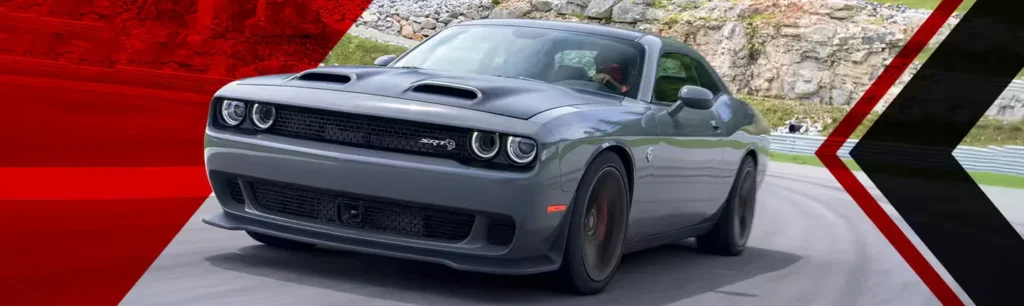
The Dodge Challenger Hellcat family expanded into a large lineup over the course of its run. Knowing the names enables you to not overpay for a badge or miss the trim you want.
SRT Hellcat. The 717-horsepower starting point. Narrow-body as standard, with a widebody option later that added flared arches and wider tires. This is the most common Hellcat on the used market and the value pick.
SRT Hellcat Redeye. Borrowed the Demon’s engine internals and pushed output to 797 horsepower. The “Redeye” name comes from the glowing badge. Faster, angrier, and pricier than the standard car.
Redeye Widebody. The Redeye engine plus the wide fenders, 305-section rear tires, and adaptive suspension. The one most people picture when they say “Hellcat Widebody.” It handles far better than the numbers suggest.
Jailbreak. Not a separate engine, but an ordering package that unlocked 807 horsepower on Redeye cars plus near-limitless color and trim mixing. Jailbreak cars command a premium because buyers built them to taste.
Super Stock. A drag-focused Redeye Widebody with 807 horsepower, drag tires, and launch hardware. Effectively the street-legal drag racer of the range.
| Trim | Horsepower | Body | Best For |
| SRT Hellcat | 717 hp | Narrow or Widebody | Value and daily thrills |
| Hellcat Redeye | 797 hp | Narrow | More power, cleaner look |
| Redeye Widebody | 797 hp | Widebody | Grip and presence |
| Jailbreak | 807 hp | Either | Custom builds |
| Super Stock | 807 hp | Widebody | Drag strip |
The Demon and Demon 170: The Wildest Hellcats of All
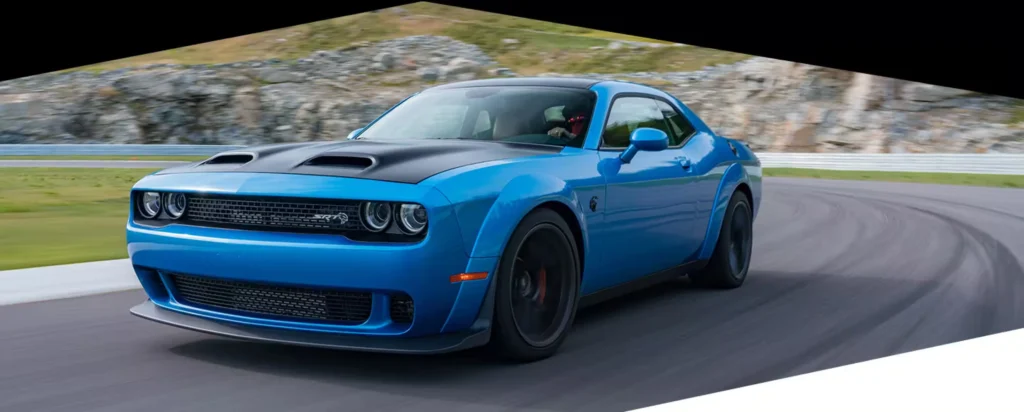
Search “demon dodge challenger hellcat,” and you land on the extreme end of the family tree. The Demon and its successors share the Dodge Challenger Hellcat supercharged bones but take everything further.
The 2018 SRT Demon started it, making 840 horsepower on race fuel, running drag radials from the factory, and pulling front wheels off the ground at launch. Dodge Challenger Hellcat built it for one job and stripped weight to do it.
Then came the finale. The 2023 Dodge Challenger SRT Demon 170, the last of the Last Call cars, produces 1,025 horsepower and 945 lb-ft of torque on E85 ethanol fuel. Dodge Challenger Hellcat claims an eight-second quarter mile and a 0-100 km/h sprint in under two seconds with the right prep. It used staggered drag tires, a stripped interior, and a single seat as standard. This was Dodge closing the HEMI era by cranking the dial past where anyone expected a factory to go.
The Demon 170 sold at a US MSRP of $96,666, with an out-the-door price near $100,361 once the destination and the gas-guzzler tax were added. Today it’s a fast-appreciating collectible, which brings us to money.
Dodge Challenger Hellcat Price: What You Pay in 2026
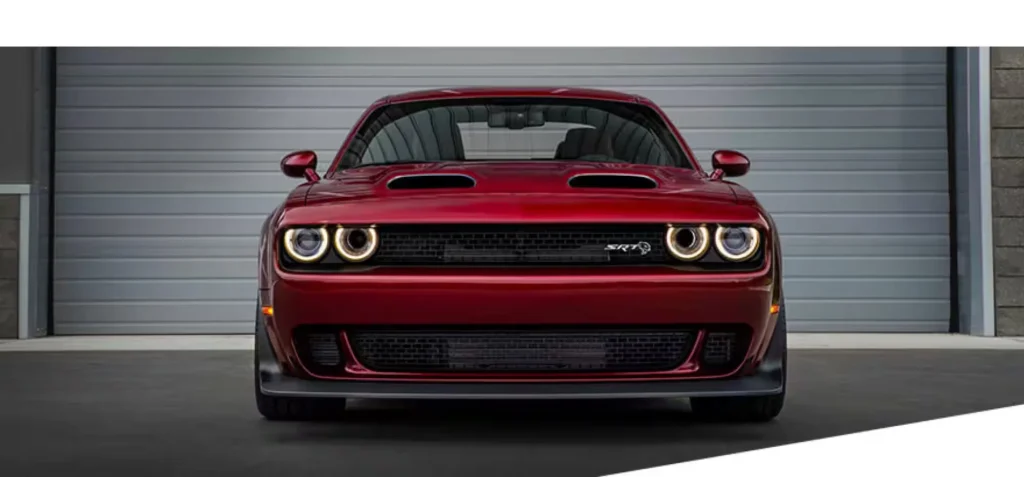
Since these cars are used or leftover stock, pricing is divided into two questions: what they cost new and what they command now. The dirham figures below are indicative conversions from US dollars at about 3.67 AED to the dollar, provided so Gulf readers have a reference point. Actual GCC market pricing is covered in the next section.
Original US MSRP when new (2023):
| Trim | US MSRP (new) | Indicative AED |
| SRT Hellcat | ~$70,000 | ~AED 257,000 |
| Hellcat Redeye | ~$83,000 | ~AED 305,000 |
| Redeye Widebody | ~$86,000 | ~AED 316,000 |
| Demon 170 | $96,666 | ~AED 355,000 |
Used pricing in 2026 tells a more interesting story. Standard Dodge Challenger Hellcat have gone down to reach, and the rare cars have gone the other direction.
| Trim | Typical US Used Price | Indicative AED |
| SRT Hellcat | $55,000 to $75,000 | ~AED 202,000 to 275,000 |
| Hellcat Redeye | Around $66,000 | ~AED 242,000 |
| Redeye Widebody / Jailbreak | $80,000 to $110,000+ | ~AED 294,000 to 404,000+ |
| Demon 170 | $110,000 to $250,000+ | ~AED 404,000 to 918,000+ |
A base Dodge Challenger Hellcat now costs less than it did new, which makes it one of the best horsepower-per-dollar buys on the used market. Kelley Blue Book estimates a 2023 Redeye will fetch around $66,200, down almost 18 percent over the past three years. The Demon 170 took a very different route, with clean, low-mileage examples selling well above their sticker as collectors lock them away.
The bottom line on value: If you’re looking for the Dodge Challenger Hellcat experience for the least money, a standard 717-hp car is the one to buy. And the Demon 170 and low-production special editions like the Black Ghost are the ones to buy and grow value. The Redeye Widebody is in the middle and is the enthusiast sweet spot.
Dodge Challenger Hellcat Widebody For Sale: What to Check
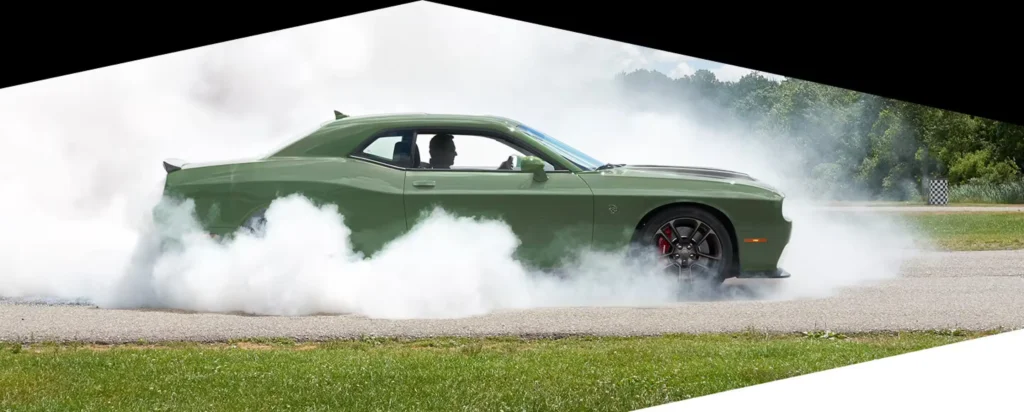
Search “Dodge Challenger Hellcat for sale” today and you get a mix of clean garage queens and hard-used cars wearing the same badge. The Widebody is the trim most shoppers seek, so listings for a “dodge Challenger Hellcat Widebody for sale” are a lot more up-to-date and often in very different states. A supercharged muscle car lives a hard life if the previous owner used all of it. Take care of yourself before you sign.
Run this checklist on any Hellcat you are serious about:
- Pull the CARFAX or GCC service history. Look for accident records, odometer gaps, and whether services were carried out on time. Supercharged HEMIs need their maintenance.
- Ask what key it came with and how it was driven. A car-babied on the black key ages very differently from a launch control abuser.
- Change the tune. Aftermarket tunes and pulley swaps can push power well past stock and stress the drivetrain. A modified car is not always bad, but it changes the value and the risk.
- Check the tires and brakes. Wide, sticky, staggered rubber is expensive to replace, and worn Brembos add up.
- Verify the trim against the VIN. Badges are swapped. Confirm you are paying Redeye money for a real Redeye, not a re-badged base car.
A pre-purchase inspection by a knowledgeable car buyer can be done for relatively little with a six-figure car and spot the issues that the seller wants you to see.
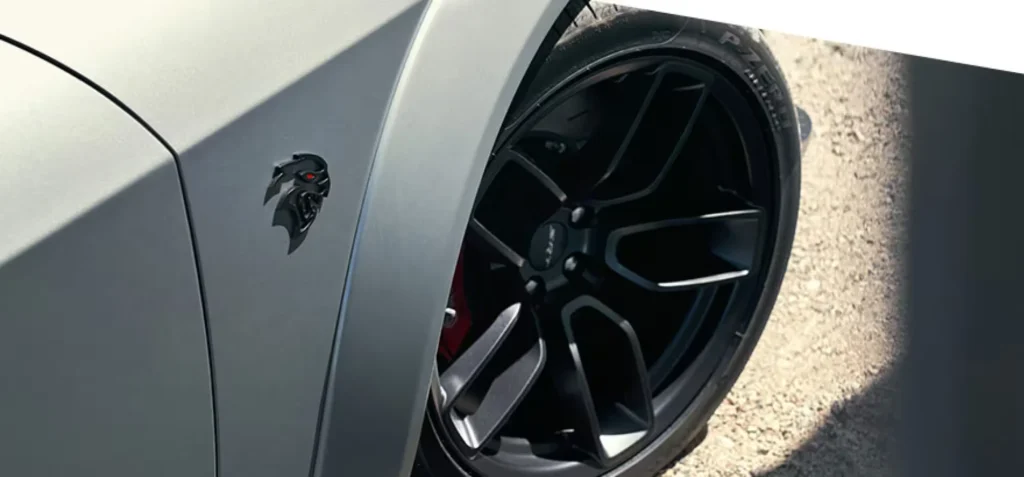
Owning a Challenger Hellcat in the Gulf
The Dodge Challenger Hellcat has a passionate following in the UAE, Saudi Arabia, and the wider GCC, where big-displacement American muscle matches the roads and the culture. Dodge sold GCC-spec Hellcats through official channels during the production run, so genuine Gulf cars are there alongside US imports. That distinction matters when you buy.
GCC-spec vs. US import. GCC cars are built for the heat, come with regional warranty history, and are easier to service and resell locally. US imports can be cheaper up front but may have gaps in warranty and parts support, and their AC and cooling systems were not always calibrated for a Dubai summer. For a car that already runs hot under boost, that is worth weighing.
Heat and the supercharger. A supercharged engine can produce serious heat, and 45-degree ambient temperatures won’t do it any favors. On the hottest days, you should expect the car to pull timing and give up a little power and budget for cooling system care. Owners who track their cars in summer often add auxiliary coolers.
Pricing in the region. New or leftover dealer stock Dodge Challenger Hellcat in the UAE have been advertised from around AED 385,000, well above the old R/T’s roughly AED 185,000 starting point. Used examples vary a lot: older non-Hellcat V6 and V8 Challengers trade from about AED 85,000 to 140,000; genuine used Hellcats and Redeyes generally range depending on year, mileage, and whether the car is GCC-spec or imported. Take any single number as a starting point and verify live stock with a dealer, because the supply of these discontinued cars keeps shrinking.
Fuel and running costs. Premium fuel is cheaper in the Gulf than in most Western markets, which softens one of the Hellcat’s biggest ownership costs. Insurance on a high-horsepower coupe still runs high, and tires are the recurring expense every enthusiast underestimates.
Hellcat Challenger vs the 2026 Charger: Which Muscle Car Wins?
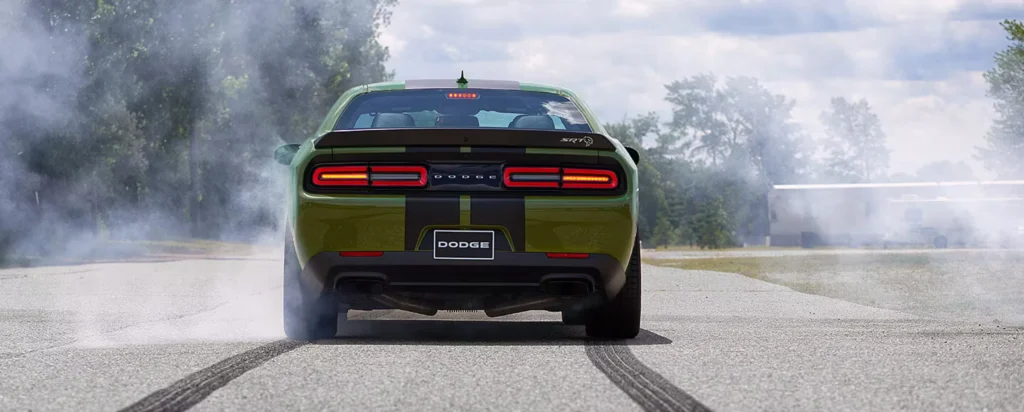
There are certainly many shoppers who cross-shop the new Charger and the Dodge Challenger Hellcat, so the comparison is worth drawing out. The two cars chase the same feeling from opposite directions.
The 2026 Charger Scat Pack, with its twin-turbo inline-six, is faster in a straight line than a Hellcat and comes with standard all-wheel drive, a nicer interior, and modern tech. On paper, it is the better car, and Dodge has the awards to back that up. It also starts around $55,000 in the US before options, and it makes its power without the theater of eight cylinders.
The Dodge Challenger Hellcat answers with something the new car cannot replicate: a naturally charismatic supercharged V8, rear-drive drama, and the knowledge that its kind will not be built again. For buyers who appreciate sound, feel, and the analog muscle-car experience, a used Hellcat provides more soul per dirham than any turbocharged replacement.
| Challenger Hellcat (used) | 2026 Charger Scat Pack | |
| Engine | 6.2L Supercharged V8 | 3.0L Twin-Turbo I6 |
| Power | 717 to 807 hp | 550 hp |
| Drive | Rear-wheel drive | All-wheel drive |
| Character | Loud, analog, rear-drive | Refined, quick, grippy |
| Status | Discontinued, collectible | Current, in production |
If you want the last true supercharged HEMI Challenger, buy the Dodge Challenger Hellcat now. If you want a warranty, four usable doors, and everyday ease, the new Charger makes more sense. They are different answers to the same question.
Is the Dodge Challenger Hellcat Still Worth Buying?
For the right buyer, yes. Nothing else on the used market offers this much theater for the money. A 717-horsepower V8 coupe with a supercharger whine and a back seat for less than a loaded family crossover is a rare thing, and it is only getting rarer now that production has stopped.
The case against is honest too. These cars drink fuel, chew tires, and depreciation on the common trims means you’re buying into a car the market has already discounted for a reason. Reliability is good for the class, but neglected or heavily modified examples can turn into money pits.
Buy a clean, documented, lightly used standard Hellcat, and you get one of the great muscle cars of the modern era for sensible money. Buy a rare Demon or a low-mileage special edition, and you get an appreciating piece of the HEMI’s final chapter. Either way, the Challenger Hellcat closed out an era that emissions rules will not allow again, and that scarcity is exactly why it still deserves the “beast” label.
Pricing figures reflect US and UAE market data available at the time of writing and are indicative. Dirham conversions from US MSRP are approximate and provided for reference only; confirm current pricing and availability with an authorized dealer.
FAQs
Q. Is there a 2026 Dodge Challenger Hellcat?
A. No. The last Dodge Challenger Hellcat was a 2023 model, and Dodge ended Challenger production in December 2023. Any “2026” listing is a used or leftover car. For 2026, the muscle badge moved to the Dodge Charger with a twin-turbo inline-six, while the only new Hellcat V8 you can buy is the Dodge Durango SRT Hellcat SUV.
Q. How much does a Dodge Challenger Hellcat cost now?
A. In the US, standard Dodge Challenger Hellcat run roughly $55,000 to $75,000, Redeye Widebody and Jailbreak cars sit around $80,000 to $110,000-plus, and Demon 170s trade from about $110,000 into the low hundreds of thousands. In the UAE, remaining dealer-stock Hellcats have been advertised from around AED 385,000, with used prices varying by spec and history. Confirm current figures with a dealer, since these cars are discontinued and stock is limited.
Q. What is the difference between the Hellcat, Redeye, and Demon?
A. The standard SRT Hellcat makes 717 horsepower. The Redeye borrows the Demon’s engine for 797 horsepower, or 807 in Jailbreak form. The 2018 Demon made 840 horsepower as a factory drag car, and the 2023 Demon 170 topped the whole family at 1,025 horsepower on E85 fuel. More power, more focus, and higher prices as you move up.
Q. Should I buy a GCC-spec or US-import Hellcat in the Gulf?
A. GCC-spec cars are built and calibrated for regional heat, carry local service history, and resell more easily, which usually justifies their higher price. US imports can be cheaper but may have warranty and parts gaps and cooling systems tuned for milder climates. For a supercharged car in a Dubai summer, a documented GCC example is the safer buy.
Q. Is the Dodge Challenger Hellcat reliable enough to drive daily?
A. Yes, within reason. The supercharged HEMI is durable when maintained on schedule, and many owners drive Hellcats every day. The catch is that fuel, tires, and brakes wear fast if you use the power often, and any car with an aggressive aftermarket tune carries more risk. Buy a well-documented example and keep up with servicing, and it will handle daily duty happily.