
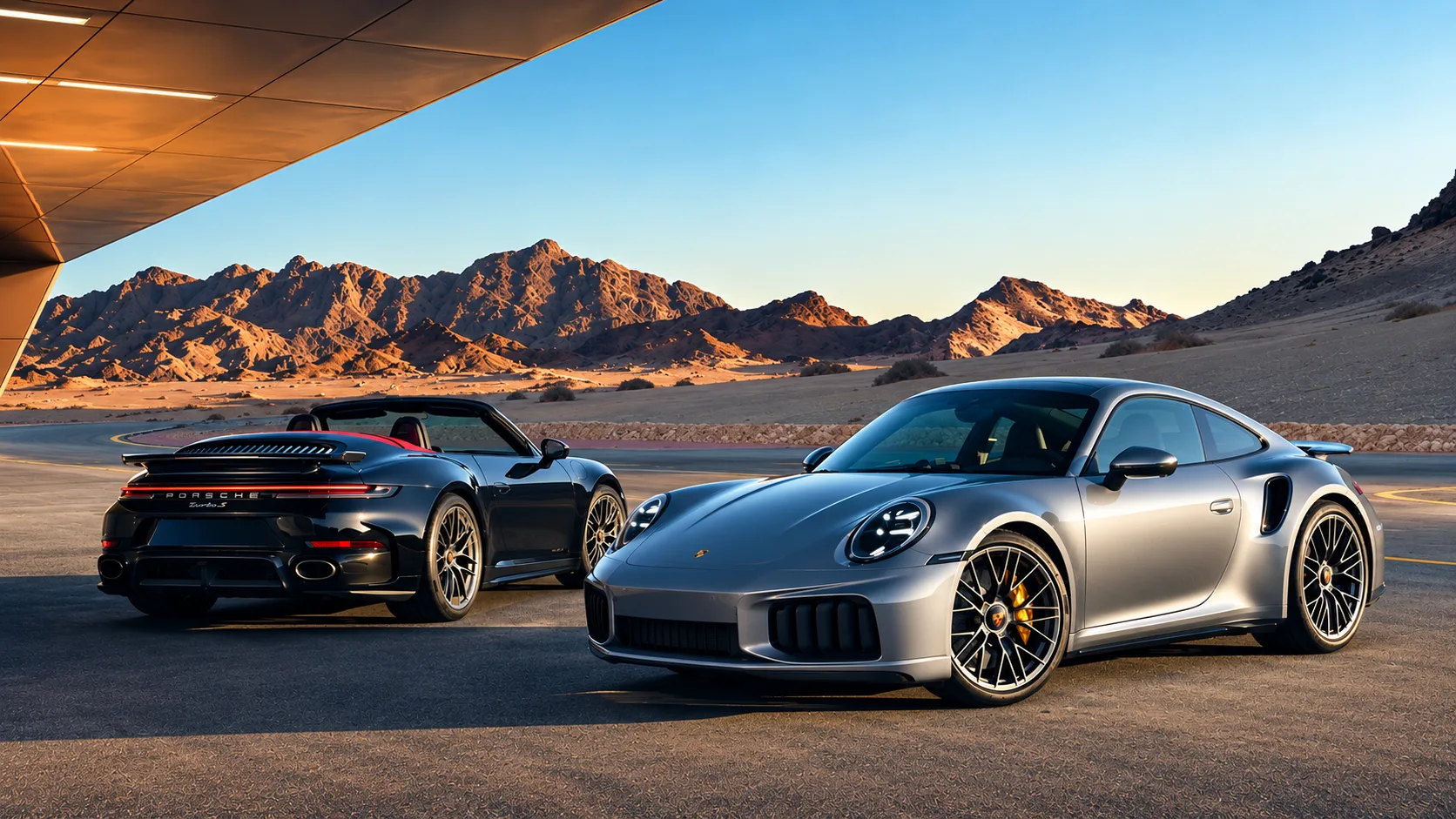
The Porsche 911 Turbo S Cabriolet 2026 is the most powerful open-top 911 Porsche has ever built. It combines a hybrid-assisted twin-turbo flat-six with all-wheel drive, active suspension, and a folding soft top that doesn’t require you to sacrifice any of the coupe’s calmness. For buyers in the United States and across the Gulf (Dubai, Abu Dhabi, Riyadh, Doha, Kuwait City, Manama, and Muscat), this is the Halo 911, and it comes with a truly new powertrain, not merely a redesign.
Everything you need to know before you configure one.
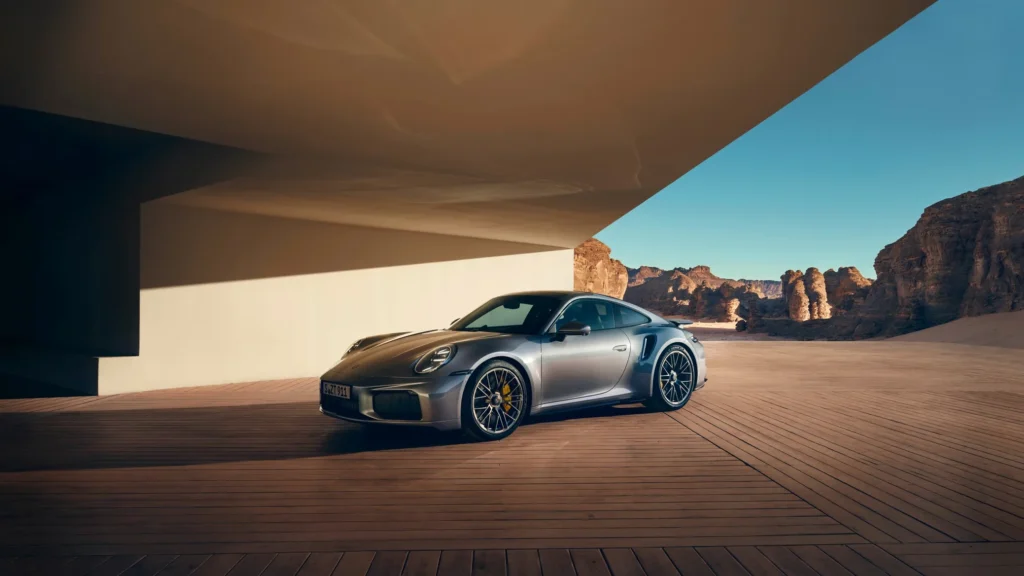
2026 Porsche 911 Turbo S Cabriolet Quick Overview
| Category | Detail |
| Body style | 2-door convertible (soft top) |
| Engine | 3.6L twin-turbo flat-six, T-Hybrid assisted |
| System output | 701 hp / 590 lb-ft (800 Nm) |
| 0–60 mph | 2.5 seconds |
| Top speed | 200 mph (322 km/h) |
| Transmission | 8-speed PDK with integrated electric motor |
| Drivetrain | All-wheel drive |
| US MSRP | From $284,300 (excludes $2,350 destination fee) |
| UAE price | Official 2026 configurator lists the 911 Turbo S from AED 986,000 (VAT included); Cabriolet pricing runs higher — estimates place it near AED 1.04 million |
| US on-sale date | Available to order now; deliveries expected Spring 2026 |
2026 Porsche 911 Turbo S Cabriolet Design: Familiar Silhouette, New Details
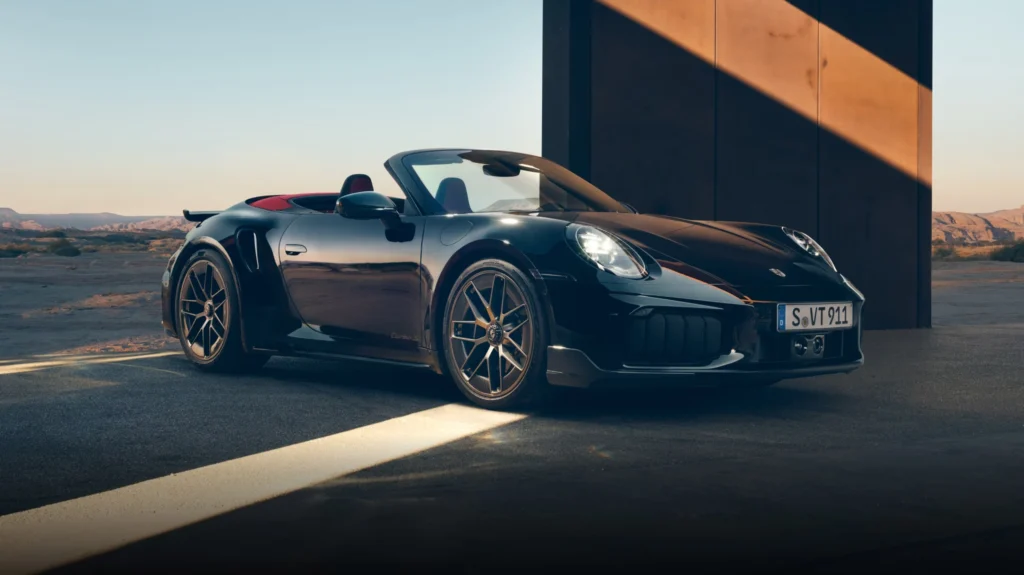
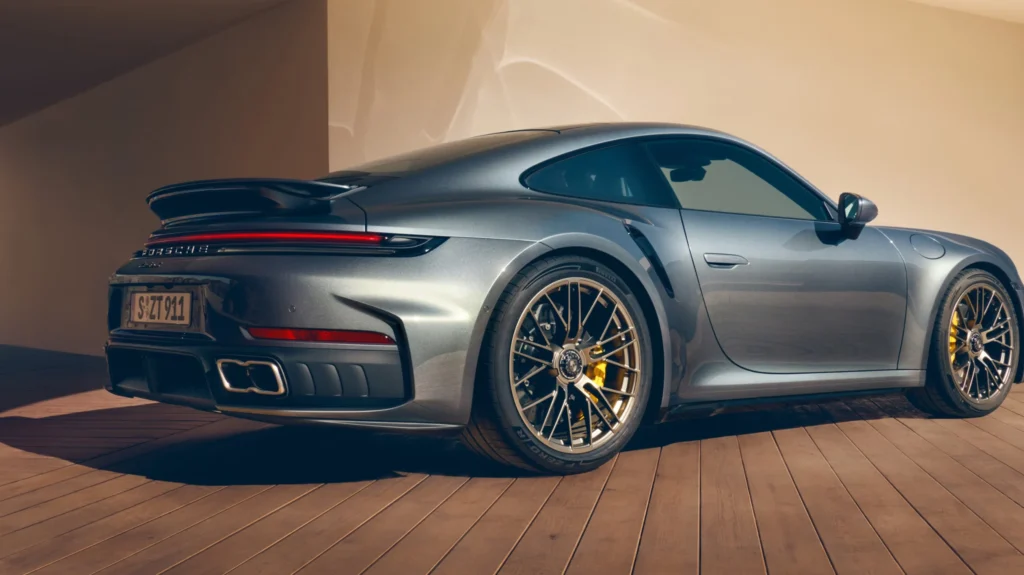
Porsche didn’t reinvent the 2026 Porsche 911 Turbo S Cabriolet shape for this generation of Turbo S, and that’s by design. The wide-body stance, broad rear haunches, and side air intakes are instantly recognizable as Turbo S cues, and the Cabriolet carries them just as convincingly as the coupe.
What’s new for MY2026 are the details:
- All-in-one LED headlight clusters replace the previous separate lighting elements, giving the front end a cleaner look.
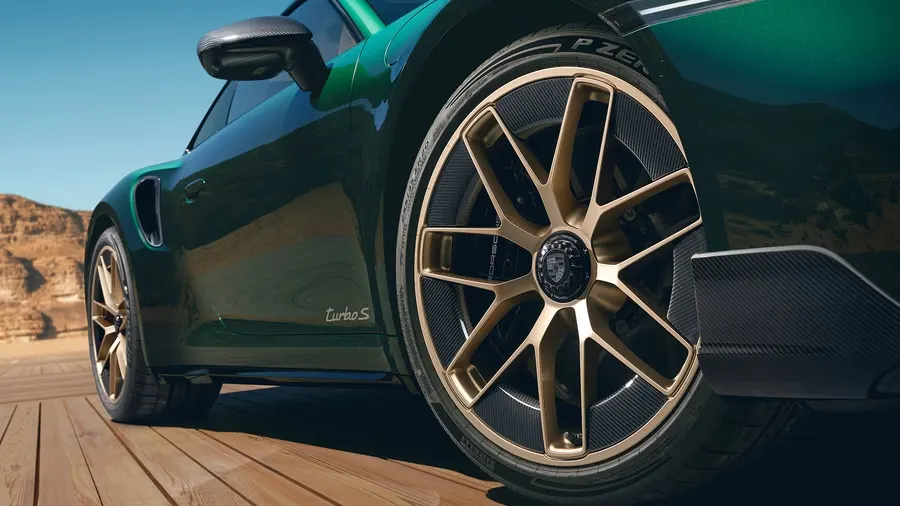
- Turbonite trim: a signature bronze-toned finish exclusive to Turbo models, appears on the rear badging, Porsche Crest, and wheel center locks.
- Active rear spoiler and front diffuser work together for the first time on this generation, adjusting automatically based on speed and drive mode to manage downforce.
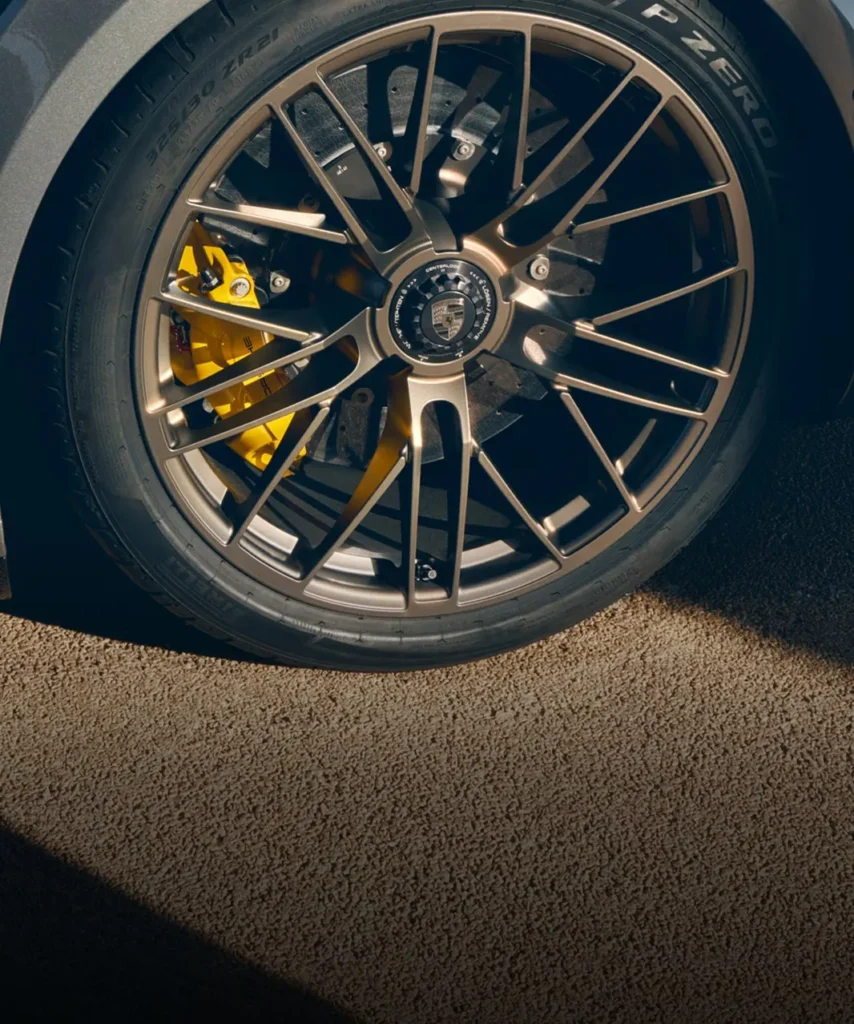
- 20-inch front and 21-inch rear wheels come standard, with center-locking hardware borrowed from Porsche’s motorsport parts bin.
For the Cabriolet specifically, the soft top folds in a matter of seconds and stows without disrupting the car’s rear-deck styling. Porsche also offers a SportDesign package with visible carbon fiber elements for buyers who want the Turbo S to look even more aggressive.
2026 Porsche 911 Turbo S Cabriolet Exterior Color and Wheel Choices
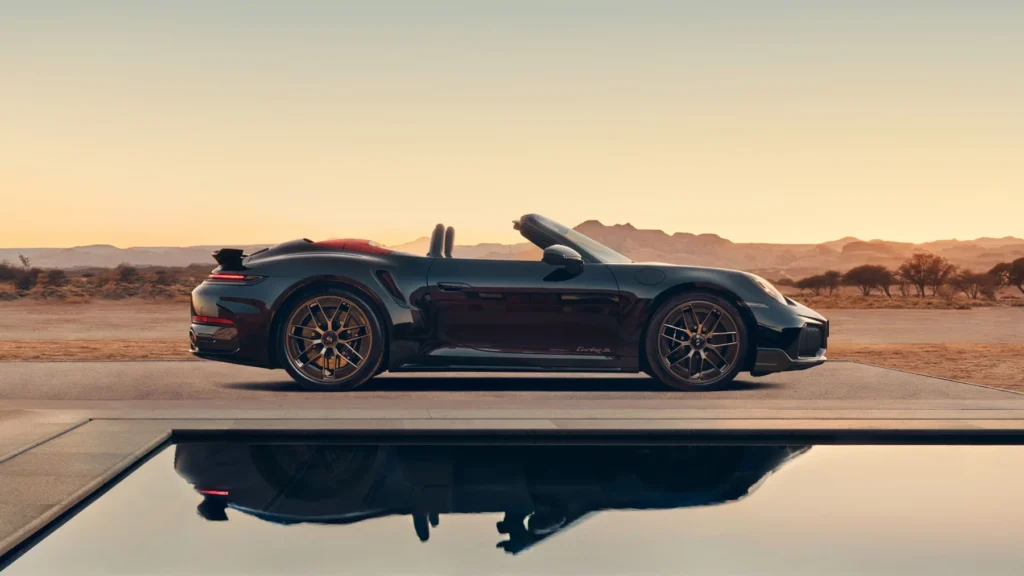
Buyers researching a 2026 Porsche 911 Turbo S Cabriolet in white, black, or one of Porsche’s signature metallics will find the color palette largely mirrors the rest of the 911 lineup, with a few Turbo-specific additions. Guards Red, Carrara White Metallic, Jet Black Metallic, and Gentian Blue remain popular choices across both the US and Gulf markets, while GT Silver Metallic and Shark Blue tend to stand out particularly well against the car’s Turbonite accents. Porsche’s Paint to Sample program also opens up an even wider range of finishes for buyers who want something outside the standard palette, a popular route for Gulf customers who often prioritize a distinctive look on a car this exclusive.
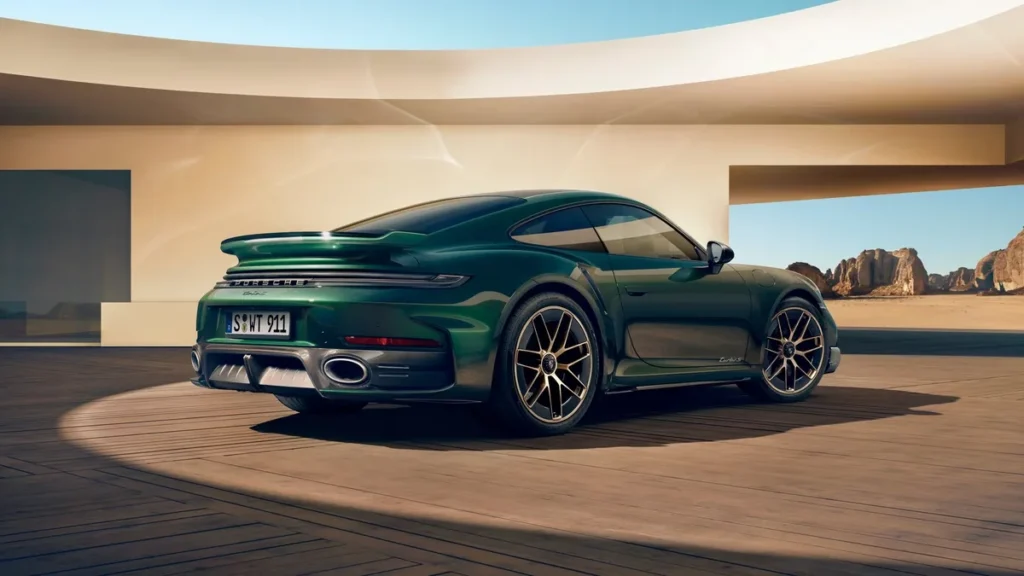
Wheel choice matters more than it might seem on a car like this. The standard 20-inch front and 21-inch rear wheels are staggered specifically to handle the Turbo S’s power delivery and all-wheel-drive traction, and switching to the optional Turbo Exclusive Design wheels with carbon-fiber blades changes both the visual stance and, marginally, unsprung weight. From a rear three-quarter angle, the view most people associate with a 911 Turbo, the wide-body haunches, quad tailpipes, and active spoiler give the Cabriolet the same unmistakable road presence as the coupe, roof up or down.
2026 Porsche 911 Turbo S Cabriolet: Engine and Performance
This is where the story actually changes. Previous Turbo S models used a 3.7-liter flat-six. The 2026 Porsche 911 Turbo S Cabriolet car switches to a smaller 3.6-liter unit, but compensates with a genuinely new hybrid architecture borrowed conceptually from Porsche’s 919 Le Mans program.
The T-Hybrid Powertrain, Explained
The system uses two electrically assisted turbochargers instead of conventional exhaust-driven units. Each turbo has its own small electric motor built into the shaft, which spins the compressor up almost instantly using electric power rather than waiting for exhaust gas flow. That’s what eliminates the lag traditionally associated with big turbocharged engines.
A second electric motor sits inside the 8-speed PDK transmission, adding torque fill and enabling energy recovery under braking. Both are fed by a 1.9-kWh battery running on a 400-volt electrical architecture, a notably higher voltage than the mild-hybrid systems used elsewhere in the industry, chosen specifically because it can deliver bursts of power fast enough to matter at speed.
The result: 701 hp and 590 lb-ft (800 Nm) of torque, a 61-hp jump over the outgoing Turbo S.
Numbers That Matter
- 0-60 mph: 2.5 seconds (Cabriolet), 0.1 second behind the coupe’s 2.4 seconds.
- Top speed: 200 mph (322 km/h) with the correct summer tires fitted.
- Nürburgring Nordschleife lap: 7:03.92, over 14 seconds quicker than the previous-generation Turbo S, a gap that’s unusually large for a mid-cycle Porsche update.
Porsche also introduced electro-hydraulic active suspension (ehPDCC) on this generation. Unlike passive dampers or even the previous adaptive setup, ehPDCC uses hydraulic actuators to counteract body roll in real time, which lets the Turbo S stay flat through corners while still riding comfortably on rough roads, a genuinely useful trait for cities with uneven tarmac.
Expert insight: The move to electrically assisted turbos rather than a bigger engine is a meaningful engineering choice. It tells you Porsche is prioritizing throttle response and low-end punch over outright displacement, the same philosophy Formula 1 and Le Mans hybrid powertrains use. For drivers, that translates into power that arrives the instant you ask for it, rather than the classic turbo “wait, then shove” sensation.
How It Actually Drives
Numbers on a spec sheet only tell part of the story, and the 2026 Porsche 911 Turbo S Cabriolet is a good example of why. What stands out on the road isn’t just the straight-line speed, plenty of cars in this price bracket are quick in a straight line, it’s how usable that power feels the moment you leave a parking lot.
The all-wheel-drive system biases power to the rear under normal conditions but shifts it forward instantly when it senses reduced grip, which matters on the sand-dusted roads common across Gulf cities after a windstorm, or on wet pavement during a US winter. Rear-axle steering effectively shortens the wheelbase at low speeds, making the car noticeably easier to place in tight parking structures than its size suggests, then lengthens it virtually at highway speeds for added stability during lane changes.
The carbon-ceramic brakes (PCCB) that come standard on the 2026 Porsche 911 Turbo S Cabriolet deserve a mention here too. Unlike steel rotors, which can lose stopping power after repeated hard braking, PCCB discs resist fade far better under sustained heavy use, relevant whether that means a track day or repeated hard stops in dense city traffic. They’re also roughly 50% lighter than comparable steel rotors, which reduces unsprung mass and sharpens turn-in response.
With the roof down, wind buffering inside the cabin is noticeably better controlled than in many rivals, thanks to a standard wind deflector design that channels airflow up and over the cabin rather than directly at occupants. That makes the Cabriolet genuinely usable at highway speeds with the top retracted, not just around town.
2026 Porsche 911 Turbo S Cabriolet Fuel Economy
Porsche has not released final EPA-certified figures for the 2026 Turbo S Cabriolet at the time of writing. For reference, the outgoing 2026 Porsche 911 Turbo S Cabriolet was EPA-rated around 14 mpg city, 20 mpg highway and 16-17 mpg combined. Given the added hybrid hardware and small weight increase from the battery, we expect the 2026 car to land in a similar range once official numbers are certified, this is not a car bought for fuel efficiency, even with the electric assistance on board.
2026 Porsche 911 Turbo S Cabriolet Interior, Features, and Technology
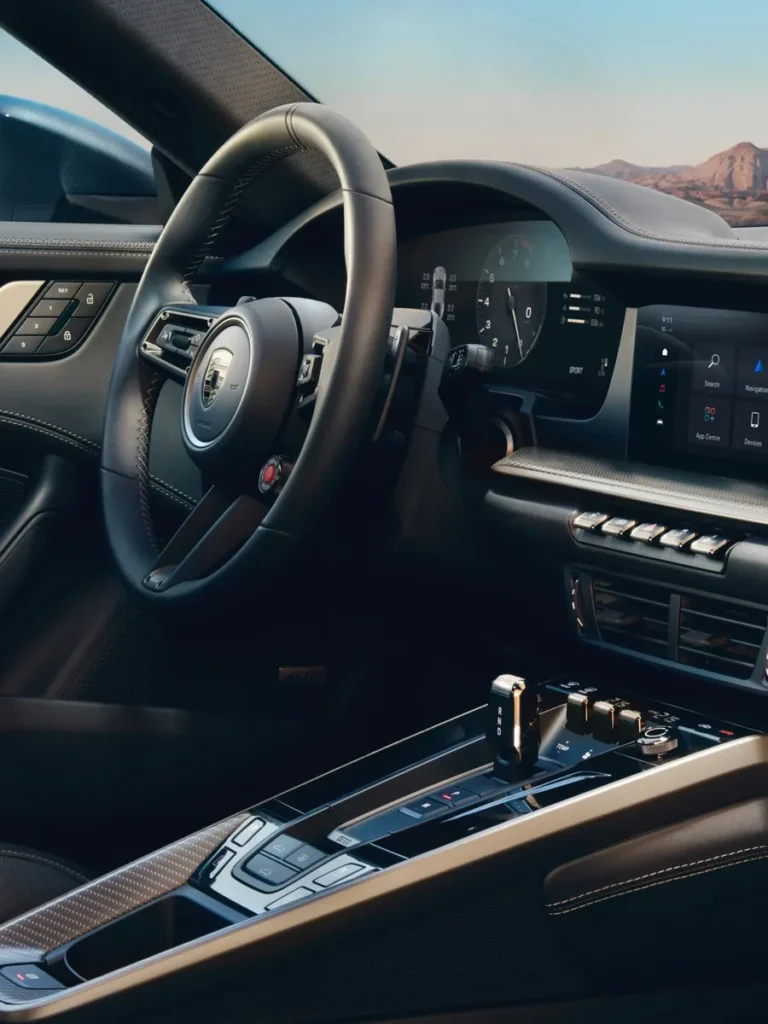
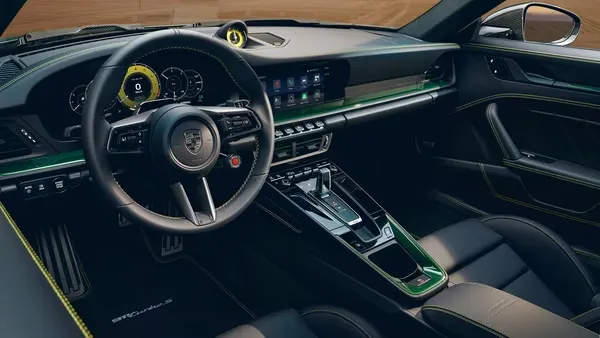
Inside the 2026 Porsche 911 Turbo S Cabriolet, you can get a motorsport feel but it is true daily driver comfort.
- There is also 18-way adaptive Sport Seats Plus with memory function with “Turbo S” lettering on the headrests.
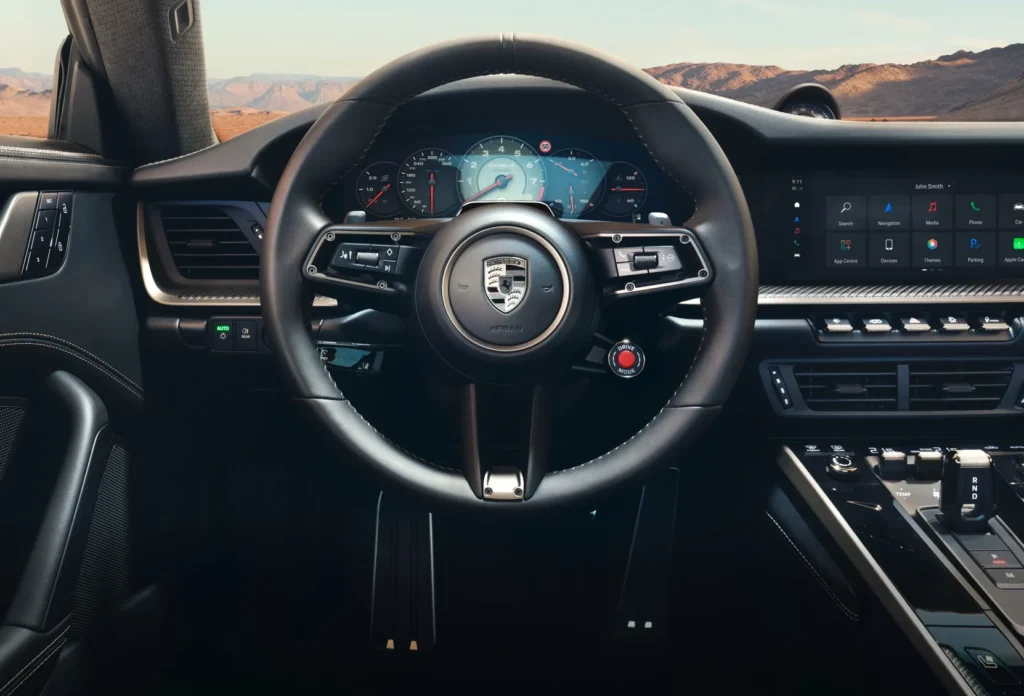
- Porsche’s new digital instrument cluster and infotainment system is still in place, with wireless smartphone support and configurable driving data display.
- Rear seats are there, but like every 911, they are more suitable as storage or occasional use for kids rather than adults.
- Porsche Exclusive Manufaktur options are another option to customize the car: Turbo Exclusive Design wheels with carbon-fiber blades finished in Neodyme with a visible carbon-fiber lightweight roof (for the coupe) and rear lighting options.
The cabin materials lean on Turbonite accents and leather upholstery, giving the car a much more special feeling than a standard Carrera without falling into the show-car territory of Porsche’s limited editions.
2026 Porsche 911 Turbo S Cabriolet Storage and Everyday Usability
One of the questions that most people asked me as I was digging into a Porsche 911 Turbo S Cabriolet from 2026 was whether it would be useful as a daily car, or solely as a weekend toy? The answer is somewhere in between. The front trunk (frunk) has a modest but very usable cargo space, enough for a few soft bags or a weekend’s worth of luggage for two people. The rear seats are flat and make room for smaller items, jackets or a laptop bag, for example, even if it’s not realistic to have adult passengers.
The ride quality with the ehPDCC active suspension in its standard mode is noticeably more compliant than the previous-generation Turbo S, which makes a real difference for buyers who plan to use the car regularly rather than only on weekends. Sport or Sport Plus helps considerably with track use or spirited driving, and Normal mode keeps the car composed enough to do daily commuting, a genuinely wide range for a car with this level of outright performance.
2026 Porsche 911 Turbo S Cabriolet Safety and Driver Assistance
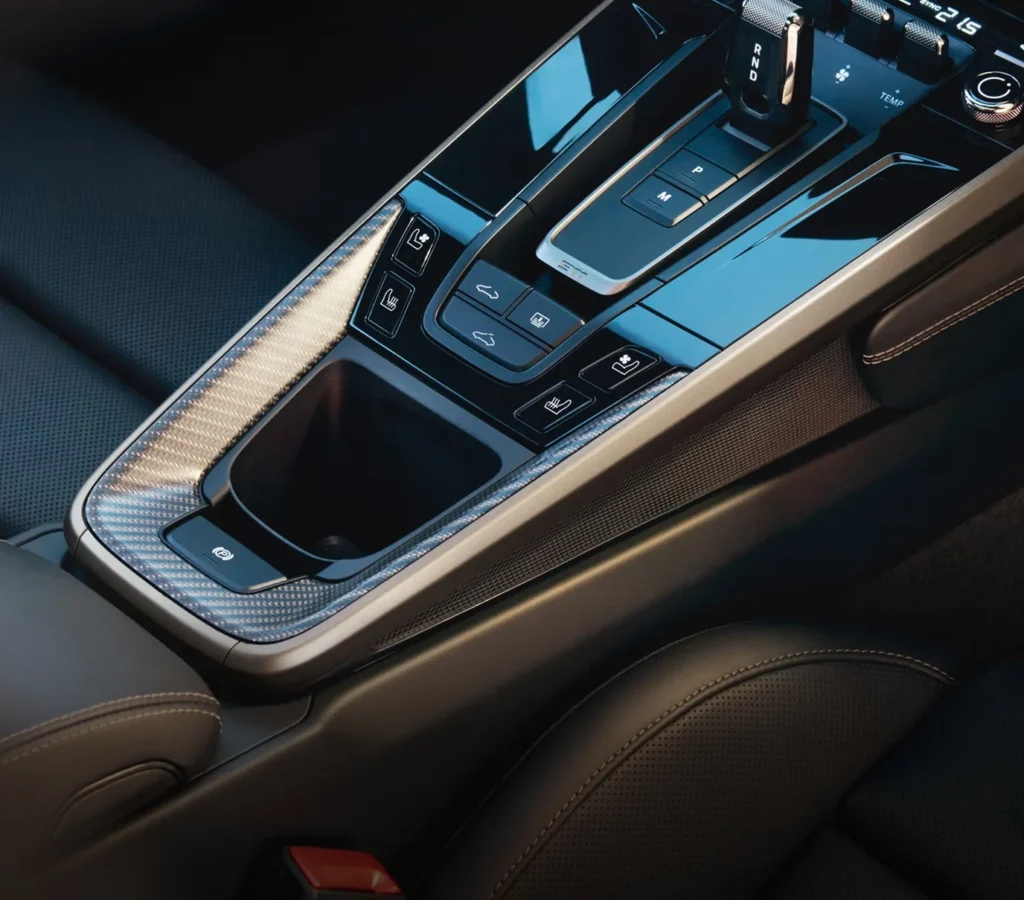
The 2026 Porsche 911 Turbo S Cabriolet has Porsche’s existing active safety features: adaptive cruise control with distance-based assistance, lane-keeping assist, automatic emergency braking with pedestrian detection, and a 360-degree surround-view camera. Rear-axle steering sharpens low-speed movement and stabilizes high-speed lane changes, while carbon-ceramic brakes (PCCB) provide stronger fade resistance than steel rotors during repeated hard stops, both for track days and spirited daily driving.
2026 Porsche 911 Turbo S Cabriolet US Price and Availability
Porsche confirmed pricing through its US newsroom:
- 911 Turbo S Coupe: $270,300 MSRP.
- 911 Turbo S Cabriolet: $284,300 MSRP.
- Both figures exclude a $2,350 delivery, processing, and handling fee, plus taxes, title, registration, and dealer-added charges.
That is $66,700 more than the original 2026 Porsche 911 Turbo S Cabriolet, a big jump that is driven largely by the new hybrid hardware, the revised chassis, and brakes and suspension improvements. The Turbo S Cabriolet is available to order now at US Porsche Centers, and deliveries will start in Spring 2026.
And don’t forget that heavily optioned builds with Exclusive Manufaktur items, painted carbon roofs, and bespoke interior stitching can push the out-the-door price well past $320,000-$350,000.
2026 Porsche 911 Turbo S Cabriolet Price in UAE and the Gulf
Gulf pricing works differently, since 2026 Porsche 911 Turbo S Cabriolet regional configurator bundles VAT into the displayed price and dealer margins vary slightly by country.
| Market | Price (approximate) | Source type |
| UAE (911 Turbo S, VAT included) | From AED 986,000 | Official Porsche regional configurator |
| UAE (Turbo S Cabriolet) | Estimated up to AED 1.04 million | Regional dealer/market estimate |
| Saudi Arabia, Qatar, Kuwait, Bahrain, Oman | Broadly similar to UAE, before local registration and dealer fees | Estimate |
Importantly, the official Porsche configurator figure is for the coupe. The 2026 Porsche 911 Turbo S Cabriolet is more expensive for every market (the gap is $14,000 in the US). Buyers in the Gulf should regard any cabriolet-specific AED figure as an estimate until they actually have the car with their local Porsche Centre, as final pricing will depend on specification, import timing, and dealer allocation.
Gulf-Specific Considerations
Heat and cooling: UAE, Saudi, and Qatari summers push ambient temperatures well past 45°C (113°F). GCC-spec cars typically come with reinforced cooling packages, and the Turbo S’s electrically assisted turbos help here too, since they don’t rely solely on exhaust heat to spin up, thermal management under sustained high-speed desert driving is easier to control than on older, purely exhaust-driven systems.
GCC specification: Check that your car is a GCC-spec vehicle and not a gray import, as GCC cars come with full warranty and dealer network support in all six Gulf states.
Availability: The waitlists for the flagship 911 models in the Gulf can be much longer than the US. If you are interested in the 2026 model, you will have to show up at your local Porsche Centre early.
Customization demand: Exclusive Manufaktur options have higher take-rates in Gulf markets than in the US, so factor in longer build times for highly customized cars.
2026 Porsche 911 Turbo S Cabriolet: Pros and Cons
Pros
- 701 hp with genuinely lag-free response thanks to electrically assisted turbos.
- Almost matches the coupe’s acceleration and top speed.
- Active suspension offers comfort and control that is rare in a car this fast.
- All-wheel drive and rear-axle steering make big power usable in daily traffic.
- Soft top adds minimal weight or compromise versus the coupe.
Cons
- $66,700 price increase over the outgoing Cabriolet.
- Fuel economy is still poor, even with hybrid assistance.
- Rear seats are unusable for adults.
- Waitlists and limited early allocation, especially in Gulf markets.
- Heavily optioned builds go well over the base MSRP.
2026 Porsche 911 Turbo S Cabriolet How It Compares: Key Competitors
| Model | Power | 0–60 mph | Starting Price (US) |
| 2026 Porsche 911 Turbo S Cabriolet | 701 hp | 2.5 sec | $284,300 |
| Ferrari Amalfi Spider | ~631 hp | ~3.0 sec | ~$290,000+ (Est. higher than Turbo S) |
| Bentley Continental GTC | 650+ hp (hybrid) | ~3.2 sec | ~$310,000+ (Comparable to slightly above) |
| Mercedes-AMG GT 63 Cabriolet | 577–630 hp | ~3.2 sec | ~$200,000–$225,000 (Below Turbo S) |
The 2026 Porsche 911 Turbo S Cabriolet closest rivals trade blows in terms of power but often cannot match the combination of everyday usability, all-weather traction, and track-ready dynamics in one open-top package. Buyers who cross-shop the Amalfi or Continental GTC tend to prefer exclusivity and grand-touring comfort over the 911’s sharper and more focused character.
2026 Porsche 911 Turbo S Cabriolet Ownership Notes
Porsche’s standard new-vehicle warranty applies to the Turbo S Cabriolet, with maintenance intervals following the same schedule as other 992-generation 911s, plus monitoring of the hybrid battery and electric turbo components during scheduled services. In both the US and Gulf, authorized Porsche Centers carry the specialized diagnostic equipment for the T-Hybrid system, so owners should stick with official service networks at least during the warranty period.
Insurance premiums for a car in this price and performance bracket will run meaningfully higher than a standard Carrera, and that applies both in the US and Gulf markets, worth factoring into total cost of ownership before signing.
Resale Value
The 911 Turbo variants have always been more valuable than most six-figure performance cars due to Porsche being slow to produce. But expect some depreciation in the first two to three years and then flatten once the car is further off the market. Cars ordered with popular, timeless color and options combinations tend to see higher resale demand than highly personalized Exclusive Manufaktur builds because the used market tends to be more buyers who want a classic-looking Turbo S rather than a one-off configuration. In the Gulf, low-mileage, well-documented GCC-spec examples are still more valuable than gray-import ones.
People Also Ask
- Is the Porsche 911 Turbo S Cabriolet in 2026 faster than the coupe? It’s very close but not quite as fast, with 2.5 seconds to 60 mph versus 2.4 seconds for the coupe, which most drivers don’t notice in real-world driving.
- What makes the T-Hybrid system different from a normal turbo engine? Instead of depending exclusively on exhaust gas to spin the turbochargers, small electric motors built into each turbo spool them up so fast that lag is almost nonexistent and the engine can produce power the moment you press the accelerator.
- Why did the price rise so much for 2026? The jump reflects an almost entirely new powertrain (electrically assisted turbos, a 400-volt hybrid system, new suspension architecture, and updated brakes) instead of a simple trim refresh.
Final Verdict
The 2026 Porsche 911 Turbo S Cabriolet is for buyers who want flagship 911 performance without giving up open-top driving and who are prepared to pay a genuinely higher price to get it. The T-Hybrid powertrain isn’t a marketing gimmick; it changes how the car delivers power, and the Nürburgring numbers back that up.
In the US, this car is for someone who is comparing the Ferrari Amalfi Spider or Bentley Continental GTC but wants sharper, more track-focused dynamics alongside everyday usability. In the Gulf, it is a natural fit for buyers in need of a halo convertible that can take part in weekend driving and extreme summer heat without compromise, provided they get the GCC specification and that they’re prepared for long waiting times for a launch year.
It’s not the car for people looking for fuel efficiency, rear-seat practicality, or a good deal on last year’s model. But for those who want the most complete open-top 911 Porsche has ever built, the 2026 Turbo S Cabriolet offers exactly that.
FAQs
Q. What is the price of the 2026 Porsche 911 Turbo S Cabriolet in the US?
A. The official MSRP is $284,300, excluding a $2,350 destination fee, taxes, and dealer charges. Fully optioned cars are much more expensive.
Q. How much does the 2026 Porsche 911 Turbo S Cabriolet cost in the UAE?
A. Porsche’s regional configurator lists the 911 Turbo S from AED 986,000 (VAT included) for the coupe. Cabriolet pricing is higher, market estimates place it around AED 1.04 million — but you will need to verify final figures with your local Porsche Centre because this isn’t an official manufacturer-published Cabriolet price.
Q. When will the 2026 Porsche 911 Turbo S Cabriolet arrive at US dealerships?
A. It’s now available to order, and deliveries are expected to begin in Spring 2026.
Q. How much horsepower will the 2026 Porsche 911 Turbo S Cabriolet have?
A. 701 hp and 590 lb-ft (800 Nm) of torque from a hybrid-assisted 3.6-liter twin-turbo flat-six, a 61-hp increase over the previous generation.
Q. Is 911 Turbo S Cabriolet a good choice for hot Gulf climates?
A. Yes. GCC-spec cars have cooling packages for very high temperatures and turbochargers that are electrically assisted to help avoid heat from the exhaust and reduce thermal load in high-speed desert driving. But confirm GCC specification to guarantee full regional warranty coverage.