
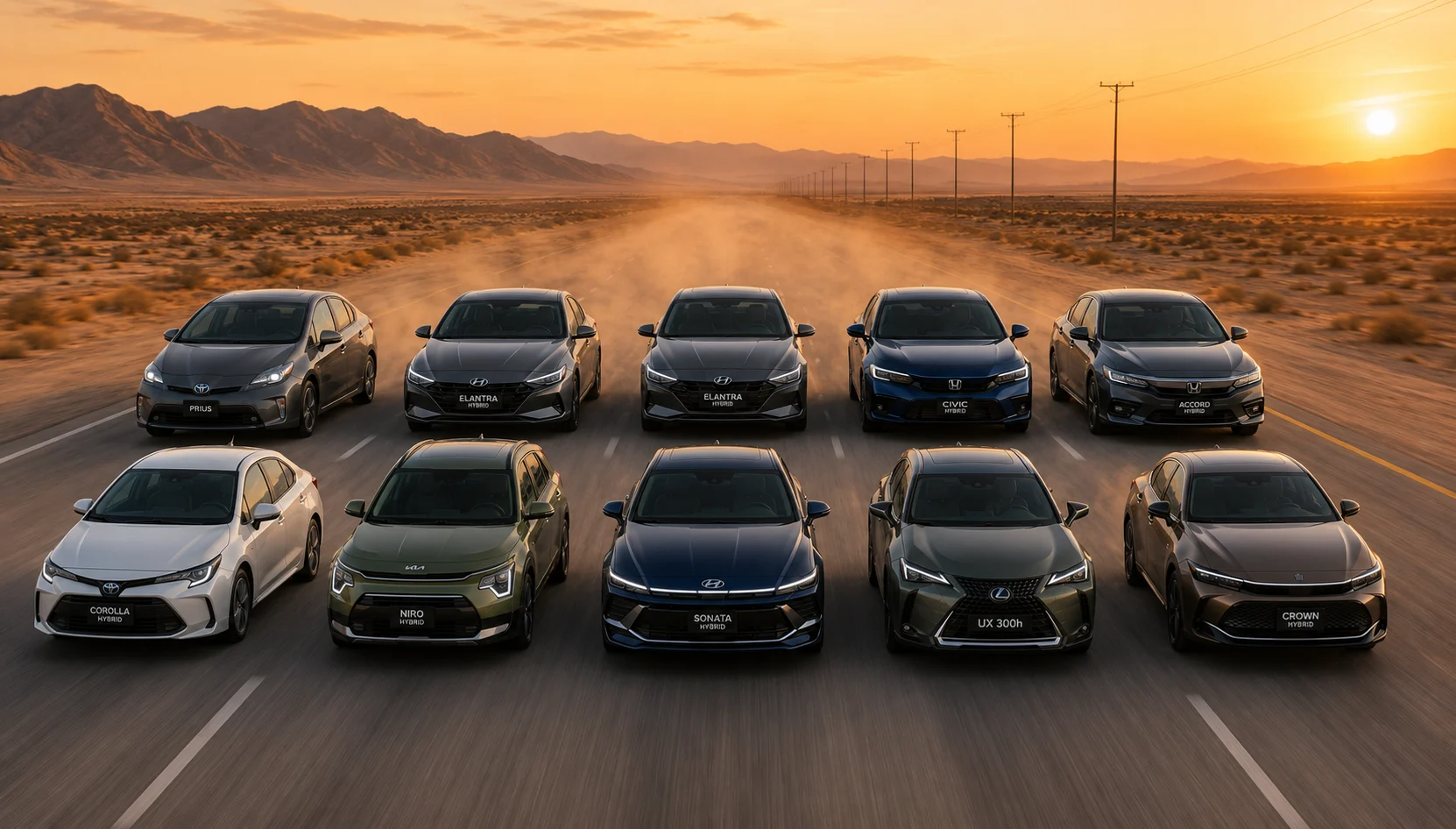
Gas just had one of its rockiest years in recent memory. After dipping toward $2.80 a gallon in January 2026, prices soared to $4.00 nationally by June after an outage in supply due to the Strait of Hormuz, a 30% jump in a matter of months. That sort of volatility is why fuel efficient cars matter so much now: The average American drives over 13,500 miles a year, and the difference between a 57-mpg hybrid and a 25-mpg crossover can save thousands of dollars over a typical ownership period.
The good news is that “fuel efficient cars” aren’t “slow” or “boring.” Today’s line-up includes traditional hybrids, plug-in hybrids and full EVs, and every driver has a way in. The 10 best fuel efficient cars of 2026: compare EPA MPG ratings side by side and discuss everything from good gas mileage habits to which of the most fuel efficient cars fits your life.
Why Fuel Efficiency Matters More Than Ever in 2026
Higher fuel prices: The national average was about $3.95–$4.00 a gallon in late June 2026, up nearly 30 percent from June 2025. California, Hawaii, and Washington drivers are paying well over $5.00. When prices move this fast, the cars that sip fuel instead of guzzling it become a genuine hedge against volatility.
Longer commutes: Remote work didn’t stop the commute; it just changed its shape. Many workers now drive longer distances on the days they do go in or take on side trips and errands they used to skip. MPG matters more when you drive more than a mile; every extra mile is a bonus.
Family road trips: Summer road trip season hits differently when a tank of gas costs $20 more than it did last year. A hybrid SUV or sedan with a 500+ mile range means fewer stops and fewer surprises at the pump.
Environmental impact: Hybrids and EVs burn considerably less fuel per mile, which results in a smaller carbon footprint over the life of the vehicle, a factor that matters to a growing share of buyers regardless of fuel prices as one of the best fuel efficient cars.
Lower ownership cost: Fuel is only part of the picture. As one of the best fuel efficient cars, many hybrids also have excellent reliability credentials; good resale value; and, thanks to regenerative braking, which cuts down on wear on traditional brake pads, lower maintenance costs over time.
Top 10 Fuel Efficient Cars for 2026
1. Toyota Prius
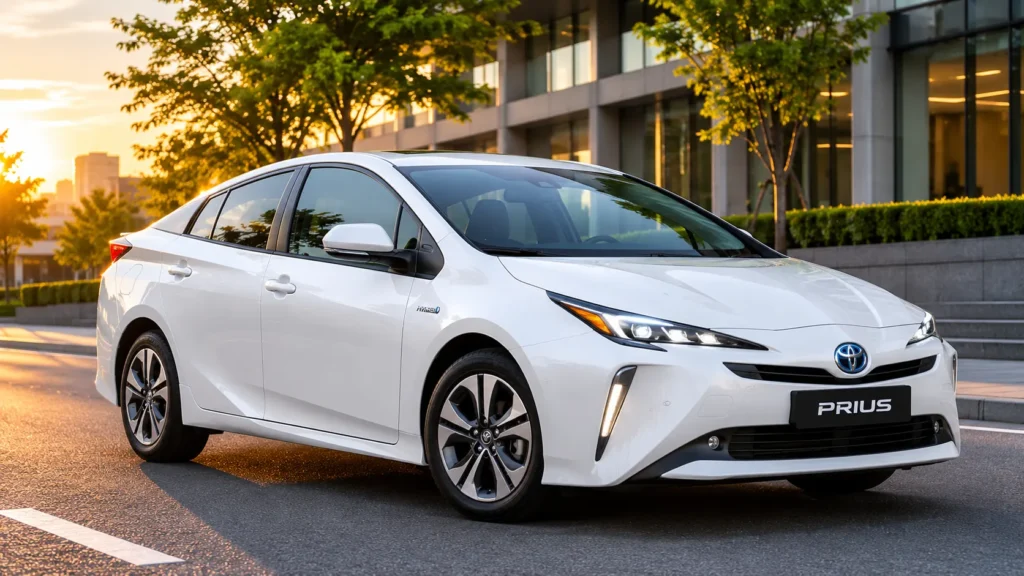
Why We Recommend It: The Prius remains the benchmark for what a hybrid can be: genuinely efficient, surprisingly fast for its class, and finally good-looking after decades of being the punchline. It’s the most fuel efficient cars on sale today.
EPA Fuel Economy: Up to 57 city / 56 highway / 57 combined mpg on the LE FWD trim. AWD models drop to 53/54/54 mpg, and upper trims with larger wheels are around 52/52/52 mpg.
Engine & Performance: A 2.0-liter four-cylinder hybrid engine with electric motor produces 194 horsepower (196 hp with optional AWD-e, which adds a second electric motor in the rear axle).
Interior: A sleek, low-slung cabin with available 12.3-inch digital instrumentation. The back seat is tight for taller passengers, but front-seat comfort and tech are a real step up from past generations.
Cargo Space: As a hatchback, the Prius offers flexible cargo space with standard 60/40 split-folding rear seats and a fully fledged 60/40 split-folding rear seat (with a full range of cargo room that is still not as wide as sedans like the Camry but is less bulky as compared to sedans like the Camry overall, but the overall volume is higher than with the Camry).
Safety Features: Toyota Safety Sense 3.0 is standard, including forward collision warning with pedestrian detection, lane-centering steering, adaptive cruise control, and blind-spot monitoring as one of the best fuel efficient cars.
| Category | Details |
| Pros | Best-in-class fuel economyAvailable AWD in the marketplaceSharp, modern styling |
| Cons | Front seats feel tightFirm ride qualityEngine becomes loud under hard acceleration |
| Best For | Commuters and efficiency-focused buyers who don’t need a large rear seat. |
2. Hyundai Elantra Hybrid
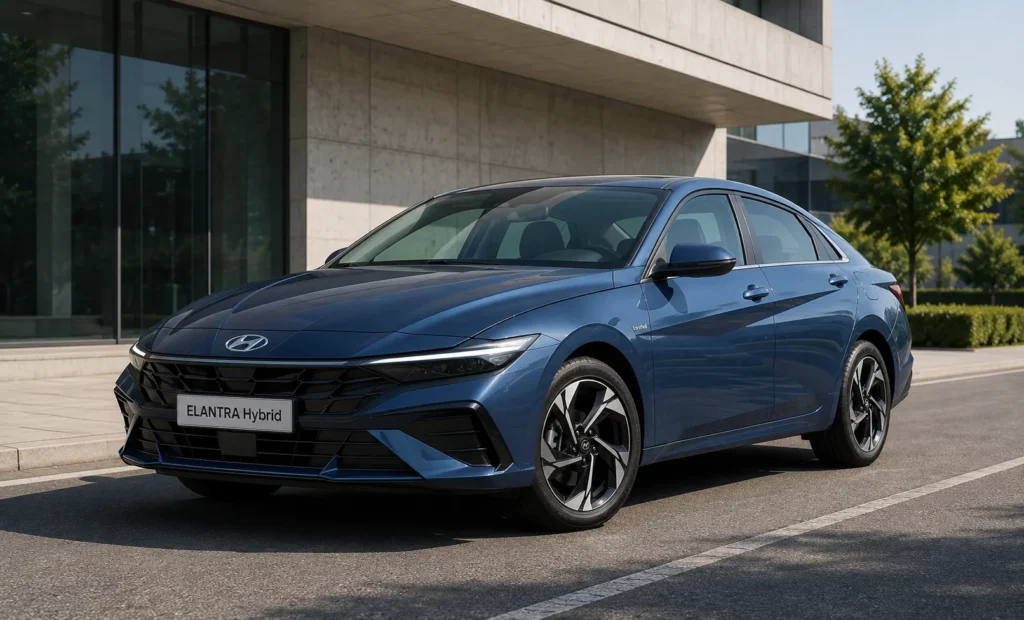
Why We Recommend It: The Elantra Hybrid undercuts nearly every competitor on price while still delivering mpg numbers comparable to the Prius, making it one of the best value plays in the segment as one of the best fuel efficient cars.
EPA Fuel Economy: The base Blue trim is rated 51 city / 58 highway / 54 combined mpg, the best-in-class highway economy. SEL Sport and Limited trims return 49/52/50 mpg.
Engine & Performance: A 1.6-liter four-cylinder with an electric motor produces 139 combined horsepower and is driven by a 6-speed dual-clutch automatic transmission.
Interior: Bold, tech-forward styling with wide digital displays and roomier rear legroom (38 inches) than most rivals, including the Prius.
Cargo Space: Trunk space is identical to the gas Elantra, so nothing can be gained for the hybrid powertrain.
Safety Features: As one of the best fuel efficient cars, the Hyundai SmartSense comes standard in all trims with forward collision-avoidance assist, lane-keep assist, blind-spot collision warning, and driver-attention monitoring.
| Category | Details |
| Pros | Excellent value for the priceGood highway fuel economySpacious rear seatRoomy driver’s seating position |
| Cons | Lower trims aren’t very engaging to driveRide prioritizes stability over sportiness |
| Best For | Budget-conscious commuters and first-time hybrid buyers. |
3. Toyota Camry Hybrid
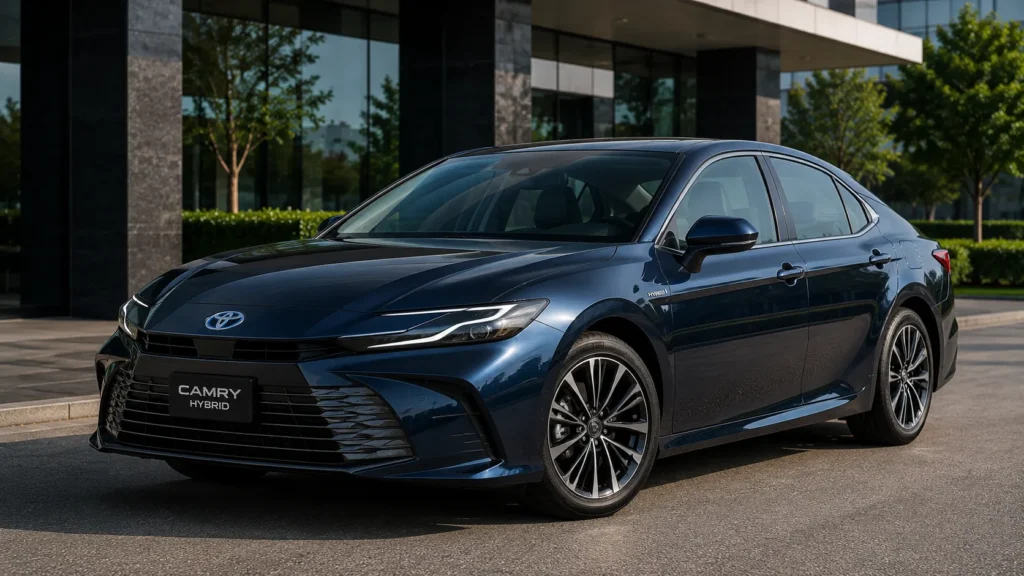
Why We Recommend It: The Camry went all-hybrid for this generation, and the result is a midsize sedan with near-Prius efficiency, a roomy cabin, and the only available all-wheel drive in the segment as one of the best fuel efficient cars.
EPA Fuel Economy: The LE FWD trim is at 52 city/49 highway/51 combined mpg. AWD models give 50/49/50 mpg, while sportier SE, XLE and XSE trims give 46–47 mpg combined.
Engine & Performance: A 2.5-liter four-cylinder hybrid system produces 225 horsepower with FWD or 232 horsepower with available AWD because of a third electric motor at the rear axle.
Interior: Quiet and comfortable, with lots of rear legroom for adults and a nice cabin that comes across as a budget hybrid.
Cargo Space: 15.1 cubic feet of trunk space, enough for groceries, golf clubs, or a family’s luggage.
Safety Features: Standard Toyota Safety Sense 3.0, plus hill-start assist and active cornering assist for added confidence in corners and on inclines as one of the best fuel efficient cars.
| Category | Details |
| Pros | Excellent fuel economy for a midsize sedanAvailable AWDSpacious and comfortable cabin |
| Cons | Not as engaging to drive as some rivalsBase trim’s smaller wheels look less appealing |
| Best For | Families and commuters who want a roomy sedan without sacrificing are known as fuel efficient cars owners. |
4. Honda Civic Hybrid
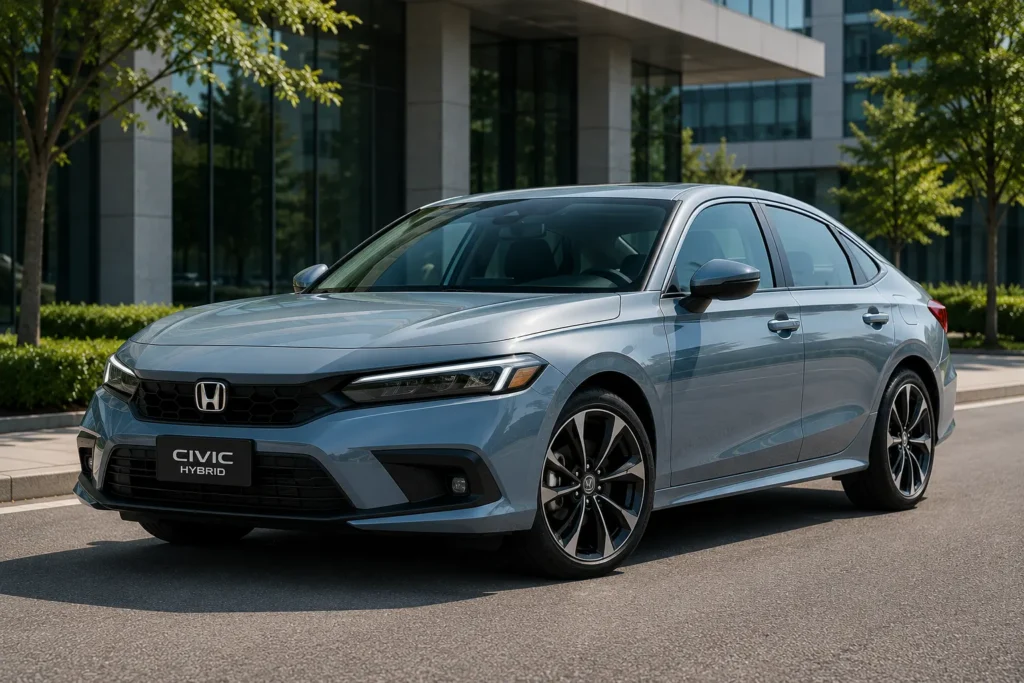
Why We Recommend It: The Civic Hybrid shows efficiency and fun are not mutually exclusive; it can match the sporty Civic Si’s horsepower, but it still manages to get nearly 50 mpg as one of the best fuel efficient cars.
EPA Fuel Economy: 50 city/47 highway/49 combined mpg for the sedan (48 mpg combined for the hatchback).
Engine & Performance: A two-motor hybrid system can produce 200 horsepower and 232 lb-ft of torque, more torque than the manual Civic Si, for real quick, responsive acceleration.
Interior: As one of the best fuel efficient cars,it has one of the most upscale cabins in the compact class, with clean metal-mesh dash trim, comfortable seats, and class-leading 37.4 inches of rear legroom.
Cargo Space: Roomy for a small sedan, the hatchback provides much more support for larger items to move around.
Safety Features: The Honda Sensing toolset includes adaptive cruise control, lane-keeping assist, and traffic sign recognition as well as automatic emergency braking.
| Category | Details |
| Pros | Most powerful hybrid in its classSmooth and refined ride qualitySpacious rear seating |
| Cons | More expensive than the Corolla and Elantra hybridsNon-hybrid trims are significantly less then become the fuel efficient cars |
| Best For | Drivers who want hybrid fuel savings without giving up driving enjoyment. |
5. Honda Accord Hybrid
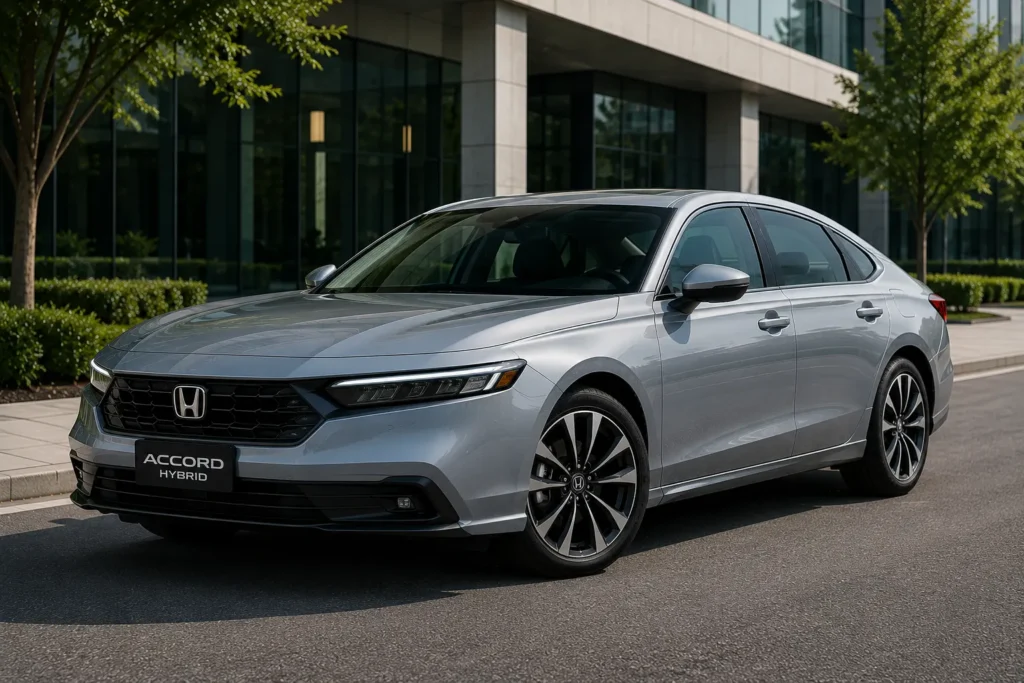
Why We Recommend It: The Accord Hybrid pairs Honda’s roomiest sedan with one of the most powerful hybrid and best fuel efficient cars powertrains in the midsize class, all while delivering class-competitive mpg.
EPA Fuel Economy: The efficiency-focused EX-L Hybrid trim gives 51 city / 44 highway / 48 combined mpg. Sport, Sport-L, and Touring Hybrid trims give 46/41/44 mpg.
Engine & Performance: A 2.0-liter Atkinson-cycle four-cylinder with two electric motors generates 204 horsepower and 247 lb-ft torque, some of the strongest outputs in the class.
Interior: As one of the best fuel efficient cars, it has premium and tech-forward features, with available Google built-in, a 12.3-inch touchscreen, and heated/ventilated leather seats.
Cargo Space: 16.7 cubic feet of trunk space on each trim. Honda’s clever underfloor battery placement means the hybrid gives up nothing to the gas model.
Safety Features: Honda Sensing is standard in the lineup as well as brake-by-wire technology for more natural, consistent pedal feel.
| Category | Details |
| Pros | Strong power and torqueNo loss of cargo space with the hybrid systemPremium, upscale interior |
| Cons | No all-wheel drive (AWD) optionMore expensive than the Camry Hybrid |
| Best For | Families looking for a spacious, feature-rich hybrid sedan with a premium feel. |
6. Toyota Corolla Hybrid
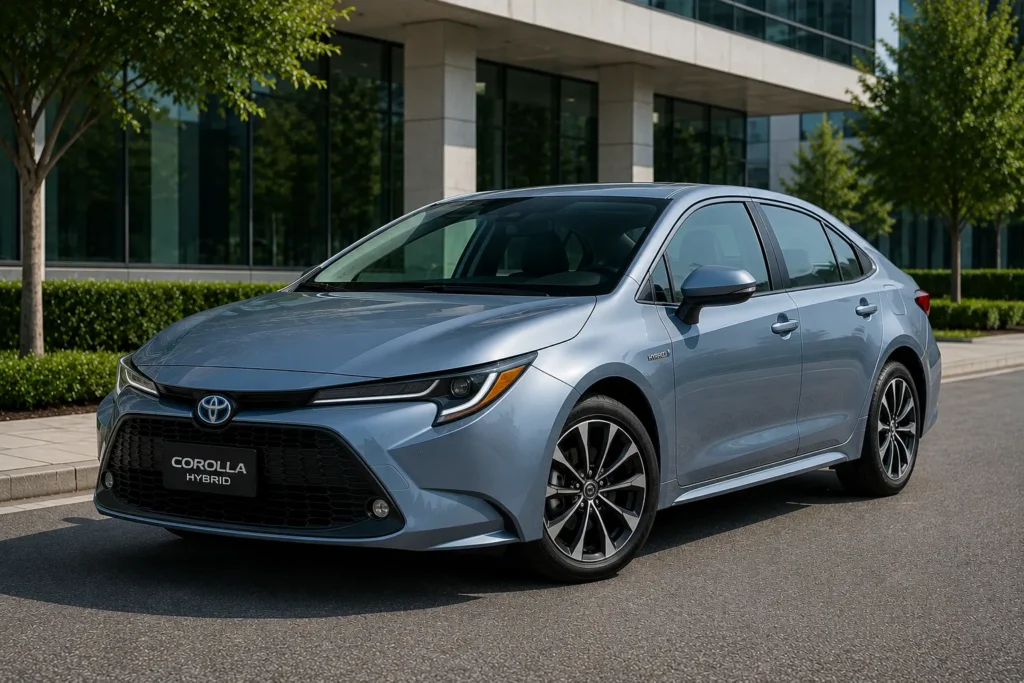
Why We Recommend It: The Corolla Hybrid is proof that you don’t need to spend a fortune to get excellent mpg; it’s one of the most affordable hybrids and best fuel efficient cars on sale and the only compact hybrid sedan with all-wheel drive.
EPA Fuel Economy: LE and XLE FWD trims have a combined 53 city/46 highway/50 combined mpg. AWD models are only 48 mpg combined.
Engine & Performance: A 1.8-liter four-cylinder with an electric motor makes 138 horsepower, enough for safe merging and passing, but not fast by any means.
Interior: Functional, but plain, with more hard plastic trim than competitors such as the Civic, but the price is a very low starting price.
Cargo Space: It is adequate for a compact sedan, on par with the standard gas Corolla.
Safety Features: Toyota Safety Sense 3.0 is standard, and for 2026 blind-spot monitoring with rear cross-traffic alert became standard across all trims as one of the best fuel efficient cars.
| Category | Details |
| Pros | One of the most affordable hybrid carsAvailable AWDExcellent reputation for reliability |
| Cons | Slow accelerationCabin materials feel budget-oriented |
| Best For | First-time buyers and budget-conscious shoppers who want excellent hybrid fuel economy. |
7. Kia Niro Hybrid
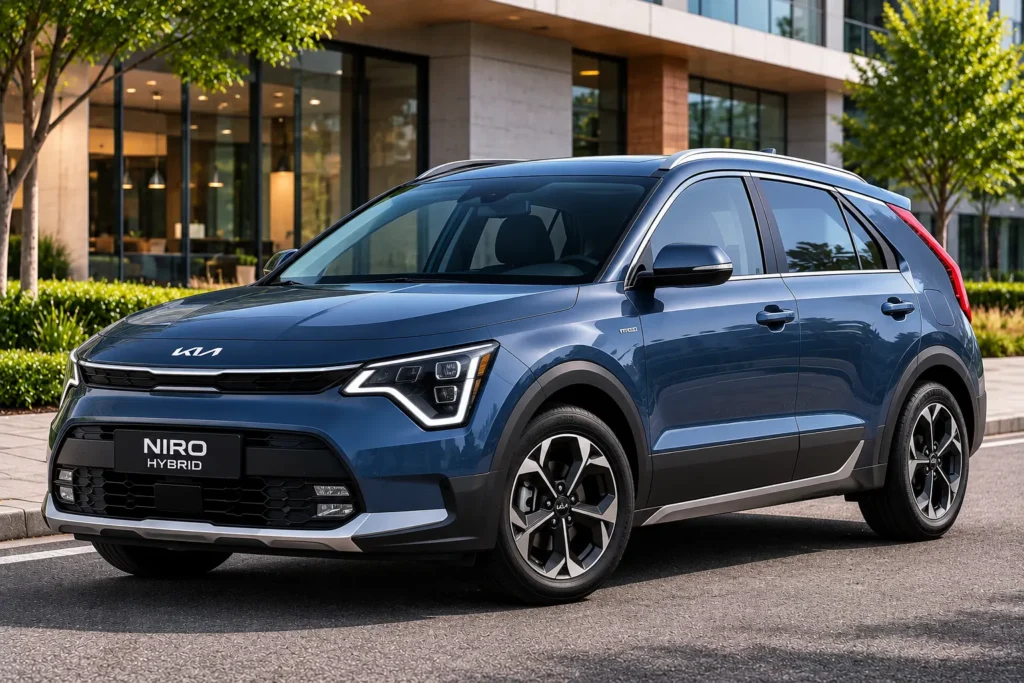
Why We Recommend It: The Niro combines SUV-style practicality with sedan-like efficiency to produce some of the best fuel efficient cars mpg numbers of any compact crossover on the market.
EPA Fuel Economy: LX, EX, and SX trims are rated with 53 city/54 highway/53 combined mpg. The sportier SX Touring trim returns 49 mpg combined.
Engine & Performance: A 1.6-liter four-cylinder with an electric motor produces 139 horsepower and 195 lb-ft of torque through a six-speed dual-clutch automatic.
Interior: Modern, tech-forward (with wireless charging pad and 10.25-inch touchscreen at higher trims).
Cargo Space: A class-leading 63.7 cubic feet of cargo room with the rear seats folded, by far the best fuel efficient cars and most versatile vehicle on this list.
Safety Features: 13 standard driver-assistance technologies, including forward collision-avoidance assist with cyclist and junction-turning detection.
| Category | Details |
| Pros | SUV-like cargo spaceExcellent fuel economyStrong warranty coverage |
| Cons | No all-wheel drive (AWD) optionLimited engine power |
| Best For | Buyers who want hybrid efficiency in a practical, SUV-style vehicle. |
8. Hyundai Sonata Hybrid
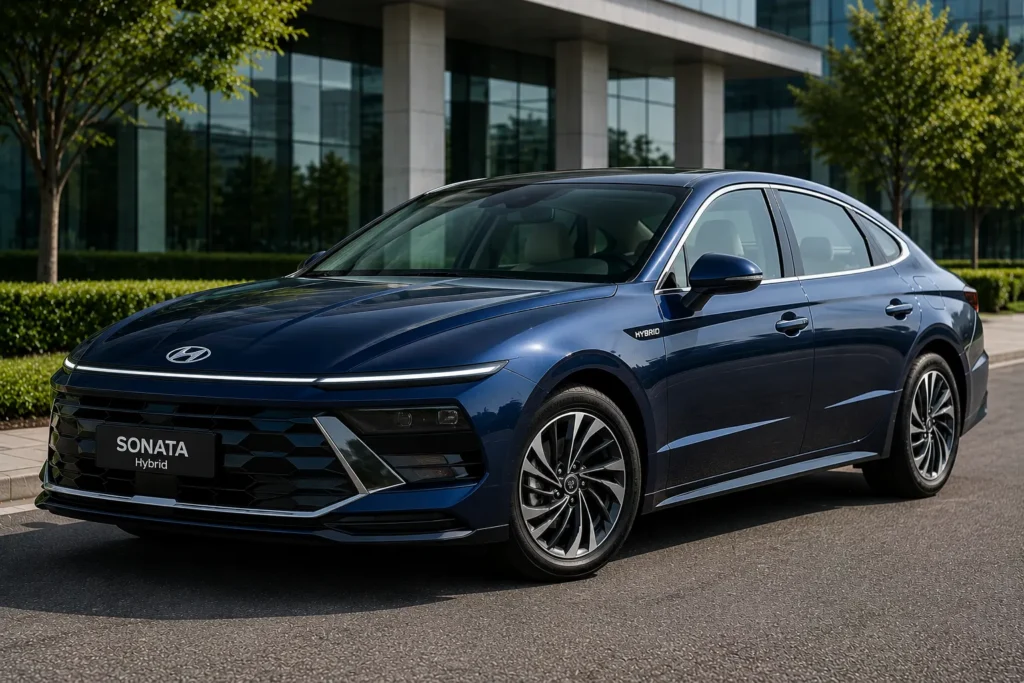
Why We Recommend It: The new Blue trim for the Sonata Hybrid for 2026 makes it more affordable than ever and has some of the best fuel efficient cars highway mpg in the midsize class.
EPA Fuel Economy: The Blue trim is 47 city / 56 highway / 51 combined mpg. The SEL and Limited trims are 44/51/47 mpg.
Engine & Performance: A 2.0-liter four-cylinder hybrid system gives 192 horsepower, and a conventional six-speed automatic (not CVT) is used rather than the CVT to make it more familiar to drive.
Interior: Dual 12.3-inch displays span the dash, and the cabin does seem quite upscale for the price, especially in Limited trim with Bose audio and a head-up display.
Cargo Space: Matches the trunk space of the standard Sonata, and there is no penalty for the hybrid system as one of the best fuel efficient cars.
Safety Features: Forward collision avoidance with pedestrian, cyclist, and junction-turning detection is standard, along with Highway Driving Assist on the Limited trim.
| Category | Details |
| Pros | Excellent highway fuel economyDistinctive stylingSmooth highway cruisingConventional automatic transmission feel |
| Cons | No all-wheel drive (AWD) optionTransmission may hesitate at low speeds |
| Best For | Highway commuters looking for a stylish and fuel efficient cars midsize sedan. |
9. Lexus UX 300h
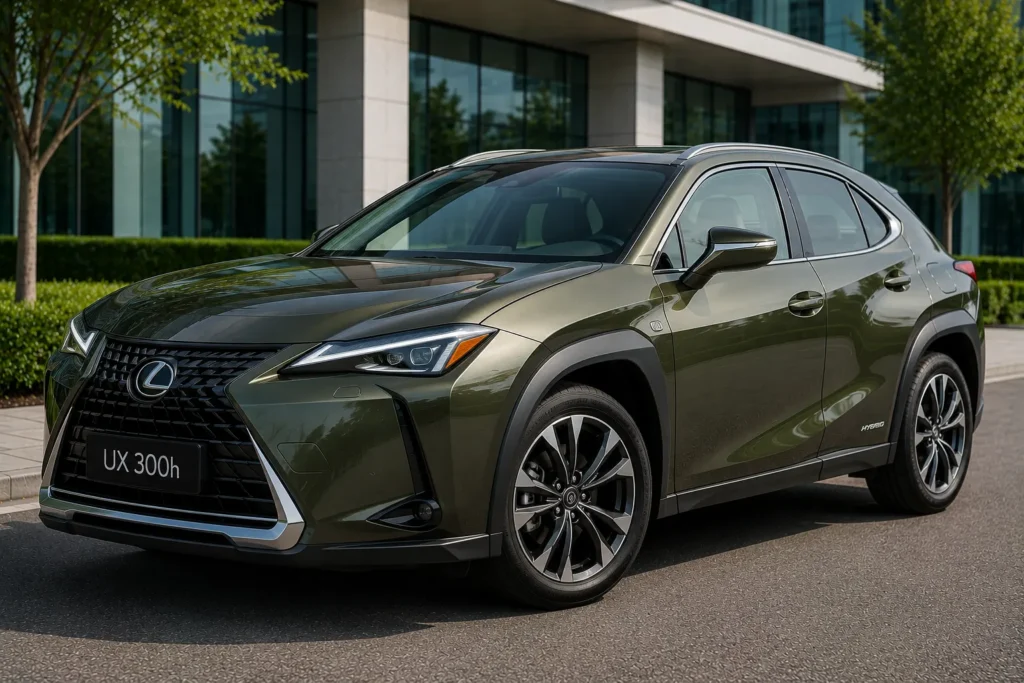
Why We Recommend It: If you want luxury badge appeal at the same time as real efficiency, the UX 300h is essentially the only game in town; no other premium small SUV is even close to matching its mpg.
EPA Fuel Economy: 45 city / 41 highway / 43 combined mpg with FWD; 44/40/42 mpg with available AWD.
Engine & Performance: A 2.0-liter four-cylinder with two electric motors provides 196 horsepower through a continuously variable transmission.
Interior: Really premium, with NuLuxe upholstery, ambient lighting, and a 12.3-inch digital instrument cluster, though the back seat is tight at 33.1 inches of legroom.
Cargo Space: Modest by SUV standards, more in line with a subcompact hatchback than a true crossover.
Safety Features: Lexus Safety System+ 3.0 is standard with pre-collision detection for vehicles, pedestrians, cyclists, and motorcyclists, plus emergency steering assist.
| Category | Details |
| Pros | Class-leading fuel economy for a luxury SUVPremium interior materials and finishExcellent reliability reputation |
| Cons | Tight rear-seat spaceModest engine performanceNot particularly engaging to drive |
| Best For | Luxury-focused buyers who want outstanding fuel efficiency without sacrificing comfort and quality. |
10. Toyota Crown Hybrid
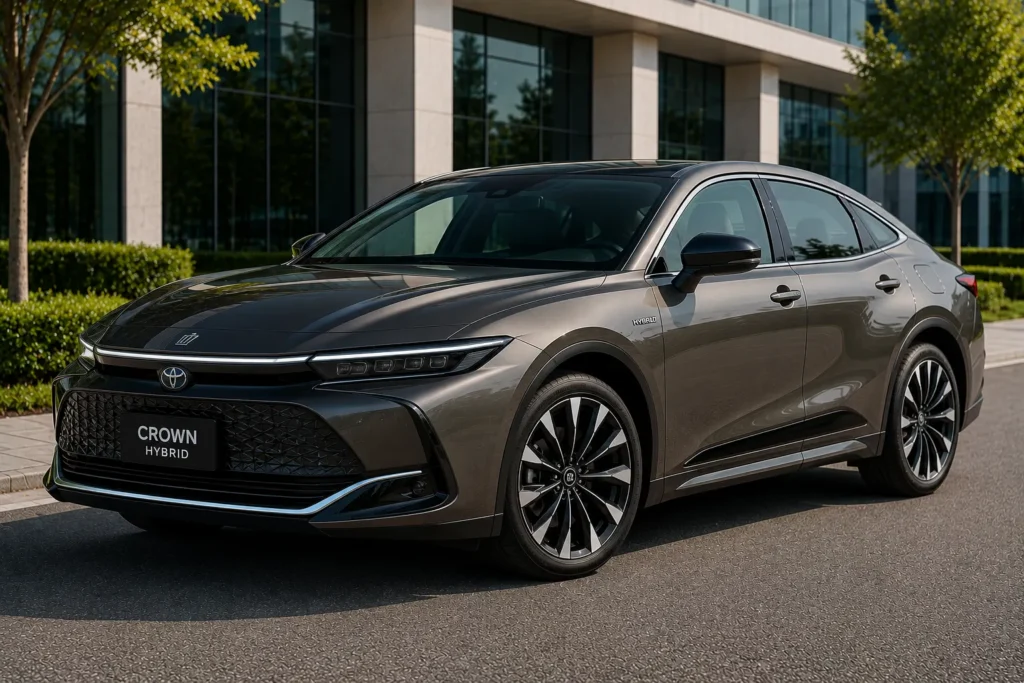
Why We Recommend It: The Crown combines sedan proportions with crossover-like ride height and standard all-wheel drive, offering an entirely different take on the efficient family car, with a high-performance Hybrid Max version for buyers who want more punch.
EPA Fuel Economy: XLE, Limited, and Nightshade trims have 42 city/41 highway/41 combined mpg. The Platinum trim (Hybrid Max) has 29/32/30 mpg performance.
Engine & Performance: The standard hybrid system combines a 2.5-liter four-cylinder with electric motors for 236 horsepower. The Platinum’s Hybrid Max system uses a turbocharged 2.4-liter engine with 340 horsepower and a 5.7-second 0-60 time.
Interior: Advanced and well-equipped, with heated and ventilated front seats, heated rear seats and a 12.3-inch touchscreen.
Cargo Space: 15.2 cubic feet of trunk space, adequate for a midsize sedan, although the battery placement limits its trunk depth slightly.
Safety Features: Toyota Safety Sense 3.0 is standard across the entire lineup.
| Category | Details |
| Pros | Standard premium AWDBold and distinctive stylingPowerful Hybrid Max powertrain option |
| Cons | Heavier and less fuel-efficient than some rivals with the base hybrid systemPremium price tag |
| Best For | Buyers who want all-wheel drive, comfort, and stylish design while still benefiting from hybrid efficiency. |
Fuel Efficient Cars Comparison Table
| Car | MPG (City/Hwy) | Fuel Type | Horsepower | Starting MSRP | Best For |
| Toyota Prius | 57/56 | Hybrid | 194 hp | $28,550 | Efficiency-first commuters |
| Hyundai Elantra Hybrid | 51/58 | Hybrid | 139 hp | $25,450 | Budget buyers |
| Toyota Camry Hybrid | 52/49 | Hybrid | 225 hp | $29,300 | Families |
| Honda Civic Hybrid | 50/47 | Hybrid | 200 hp | $30,590 | Driving enthusiasts |
| Honda Accord Hybrid | 51/44 | Hybrid | 204 hp | $34,990 | Spacious family sedan |
| Toyota Corolla Hybrid | 53/46 | Hybrid | 138 hp | $25,970 | First-time buyers |
| Kia Niro Hybrid | 53/54 | Hybrid | 139 hp | $27,390 | SUV-style cargo needs |
| Hyundai Sonata Hybrid | 47/56 | Hybrid | 192 hp | $30,295 | Highway commuters |
| Lexus UX 300h | 45/41 | Hybrid | 196 hp | $38,250 | Luxury buyers |
| Toyota Crown Hybrid | 42/41 | Hybrid (AWD std.) | 236 hp | $41,440 | AWD/road-trip comfort |
MSRP figures reflect base trim, exclude destination fees unless noted by the source, and are subject to change. MPG figures reflect the most efficient mainstream trim of each model.
What to consider before buying fuel efficient cars?
- Purchase Price: You have to know that the hybrid premium is comparable to your expected annual mileage to estimate payback time.
- Fuel Economy: If your driving leans heavily toward city or highway mpg, check both and keep it in mind.
- Insurance Costs: Get a quote before you buy; premiums can vary meaningfully between similar models.
- Reliability: Use long-term ownership data as opposed to first-year reviews. Warranty: Hybrid components and batteries often carry separate, longer warranty terms, worth checking closely.
- Cargo Space: Hatchbacks and crossovers like the Prius and Niro are more flexible than sedans.
- Safety Ratings: Most 2026 hybrids come with driver-assistance technology, but crash-test ratings vary by model.
- Technology: Touchscreen size, smartphone integration, and driver-assist features differ significantly among our list.
- Resale Value: Toyota and Honda hybrids have historically held value especially well.
- Maintenance Costs: Consider the fact that they will charge for routine service costs, not only for fuel efficient cars for fuel savings over your expected ownership period.
Final Verdict
Best Overall: Toyota Camry Hybrid: the rare combination of strong mpg, real interior space, available AWD, and genuine driving competence.
Best Budget: Hyundai Elantra Hybrid: 54 mpg combined for one of the lowest starting prices in the segment.
Best Hybrid: Toyota Prius is still the efficiency king, now with the styling and AWD option to match.
Best Family: Honda Accord Hybrid: spacious, tech-loaded, and powerful enough to never feel like a compromise.
Best Luxury: Lexus UX 300h is the only premium small SUV that delivers genuinely class-leading mpg.
Best Road Trip: Toyota Crown Hybrid, standard AWD, a comfortable ride, and enough range for long stretches between fill-ups.
Best SUV: The Kia Niro Hybrid has 53 mpg combined with class-leading cargo flexibility that sedans simply can’t match.
Best Long-Term Value: The Toyota Corolla Hybrid has an affordable price, Toyota’s reliability reputation, and real-world mpg that pays for itself fast.
Whatever model you choose, the broader trend for 2026 is clear: fuel efficient cars are no longer a compromise. With gas prices swinging unpredictably, locking in 45–55 mpg today is one of the simplest ways to protect your budget for the years ahead, whether that comes from a hybrid sedan, an SUV, or eventually an EV.
FAQs
Q. What is good gas mileage?
A. For a gas-only car, anything above 30 mpg combined is generally considered good in 2026. For hybrids, good starts closer to 45–50 mpg combined, and the best models on this list go into the mid-50s.
Q. Which car will give you the best gas mileage in 2026?
A. Among mainstream gas-powered hybrids, the Toyota Prius is the best with up to 57 mpg combined. Plug-in hybrids and EVs can get even better MPGe results, but the Prius is still the most efficient car that runs purely on gasoline.
Q. Are hybrid cars worth buying?
A. For most drivers, yes. The price premium over a comparable gas trim has dropped to a few hundred or a couple thousand dollars on many models, and at present gas prices, that premium is often recovered within a few years through fuel savings alone by purchasing fuel efficient cars.
Q. Which SUV offers the best fuel economy?
A. Among all of the vehicles in this guide, the Kia Niro Hybrid leads compact hybrid SUVs at 53 mpg combined, with class-leading cargo space to match.
Q. What can I do to improve my gas mileage?
A. Keep tires properly inflated, avoid hard acceleration, use cruise control on the highway, stay current on maintenance, and avoid unnecessary idling. See the full list above for more detail.