
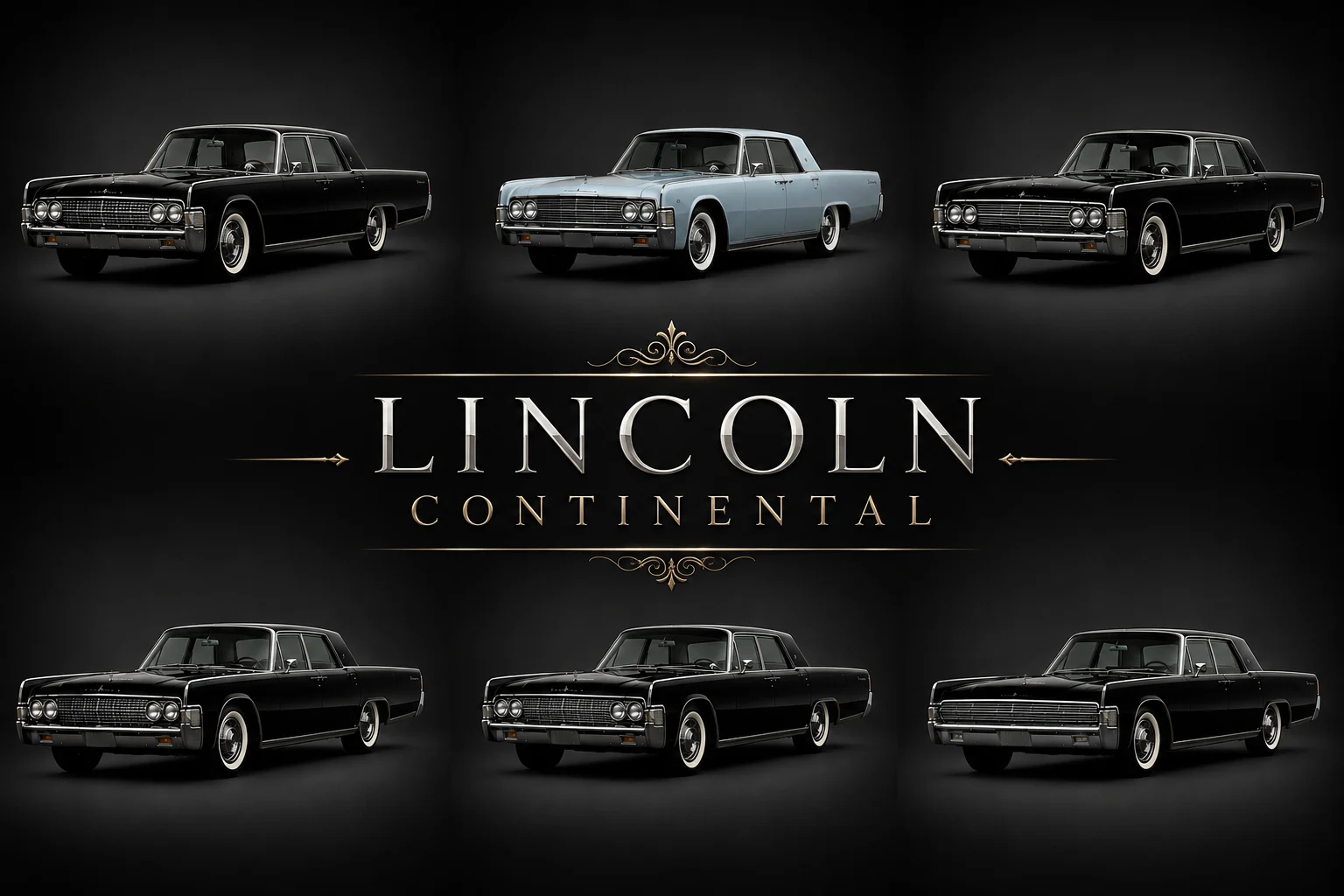
One name has stood for effortless American luxury for over eight decades: Lincoln Continental. From hand-built classics that Frank Lloyd Wright described as “the most beautiful car in the world” to suicide-door icons of the 1960s and tech-laden flagship sedan of 2020, the Continental has always been Lincoln’s statement car, the one designed to show that American luxury could match anything out of Europe.
This guide walks through the full story: the generations, the design details, the interiors, the engines and, because price matters whether you’re shopping in Los Angeles or Dubai— what a Continental actually costs today in USD and AED.
Quick Facts Before We Dive In
- First introduced: 1939 as a one-off for Edsel Ford.
- Production span: 1939-1948, 1956-2002, 2017-2020 ( three different generations).
- The most iconic generation: 1961-1969, with its suicide (coach) doors.
- Last new Continental: built December 2020.
- Signature feature across every era: A longer, lower, more formal silhouette than the rival Cadillacs.
The Full History of the Lincoln Continental
1. The Original (1939–1948): A Personal Car That Became a Legend
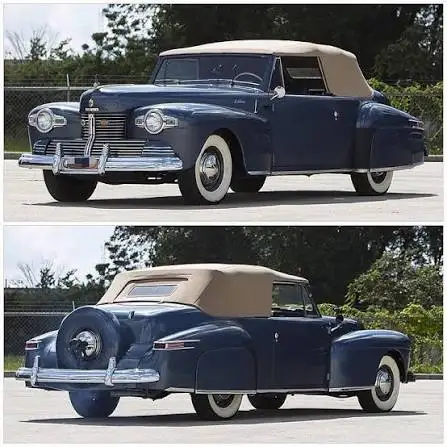
The Continental wasn’t originally meant for the public. Edsel Ford asked designer Bob Gregorie for a personal European-style tourer to drive on vacation in Florida. The result, released in October 1939, became a design icon instantly and even made it to a 1946 Museum of Modern Art exhibition on automotive design excellence. Architect Frank Lloyd Wright loved it so much that he bought two of them.
- Hand-built in low numbers, based on the Lincoln-Zephyr platform.
- The 1948 model was the last American car to be sold with a V12 engine.
- Production halted during World War II as factories transitioned to wartime production.
- The nameplate was gone from 1949 to 1955 completely.
2. The Mark II Era (1956–1960): Rebirth as a Standalone Brand
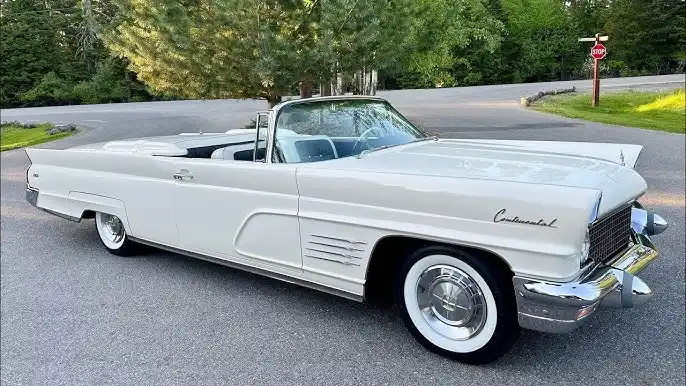
Lincoln revived the Continental in its own Continental Division, making it a hand-finished flagship that fit in better with the regular Lincoln line-up. The car had grown rapidly by 1958 – the largest sedan ever made by an American car maker is still the record. However, even with the technological ambition, it simply couldn’t compete with Cadillac (and the standalone Continental Division was incorporated with Lincoln by 1959).
3. The Icon (1961–1969): Suicide Doors and Timeless Design
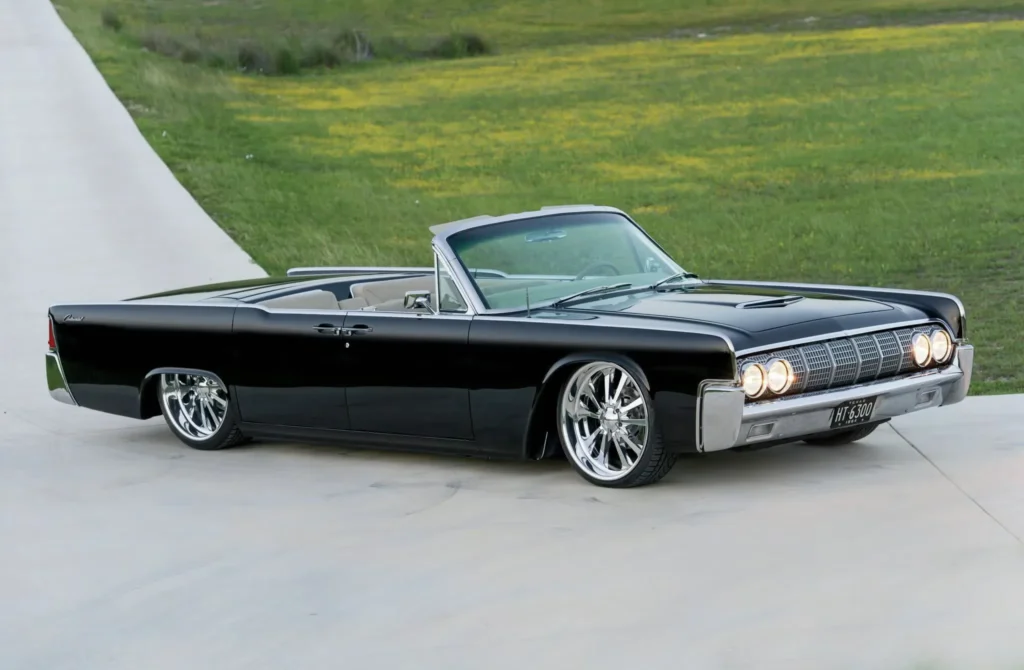
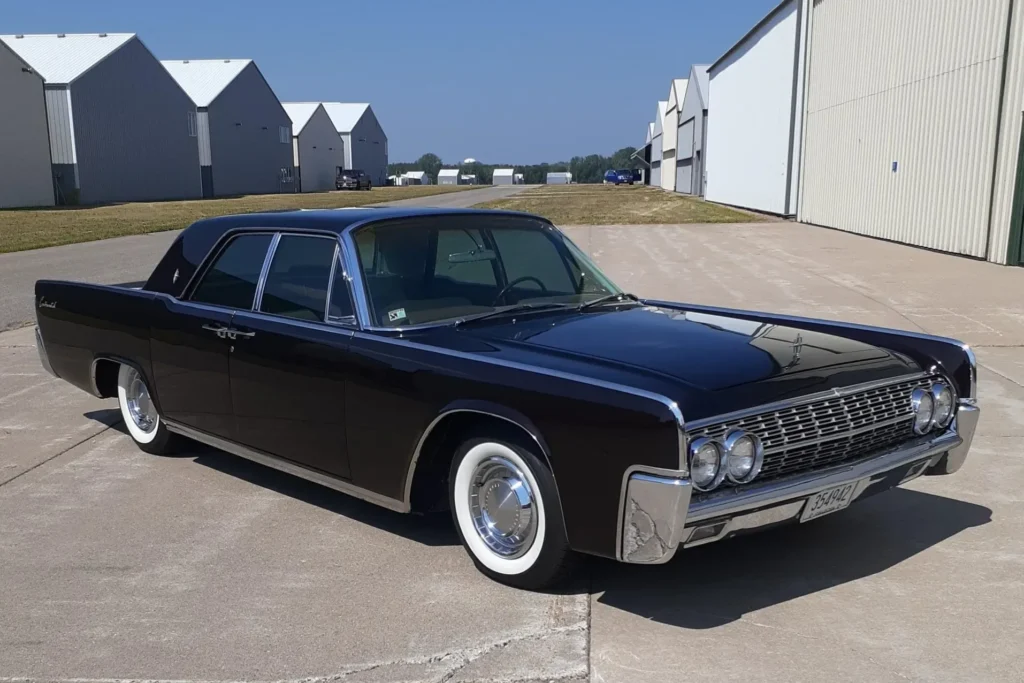
This is the generation most people picture when they hear Lincoln Continental, and for good reason. The 1961-1969 Continental brought rear-hinged “coach” doors (often called suicide doors), razor-clean bodywork and a formal grille that defined an entire decade of American luxury design.
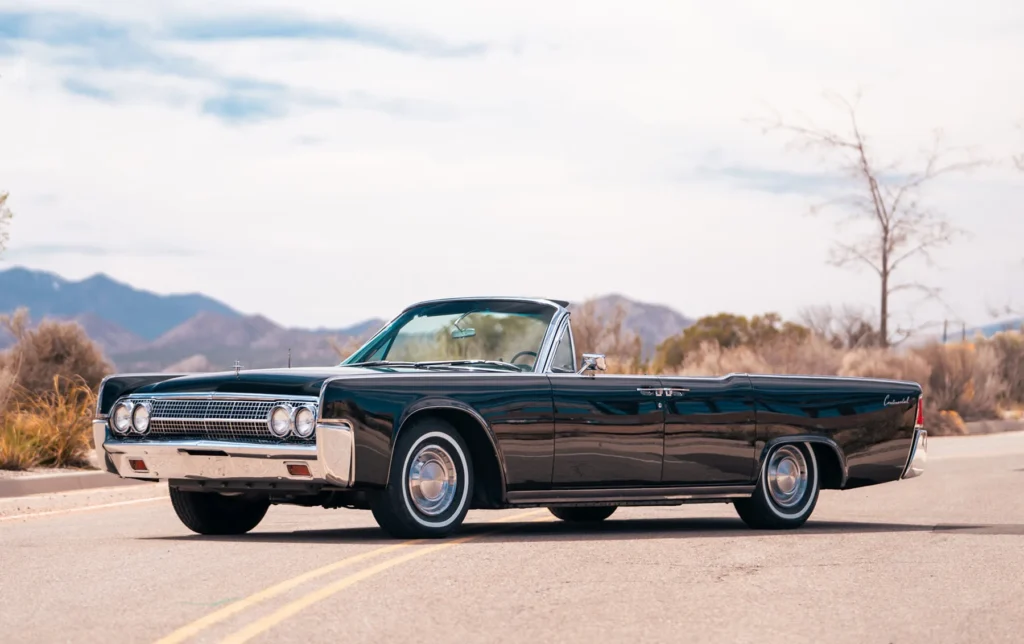
- It was available in a four-door sedan and in 1961-1967 a true four-door convertible, a body style no other manufacturer did.
- Popular among state motorcades and celebrities of the era.
- With a restrained, elegant design in a time when most American cars were piled on chrome and fins.
- It was the 1964 Lincoln Continental, 1965 Lincoln Continental, 1966 Lincoln Continental, 1967 Lincoln Continental that remain some of the most sought-after classics today because of their clean lines and V8 power.
In the case of a 1963 Lincoln Continental or a 1969 Lincoln Continental restoration project, this generation is where collector demand is strongest.
4. The Personal Luxury Era (1970–1980): Bigger, Bolder, More Formal
The Lincoln Continental 1970 and its successors grew larger, heavier and more traditional “American boulevard cruiser” in character, moving away from the crisp 1960s look toward a more imposing, formal profile. The era also gave birth to the Lincoln Continental Mark V, a personal luxury coupe spin-off that became one of the best-selling Lincolns of the decade.
- Bigger V8 engines, softer suspension tuning and opera windows became signature touches.
- The 1975 Lincoln Continental, 1976 Lincoln Continental and 1977 Lincoln Continental went back to chrome, vinyl roofs and velour interiors.
- By 1979 Lincoln Continental and 1980 Lincoln Continental production, fuel economy regulations were beginning to shift the platform and set the stage for the next transformation.
In 1981, the Continental name was given to what we now call the Lincoln Town Car, and “Continental” was transferred to a smaller, downsized version.
5. The Downsized Years (1982–2002): Efficiency Over Excess
From 1982 to 1987, the Continental was exclusively a four-door sedan and moved to front-wheel drive for the first time. The eighth generation took place from 1988 to 1994 and the ninth from 1995 to 2002, each one a bit more modern and tech-forward than the last, power everything, keyless entry and eventually digital instrument clusters.
But the era ended on a rough note. Sales fell from around 35,000 units in 1998 to just 280 units in 2003, and Lincoln pulled the plug. The 2000 Lincoln Continental, 2001 Lincoln Continental and 2002 Lincoln Continental were the last cars of this generation before a 15-year hiatus.
6. The Modern Revival (2017–2020): A Comeback Built for the Smartphone Era
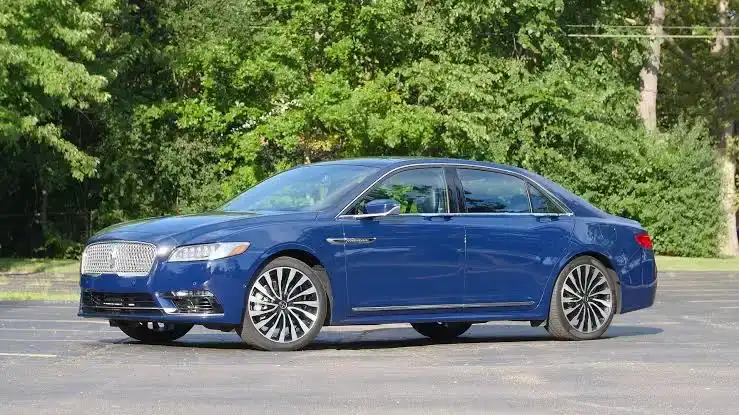
After being gone since 2002, the tenth-generation Continental finally hit the road in 2016 as a 2017 model and replaced the slow-selling Lincoln MKS in the mid-size luxury sedan segment. It was Lincoln’s most serious attempt yet to go head-to-head with the Mercedes-Benz E-Class and BMW 5 Series.
- The engine options were a 3.7-liter naturally aspirated V6, a 2.7-liter twin-turbo V6 with 335 hp and a range-topping 3.0-liter twin-turbo V6 with 400 horsepower.
- The front-wheel drive on the lower trims was standard, with all-wheel drive available, and the top Black Label trim with AWD and torque-vectoring rear differential was standard.
- For the 80th anniversary Lincoln brought back the suicide-door concept with a limited Coach Door Edition stretched six inches and finished as an ultra-luxury, two-seat rear cabin.
Despite an initial buzz on the new product, sales dropped from more than 12,000 units in 2017 to just 5,256 by 2020, because SUVs and trucks took over 80% of U.S. vehicle sales. The last examples, designed for the Chinese market, rolled off the line in late 2020, closing the book on the Continental, for now.
Is There a 2025 or 2026 Lincoln Continental?
In the meantime, there is no new Lincoln Continental for 2025 or 2026. Lincoln is now turning all of its products into SUVs, Corsair, Nautilus, Aviator and Navigator and a growing electrified portfolio. Rumors about a new 2025 or 2026 Lincoln Continental continue to linger online, often related to sketches or fan conjecture, but Lincoln has not moved forward with a production announcement. When you see listings for a new 2025 or 2026 Continental in today’s market, they are almost always for 2020 models or aftermarket customizations, not factory-new production.
Interior & Luxury Features That Defined the Continental
The Continental interior was where Lincoln tried hardest to out-luxury the competition in every generation: Highlights that made it a true rival to European flagships:
- 30-way adjustable Perfect Position seats for the late Black Label models with massage, heating and cooling capabilities.
- Real wood and metal trim, from the walnut inserts added in 1947 through to the open-pore wood on 2020 models.
- Revel Ultima 19-speaker premium audio system, one of the most highly rated factory sound systems of its era.
- Chateau, Thoroughbred and Chalet interior themes on the last generation of models with different leather, stitching and trim combinations.
- Rear-seat luxury treatment on the Coach Door Edition, a two-seat rear cabin with center console, wireless charging, an ice bucket and umbrella holders built into the doors.
- Suicide/coach doors, reintroduced as a design flourish that links the modern car directly back to the beloved ‘60s originals.
When you’re comparing a 1965 Lincoln Continental interior to a 2018 Lincoln Continental or 2019 Lincoln Continental, the difference is generational, hand-fitted leather and chrome switchgear versus digital climate control and heated massage seats, but the aim has never changed: make the cabin feel like a private lounge on wheels.
Specs and Performance Snapshot
| Era | Notable Engine | Output | Drivetrain |
| 1961–1969 | 430 cu in V8 | ~320 hp | Rear-wheel drive |
| 1970s (Mark V era) | 460 cu in V8 | ~200–365 hp (varies by year/emissions) | Rear-wheel drive |
| 1988–2002 | 4.6L Modular V8 | 260–275 hp | Front-wheel drive |
| 2017 Continental (Base) | 3.7L V6 | 305 hp | FWD / AWD |
| 2017–2020 Continental (Mid) | 2.7L Twin-Turbo V6 | 335 hp | FWD / AWD |
| 2017–2020 Continental Black Label | 3.0L Twin-Turbo V6 | 400 hp / 400 lb-ft | AWD (Standard) |
The current Continental’s flagship 3.0-liter engine could accelerate the car from 0-60 mph in about 5.3 seconds (fast for a nearly 4,400-pound luxury sedan) and achieve an EPA rating of around 21 mpg.
Lincoln Continental Pricing Guide: US Dollars & AED
Prices vary widely by generation, condition and market, but here is a realistic snapshot for shoppers in the United States and the Gulf (UAE, Saudi Arabia, Qatar, Kuwait, Bahrain, Oman). All AED figures are based on the UAE dirham peg of 1 USD = 3.67 AED.
New (When Last Available): 2017–2020 Models
- 2017 Continental Premiere (base): started at $45,485 (about AED 167,000).
- 2017 Continental Black Label: started at $69,105 (about AED 253,700).
- 2020 Continental base MSRP: around $47,300 (about AED 173,700).
- 2020 Continental Black Label MSRP: around $71,200 (about AED 261,400).
- 2020 Continental Coach Door Edition: $115,470 (about AED 424,000).
Used Market Today (2025–2026 pricing trends)
- The average asking price for a used 2020 Continental Black Label is around $50,365 in the country with listings at around $24,194, about AED 88,900 to AED 184,900.
- A 2020 base Continental sedan now trades around $19,300 in the used market, roughly AED 70,800.
- A used 2020 Black Label today is around $26,000 (about AED 95,400).
- Classic 1961-1969 Continentals of good, driver-grade configuration are around $25,000–$45,000 (AED 91,800-165,300) and fully restored and convertible examples can go up to $70,000–$100,000+ (AED 257,000–367,000+).
- The 1970s Mark series and Continentals are cheaper entry points into the classic market, usually $8,000–$20,000 (AED 29,400–73,400) depending on conditions.
Gulf Buyer Notes
Shoppers in UAE, Saudi Arabia, and other markets should be factoring in a few region-specific costs in with the sticker price as well:
- Import duty (typically around 5% in the UAE for GCC-standard vehicles).
- Customs registration and RTA/traffic authority fees.
- Shipping costs if importing a classic Continental from the US, generally $1,500-$3,000 depending on the port and shipping method.
- Classic American cars, particularly 1960s Continentals, have a strong collector following in the Gulf so well-documented, low-mileage examples can command a premium over comparable US asking prices.
Buying Guide: What to Look For
Shopping for a classic (1960s–1970s):
- Check for rust in the floor pans, trunk, and lower doors, a common problem in cars this old.
- Verify power windows and vacuum-operated systems work, as these were complicated in their era and expensive to restore.
- Request documentation on any suicide-door alignment work, as panel gaps are notoriously tricky to get right.
Shopping for a modern 2017–2020 Continental:
- Black Label trims are higher value and offer the most attractive tech and interior elements.
- AWD models are worth it in a region with rain, snow, or rough roads.
- Ensure the twin-turbo V6 has a history of ongoing maintenance; turbocharged engines love regular oil changes.
- Coach Door Editions are very rare (only a few hundred were built in total), so you should check for authenticity with the VIN before paying a premium.
Lincoln Continental vs. Its Rivals
If you’re weighing a classic or a modern example, it helps to know who the Continental was actually competing against in each era:
1960s–1970s: The Continental’s main rival was the Cadillac Fleetwood and Cadillac Sedan de Ville. Where Cadillac leaned into chrome, fins, and size, Lincoln’s design team pushed toward restraint, cleaner lines, a lower roofline, and understated badging. That’s why the 1961–1969 cars still look modern parked next to their contemporaries; the Continental aged more gracefully than almost anything else of the era.
In the 1980s–1990s, as the car downsized and shifted to front-wheel drive, the car’s closest competitor was Cadillac DeVille and later imports like the Lexus LS400. This is where the Continental started losing ground, Lexus in particular offered a high-quality build and reliability that put real pressure on Lincoln and Cadillac.
2017–2020: The modern Continental targets the Mercedes-Benz E-Class, BMW 5 Series, Genesis G90, all German or Korean brands that have stronger brand appeal in the luxury space. Lincoln’s pitch was value: a bigger, more interesting car for less money, with a smoother ride for comfort instead of cornering. It was a strategy that worked on paper but never quite translated into the sales volumes Lincoln needed to keep the nameplate alive.
Why the Continental Still Has a Following in the US and the Gulf
Two very different collector cultures keep the Continental relevant today:
In the United States, the 1960s Continental is a staple of classic car shows, valued for its clean design, its association with mid-century Americana, and its status as one of the few American four-door convertibles that have ever been built at scale. Restoration parts and specialist mechanics are easily found, and the car is relatively inexpensive compared with rarer European classics.
In the Gulf, especially in the UAE and Saudi Arabia, American full-size luxury cars are well-liked by collectors who appreciate their appearance, comfort, and V8 power. Wide roads, a strong car culture, and a reputation for statement vehicles make the Continental, particularly coach-door models, perfect for weekend driving and formal occasions such as weddings.
Both markets also share an interest in the final-generation 2017–2020 cars, particularly the Black Label and Coach Door trims, which are increasingly viewed as future collectibles now that the nameplate has gone quiet again.
Final Word
Few nameplates have been revived, retired, and reinvented as many times as the Lincoln Continental, and fewer have survived eight decades of changing tastes. So whether you’re shopping for a restored 1965 Lincoln Continental for weekend cruising or comparing a used 2020 Continental Black Label with its German counterparts, the Continental is still one of the most striking examples of American luxury done right. Don’t expect a factory-new one in showrooms anytime soon; for now, the story ends in 2020, but there is another door open for a future comeback.
FAQs
Q. Why was Lincoln Continental discontinued?
A. Lincoln discontinued the Continental due to weakening sales, alongside a broader industry shift toward SUVs, which accounted for more than 80% of US vehicle sales by mid-2021. The last examples were built in December 2020, and no direct successor was announced.
Q. Will there be a new Lincoln Continental for 2025 or 2026?
A. No official revival has been announced. Lincoln’s current lineup is very much about SUVs, so any “2026 Lincoln Continental” you see on the internet is just speculation, not a confirmed production vehicle.
Q. What is a Lincoln Continental worth today in dollars and AED?
A. It is very much a generation and condition-based business. A used 2020 model in good condition would be around $19,000–$50,000+ (AED 70,000–184,000+), and classic 1960s Continentals in good condition can retail for $25,000–$100,000+ (AED 92,000–367,000+) depending on body type and restoration quality.
Q. Can I import and register a classic Lincoln Continental in the UAE or Saudi Arabia?
A. Yes, classic American cars are popular in the Gulf, but buyers should budget for import duty (around 5% in the UAE), shipping (around $1,500–$3,000 from the U.S.), and local registration requirements, which can vary from emirate to emirate or country.
Q. What made the Lincoln Continental’s suicide doors so famous?
A. The rear-hinged coach doors on the 1961 model gave the Continental a distinctive, formal silhouette unlike anything else on the road at the time. Lincoln reintroduced the concept on the limited 2019–2020 Coach Door Edition because of the nostalgia and collector demand for the original design.