
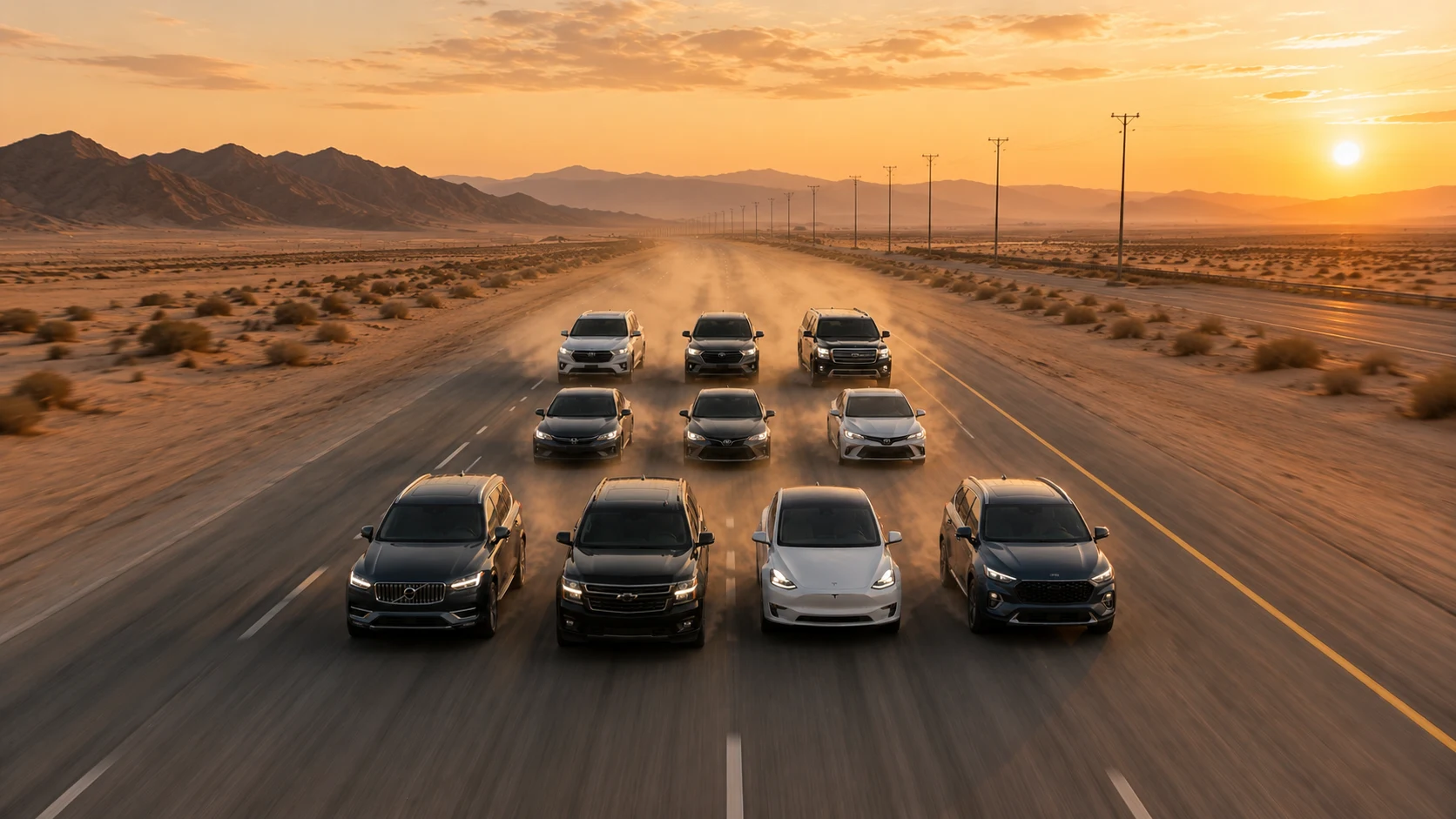
There is a moment on every great road trip, one hour or so after a gas station coffee, when you think the car is either making the trip better or quietly working against you. A stiff seat. A buzzy cabin. A fuel gauge that drops faster than you’d like. And that is why you must choose that vehicle before you load the trunk.
The best cars for road trips are not about horsepower numbers or showroom shine. It is comfort that lasts eight hours in the same seat, fuel economy that hasn’t taken a detour every 200 miles, cargo that can swallow everything from camping gear to oversized suitcases, and safety tech that takes some of the mental load off your shoulders on a dark highway.
Every traveler asks something very different when searching for the best cars for road trips. Families want three rows and a DVD-free way to keep the peace. Couples want a quiet, efficient sedan that sips fuel on long interstate runs. Solo travelers and weekend warriors want something nimble enough for city parking but rugged enough for a forest service road. Adventure seekers want all-wheel drive, ground clearance, and a roof rack that can actually carry something.
This guide breaks down the best cars for road trips of 2026 by comfort, fuel economy, cargo space, technology, and safety, and then sorts them by who they’re actually built for. If you’re looking for a fuel-sipping hybrid, a three-row family hauler, or an EV that can run on Superchargers, you’ll get a real answer here, not just a list of trims pulled from a brochure.
What Makes the Best Cars for Road Trips?
Not every comfortable commuter car turns into one of the best cars for road trips once the miles start stacking up. The qualities that matter on a 20-minute test drive, fast acceleration and punchy stereo, aren’t the ones that matter at hour six on I-80. What separates the best cars for road trips from everything else on the lot?
Comfort for Long Hours on the Road
- The best cars for road trips include seat cushioning, which is the first thing your body notices and the last thing most buyers think to test properly.
- A seat that feels good for 15 minutes in a showroom can be a real problem by the time you cross a second state line. Instead of soft and plush seats that feel good at first touch but are hollow over long distances, look for dense foam.
- Lumbar support matters just as much, especially for drivers with any history of lower back discomfort.
- Adjustable lumbar, ideally power-adjustable, allows you to fine-tune support as your body fatigues over a long stretch behind the wheel.
- Legroom is important to everyone in the vehicle, not just the driver. A road trip car with a cramped second row turns rest stops into negotiations.
- Ride quality and cabin noise levels add up to a comfort equation: a suspension that absorbs highway expansion joints without jostling passengers and strong noise insulation make the difference between arriving relaxed and arriving wrung out.
Fuel Efficiency and Driving Range
- Fewer fuel stops mean more time traveling to your destination and more actual savings in a multi-day trip.
- Gas-only vehicles are still reliable and good to refuel anywhere, but they generally can’t match the performance of hybrid best cars for road trips, especially on long highway trips.
- Hybrid vehicles have become the sweet spot for many best cars for road trips in 2026, with 35 to 51 MPG combined depending on the model and no charging infrastructure required.
- Electric vehicles deliver the lowest running costs and near-silent cruising, but road trip planning means factoring in charging stops, something that has become much easier with the expansion of fast-charging networks but still needs a bit more planning than a gas fill-up.
Cargo Space and Passenger Room
- Storage of luggage is the most obvious cargo, but real-world best cars for road trips packing involve coolers, camp chairs, strollers, and the inevitable bag of snacks that arrives somewhere around day two.
- Family travel needs typically demand at least 75-85 cubic feet of cargo space with rear seats folded and rear-seat comfort (legroom, headroom, and cupholders) to keep people civil for the duration.
Safety Features for Highway Travel
- Modern driver-assistance technology has become a near-standard feature on the best cars for road trips, and for good reason.
- Adaptive Cruise Control reduces fatigue on long, monotonous highway stretches by automatically maintaining following distance.
- Lane Keep Assist gently nudges you back into your lane if attention drifts.
- Blind spot monitoring is invaluable when towing a trailer or navigating unfamiliar interstates packed with merging traffic, and automatic emergency braking adds a critical layer of protection during the unpredictable moments that long highway drives inevitably bring.
Best Cars for Road Trips in 2026
Here’s where your search for the best cars for road trips gets specific. Below are ten of the best road trip cars for 2026: hybrid SUVs, efficient sedans, three-row family haulers, and one all-electric option that’s reshaped what long-distance EV travel looks like.
1. Toyota Highlander Hybrid
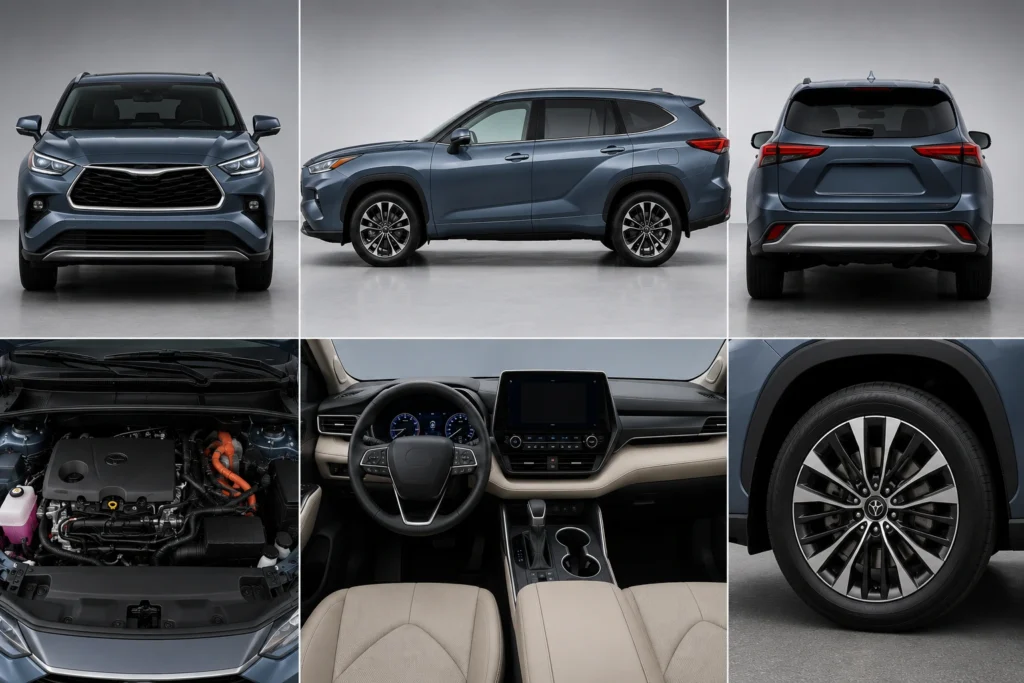
Why It’s Great: The Highlander Hybrid has always been a default response to “What is a good car for long drives?” and the 2026 model keeps that brand reputation up-to-date. All-wheel drive throughout the lineup, a quiet cabin, and Toyota’s history of excellent reliability all make it one of the most reliable and best cars for road trips on this list.
Fuel Economy: The 2026 Highlander Hybrid is rated at a manufacturer-estimated 35 MPG combined, which is a considerable improvement from the gas-only model’s 24 MPG, which translates to fewer fuel stops on a long route.
Cargo Space: Up to 84.3 cubic feet of cargo space with the second and third rows folded, with the hybrid battery tucked under the second-row seats so it doesn’t eat into passenger or cargo room.
| Pros | Cons |
| Excellent fuel economy for a three-row SUV | Third-row legroom still lags behind larger rivals |
| Standard AWD | Towing capacity is limited to 3,500 pounds on hybrid models |
| Strong resale value | Less cargo space behind the third row than some competitors |
| Comfortable third row for a midsize SUV | Higher starting price than some non-hybrid rivals |
2. Honda CR-V Hybrid
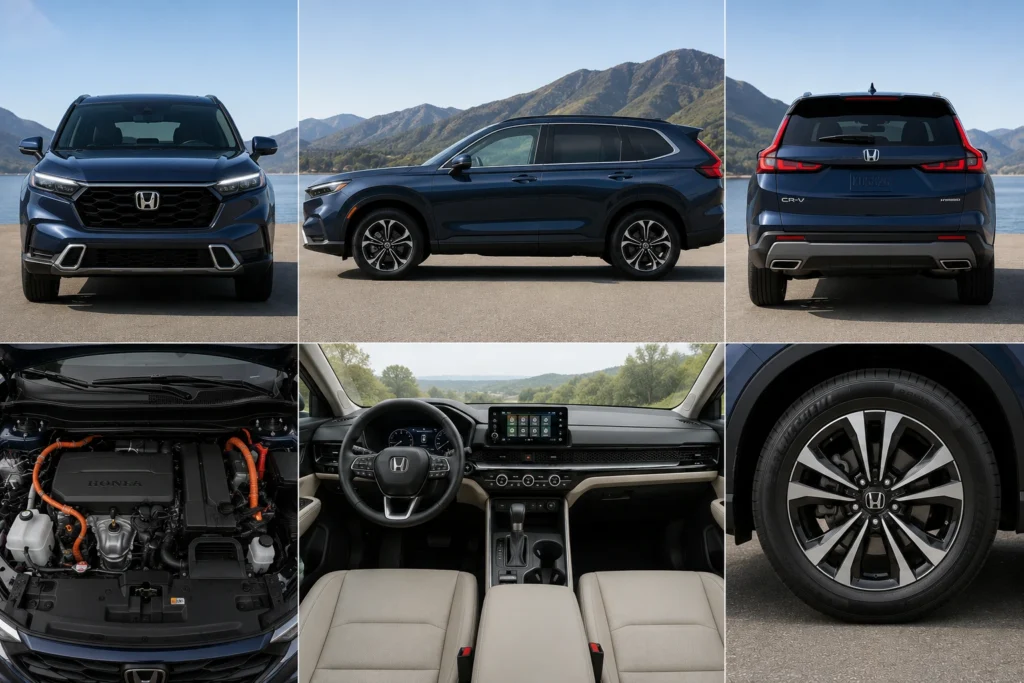
Why It’s Great: If fuel economy is your top priority among the best cars for road trips, the CR-V Hybrid is hard to beat in the compact SUV class. It has real MPG that shows up in the gas mileage count and a cabin that is above its size class for comfort.
Interior Comfort: Front seats are nice and comfortable for front-end comfort; rear seats allow for a compact SUV interior with more space to move comfortably and less noise in the rear legroom and relatively low cabin noise compared to the previous generation of best cars for road trips (like the CR-V Hybrid), which are good companions for long-term comfort.
Fuel Economy: Up to 40 MPG combined on 2WD hybrid trims (43 city/36 highway), with AWD hybrid trims still returning a strong 37 MPG combined.
| Pros | Cons |
| Best-in-class fuel economy for the segment | Hybrid models have slightly less cargo space behind the second row than gas models |
| Up to 76.5 cubic feet of maximum cargo space | Less overall passenger and cargo room than many midsize three-row SUVs |
| Strong safety ratings | Not ideal for larger families needing extra space |
| TrailSport trim is great for light off-pavement adventures | Hybrid cargo capacity is reduced compared to gas trims |
3. Subaru Outback
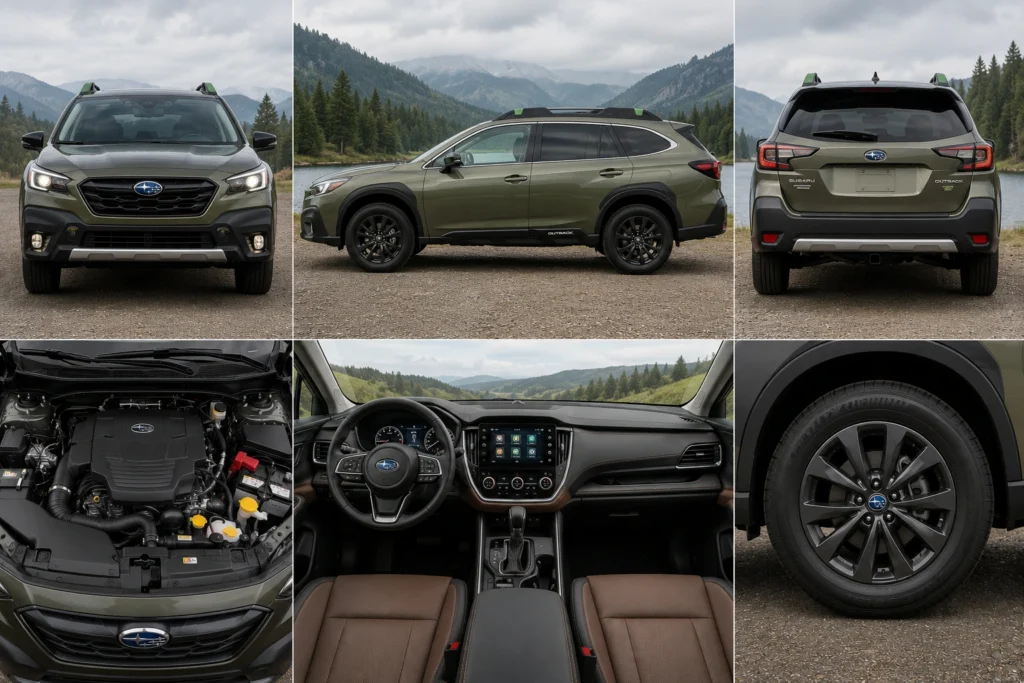
Why It’s Great: The now fully redesigned 2026 Outback enters SUV territory with a taller, boxier shape and the wagon-like handling with all-wheel drive that has long made it a favorite among road trippers for years.
AWD Capability: Standard symmetrical all-wheel drive on every trim with up to 9.5 inches of ground clearance and X-MODE for tackling gravel, snow, and rough campground access roads.
Camping & Adventure features: Wilderness trim includes all-terrain tires, reinforced underbody protection, and roof rails up to 800 pounds that will be ideal for rooftop tents or cargo boxes on long trips.
| Pros | Cons |
| Class-leading off-pavement capability | Fuel economy (up to 31 MPG highway) trails hybrid competitors |
| Up to 80.5 cubic feet of maximum cargo space | Turbocharged Wilderness trim is less fuel-efficient |
| Subaru’s strong reputation for long-term reliability | Highway efficiency drops with the more capable Wilderness model |
| Excellent choice for road trips and outdoor adventures | Not as economical as hybrid SUVs for daily driving |
4. Kia Telluride
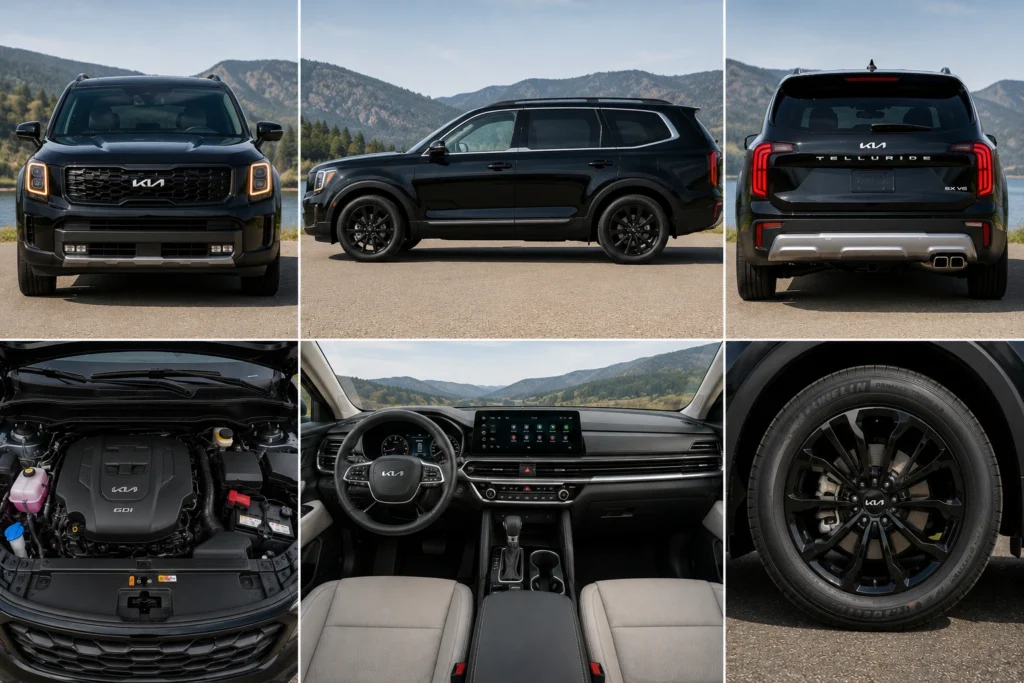
Why It’s Great: Just a few three-row SUVs are good at the balance of value, style, and family-friendly space as well as the Telluride. It is one of the most common but also best cars for road trips for large families heading into the summer travel season.
Three-Row Seating: Seating for up to eight, with genuinely usable adult space in the third row (a rarity in this price bracket).
Premium Cabin: Nappa leather options, heated and ventilated front and second-row seats, and dual panoramic sunroofs give the Telluride an interior that feels a class above its price point.
| Pros | Cons |
| Up to 87 cubic feet of maximum cargo space | V6 fuel economy is modest at around 22 MPG combined |
| Tows up to 5,500 pounds on the X-Pro trim | Redesigned model is expected for the 2027 model year |
| Comprehensive standard safety suite | Current generation may feel dated compared to the upcoming redesign |
| One of the roomiest SUVs in its class | Waiting for the next-generation model may be a better value |
5. Hyundai Palisade
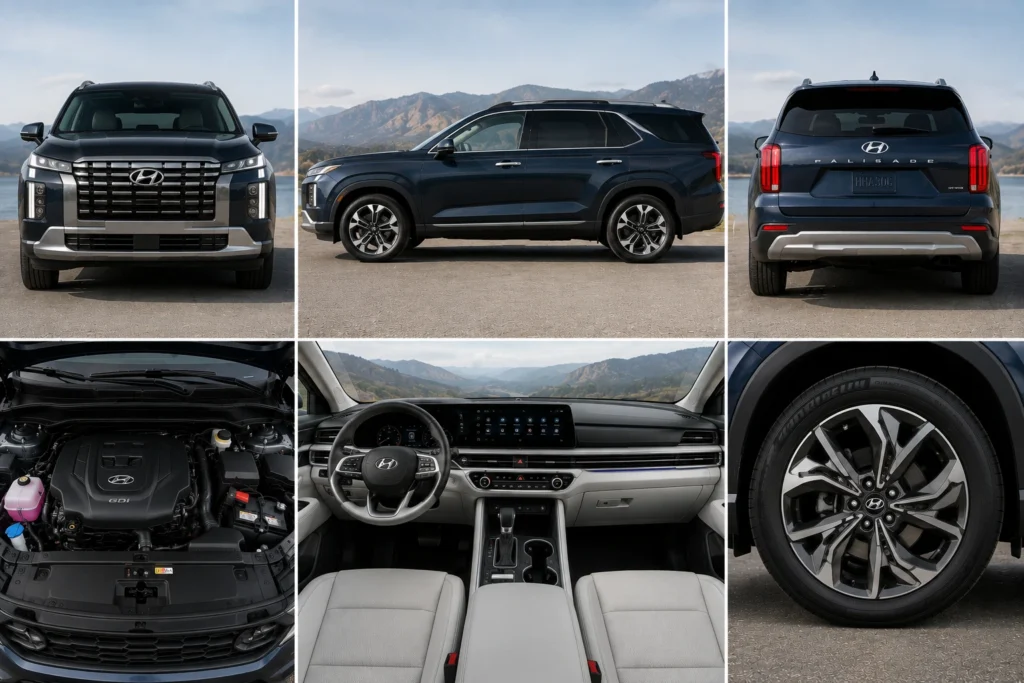
Why It’s Great: The redesigned 2026 Palisade grew in nearly every dimension and added a long-awaited hybrid powertrain, instantly making it one of the more compelling best cars for road trips in the three-row luxury-adjacent space.
Luxury features: Relaxation seats up front and in the second row, a curved dual-display cockpit, and a Bose 14-speaker premium audio system take the cabin experience beyond typical family-SUV territory to a whole new level.
Highway Comfort: Over 44 inches of front legroom and a quiet cabin make the Palisade one of the most comfortable cars for long highway trips in its class.
| Pros | Cons |
| Hybrid models deliver up to 34 MPG combined | Third-row space is tighter than the Telluride’s |
| Up to 86.7 cubic feet of maximum cargo space | Base V6 returns only 21 MPG combined |
| Expected to earn excellent safety ratings | Fuel economy drops significantly if you skip the hybrid |
| Spacious and practical for family travel | Hybrid is the better choice, limiting appeal of the V6 |
6. Toyota Camry Hybrid
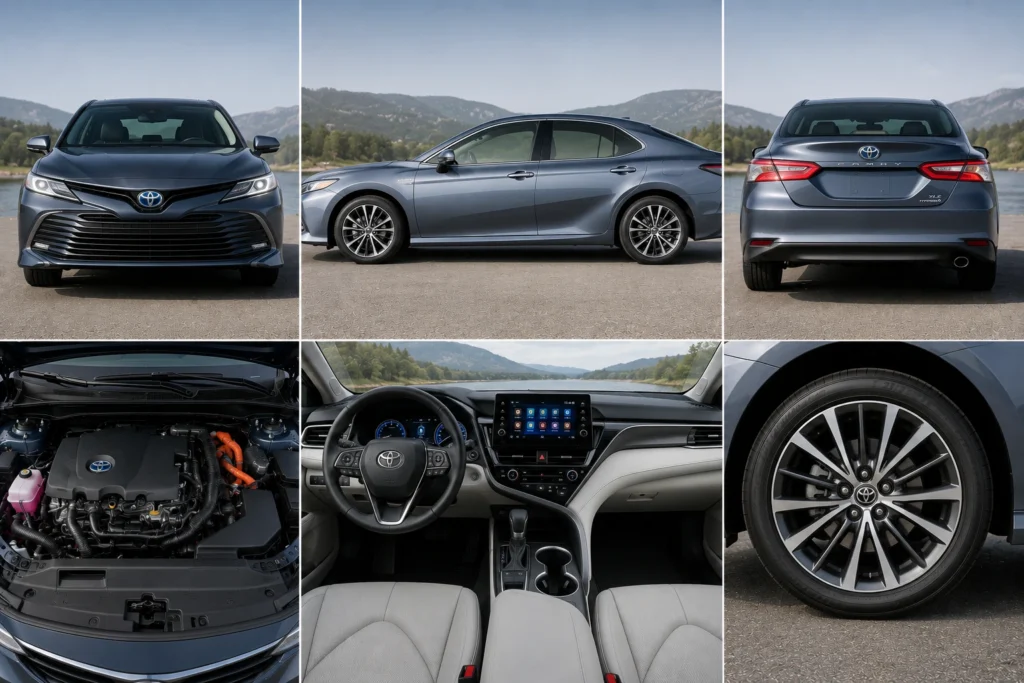
Why It’s Great: Toyota now sells the Camry exclusively as a hybrid, and for road trip duty, that’s a real upgrade, you get sedan efficiency without sacrificing the reliability the Camry name has built over decades.
Fuel Efficiency: The LE FWD trim is EPA-estimated 51 MPG combined, one of the best fuel economy figures of any non-plug-in vehicle on this list with a 13.2-gallon tank that can produce 670-plus miles on a single fill.
Reliability: Toyota’s hybrid system has a long track record of low long-term maintenance costs that has made the Camry Hybrid a low-stress choice for the best cars for road trips on a high-mileage schedule.
| Pros | Cons |
| Good combined fuel economy | Trunk space is limited to 15.1 cubic feet |
| Quiet and smooth ride | Cargo capacity is small for family road trips |
| Available all-wheel drive for the first time in this generation | Better suited for couples than families needing luggage space |
| Comfortable and refined for daily driving | Less practical than SUVs or wagons for long vacations |
7. Honda Accord Hybrid
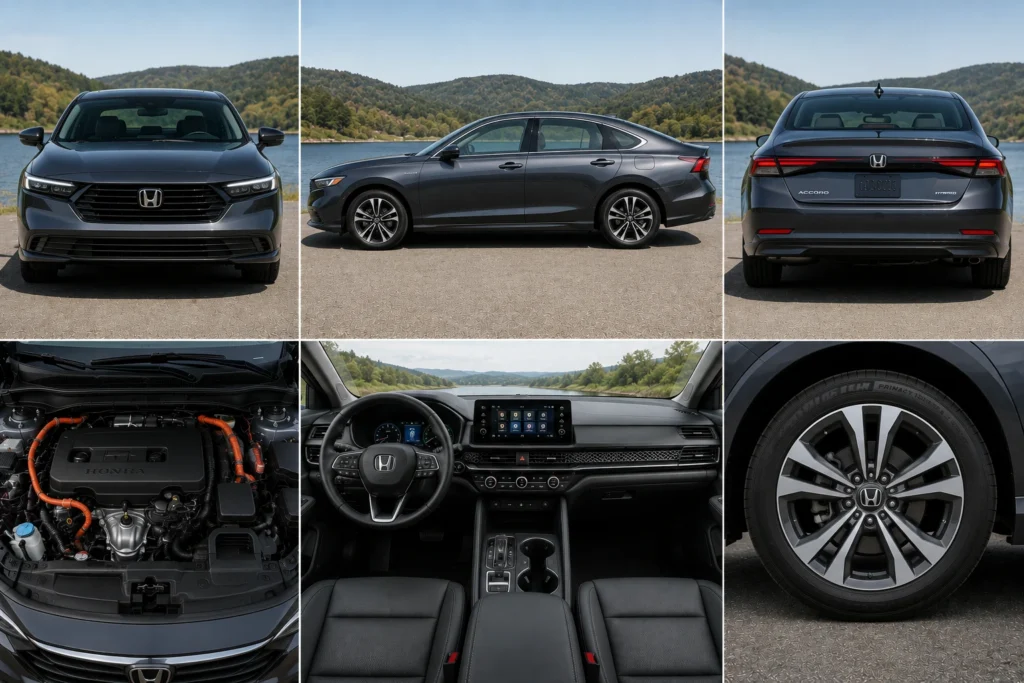
Why It’s Great: The Accord Hybrid quietly achieves some of the best real-world comfort in the midsize sedan class for road trips, with a cabin that is often compared favorably to vehicles a tier above its price point.
Comfort: A comfortable back seat, supportive front seats, and an intelligent power unit tucked beneath the rear floor (to ensure full trunk space) make this one of the more livable sedans for long-distance travel.
Highway performance: The EX-L Hybrid trim returns up to 48 MPG combined (51 city/44 highway) with the rest of the hybrid trims still delivering 44 MPG.
| Pros | Cons |
| 16.7 cubic feet of trunk space, larger than most rivals | No all-wheel drive option |
| Standard Honda Sensing safety suite | Less confidence on snowy or icy roads |
| Multi-year Car and Driver 10Best winner | Requires quality winter tires for mountain trips |
| Spacious trunk for a compact sedan | Not ideal for frequent winter road travel |
8. Tesla Model Y
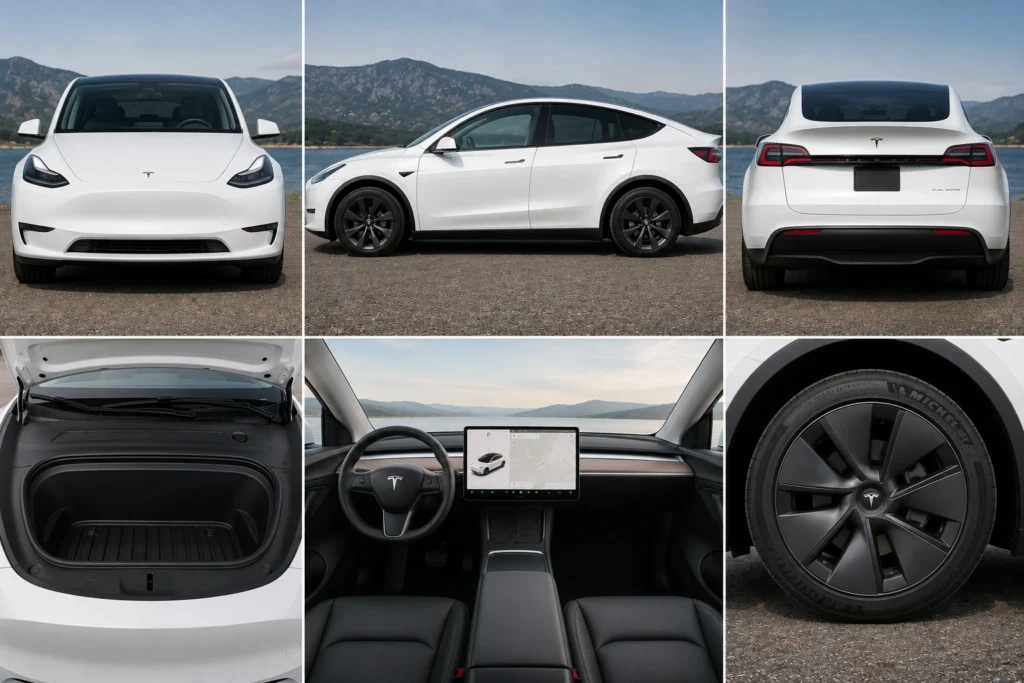
Why It’s Great: For travelers looking to plan around charging stops, the Model Y is the standard electric best cars for road trips, combining genuine SUV practicality with one of the largest fast-charging networks on the continent.
Supercharger Network: More than 60,000 Superchargers in North America, with the ability to add 150-plus miles of range in about 15 minutes on the latest hardware.
Technology: A new 2026 cabin provides sound insulation, ventilated seats, and a rear-seat touchscreen for climate and entertainment control; all of these are really useful upgrades for long-haul comfort.
| Pros | Cons |
| Up to 357 miles of EPA-estimated driving range | Charging requires more planning than gas refueling on rural trips |
| Up to 76 cubic feet of maximum cargo space | Charging infrastructure can be limited in remote areas |
| Quick acceleration and responsive performance | Ride quality is firmer than many traditional SUVs |
| Low running and maintenance costs | Less comfortable over rough roads than some competitors |
9. Chevrolet Tahoe
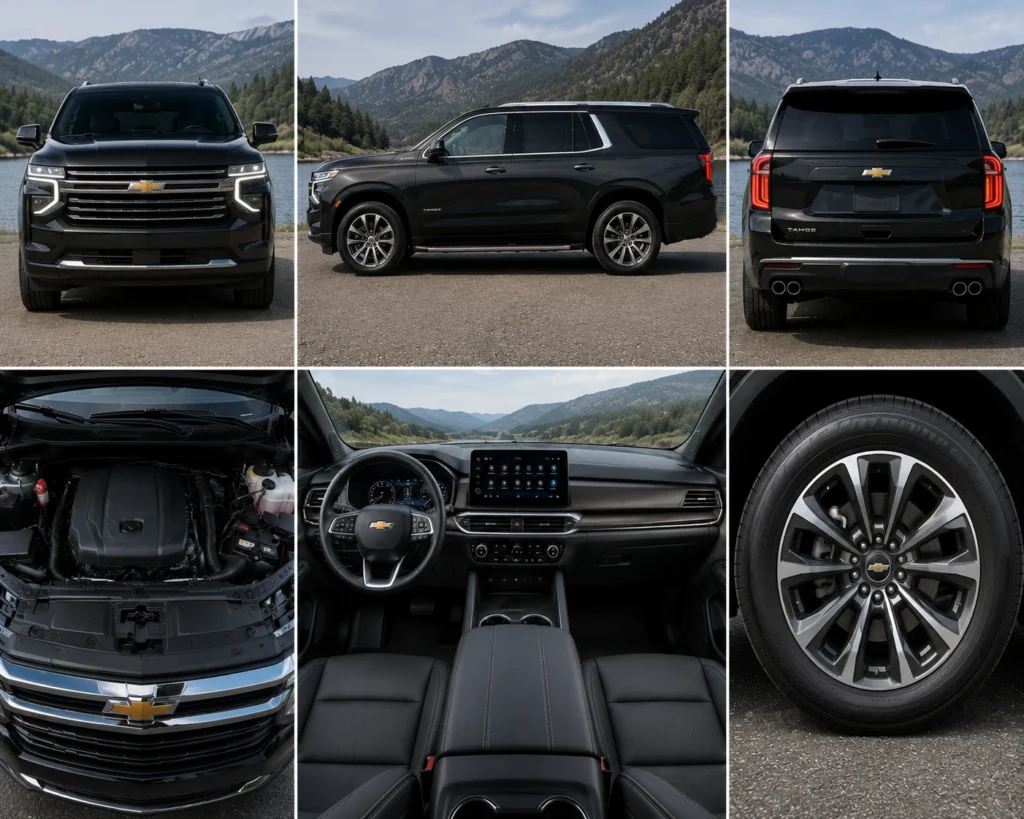
Why It’s Great: When the road trip involves a trailer, a boat, or simply more passengers and gear than a midsize SUV can handle, the Tahoe remains one of the most capable full-size best cars for road trips on the market.
Passenger space: Seating for up to nine with the right configuration, plus genuinely usable third-row legroom that most three-row SUVs can’t match.
Towing capacity: Up to 8,400 pounds of towing capacity with the Max Trailering Package, so it’s a realistic choice for travelers hauling a camper or boat alongside the family.
| Pros | Cons |
| Up to 122.7 cubic feet of maximum cargo space | V8 models return only about 18–20 MPG on the highway |
| Available diesel engine delivers up to 26 MPG highway | Large size makes parking and maneuvering more difficult |
| Super Cruise hands-free driving on compatible highways | Can feel cumbersome in tight urban areas |
| Excellent for towing and long family road trips | Higher fuel costs with V8-powered models |
10. Volvo XC90
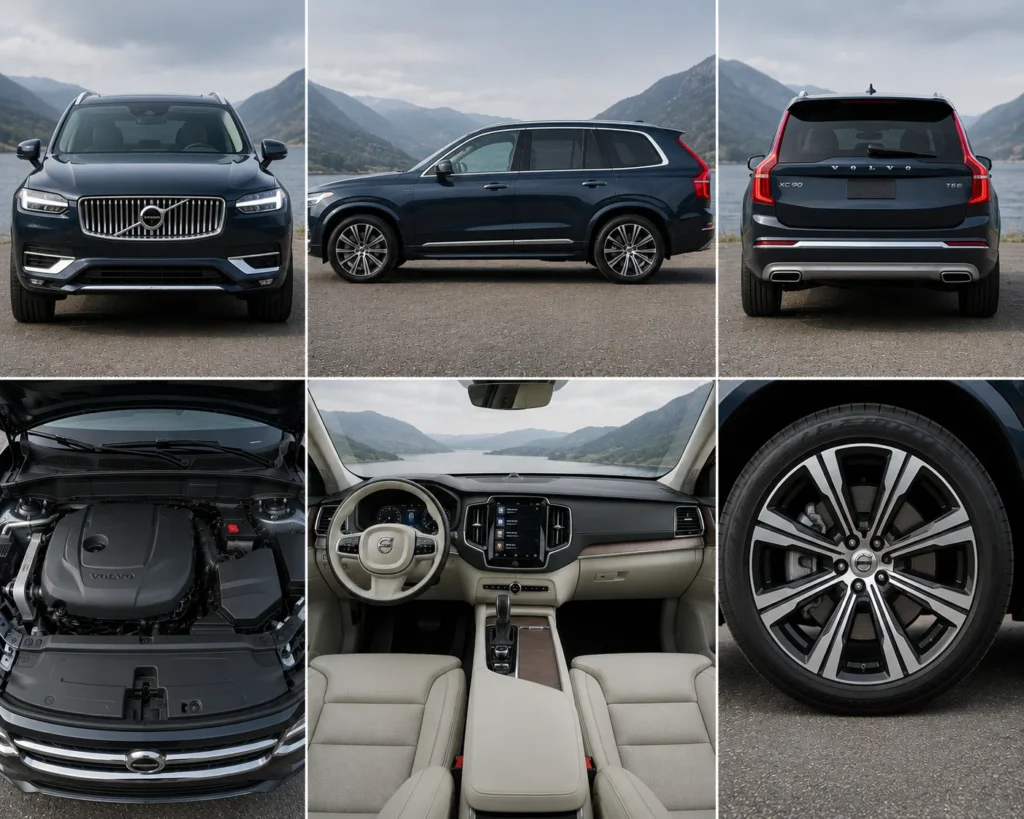
Why It’s Great: For travelers who want three-row practicality wrapped in genuine luxury and class-leading safety engineering, the XC90 remains the standard-bearer and consistently tops lists of the most comfortable and best cars for road trips for long highway trips for good reason.
Luxury features: Available Nappa leather, an air suspension that can lower the rear by two inches for easier loading, and a Bowers & Wilkins audio system on top trims create a cabin that feels distinctly upscale.
Safety Technology: A 5-star NHTSA overall safety rating, plus a comprehensive standard suite including forward collision warning, lane-centering steering, and traffic jam assist.
| Pros | Cons |
| Up to 85.7 cubic feet of maximum cargo space | Touchscreen software can feel slow and unresponsive |
| More cargo space than rival luxury plug-in SUVs | Infotainment system isn’t as polished as some competitors |
| Plug-in hybrid offers up to 33 miles of electric-only range | Third-row seating is best suited for children |
| Excellent blend of luxury, practicality, and efficiency | Limited comfort for adults in the third row |
Best Cars for Road Trips by Travel Style
Not all travelers need the same things from the best cars for road trips, so here’s how the lineup above sorts by who’s actually doing the driving.
Best Road Trip Cars for Families: The Toyota Highlander Hybrid, Kia Telluride, and Hyundai Palisade all combine three-row seating with strong cargo capacity and comprehensive safety tech, exactly what a family needs for a week of shared driving and shared snacks.
Best Road Trip Cars for Couples: The Honda Accord Hybrid and Toyota Camry Hybrid deliver outstanding fuel economy, quiet cabins, and enough trunk space for two people’s luggage without the bulk of an SUV.
Best Road Trip Cars for Camping and Adventure: The Subaru Outback brings standard AWD and genuine off-pavement capability, while the Toyota 4Runner, rated to tow up to 6,000 pounds with up to 84.4 cubic feet of cargo space behind the front seats, adds true body-on-frame ruggedness for travelers heading well off the beaten path.
Best Road Trip Cars for Luxury Travel: The Volvo XC90 and BMW X5 both pair refined cabins with strong highway manners; the X5 xDrive40i returns roughly 25 MPG combined and offers up to 72.3 cubic feet of max cargo space alongside a 7,200-pound towing rating.
Best Road Trip Cars for Fuel Economy: The Honda CR-V Hybrid and Toyota Camry Hybrid lead this category by a wide margin, both capable of crossing entire states between fill-ups.
What Is a Good Car for Long Drives?
If you’re asking, “What are the best cars for road trips?” the answer comes down to a short list of non-negotiables that matter far more than horsepower or styling.
Key Features to Look For
- Supportive seats that maintain comfort past the two-hour mark, not just in a five-minute test sit.
- Smooth suspension that absorbs highway imperfections without transmitting every bump into the cabin.
- Quiet cabin insulation that reduces wind and road noise, since constant low-level noise is one of the biggest hidden contributors to driver fatigue.
- Excellent fuel economy, because fewer stops mean more time covering ground.
- Advanced driver assistance systems that reduce the mental workload of hours-long highway stretches.
Common Mistakes Buyers Make
- Choosing style over comfort is the most common regret for best cars for road trips; shoppers report a sharp-looking sedan with a stiff sport suspension can turn brutal on a six-hour drive.
- Ignoring cargo requirements is another frequent miss; buyers often test-drive a vehicle empty and forget to mentally load it with everything an actual trip requires.
- Overlooking fuel costs matters more on long trips than daily commuting, where the gap between 22 MPG and 40 MPG adds up fast over hundreds of miles.
- Forgetting long-term reliability can turn budget-friendly best cars for road trips into an expensive one if they spend time in the shop instead of on the highway.
Most Comfortable Cars for Long Highway Trips
Comfort is subjective, but certain best cars for road trips consistently earn praise for how they feel after hour five, not just hour one.
Top Comfort Picks
The Volvo XC90, Hyundai Palisade, Kia Telluride, Honda Accord Hybrid, and Toyota Highlander Hybrid all stand out among the most comfortable cars for long highway trips, thanks to a combination of well-cushioned seating, quiet cabins, and suspension tuning that favors comfort over sportiness.
Features That Improve Comfort
Heated and ventilated seats keep passengers comfortable across changing weather without constant climate adjustments.
Multi-zone climate control enables front and rear passengers to set their own preferred temperature, a small feature that prevents a surprising number of backseat arguments.
Noise insulation, including acoustic glass and additional sound deadening in the floor and doors, meaningfully reduces fatigue on long stretches.
And adaptive suspension systems, available on several vehicles in this list, automatically adjust damping based on road conditions and speed for a consistently smooth ride.
SUV vs Sedan vs Hybrid: Which Road Trip Car Is Right for You?
| Vehicle Type | Pros | Cons | Best For |
| SUVs | Spacious cabins, excellent passenger comfort, and generous cargo capacity make them ideal for families, luggage, and outdoor gear. | Lower fuel economy than comparable sedans, especially with non-hybrid engines. | Family vacations, camping trips, road trips with multiple passengers, and long-distance travel. |
| Sedans | Better fuel efficiency, smoother highway handling, and easier maneuverability for long-distance driving. | Smaller trunk and limited passenger/cargo space compared to SUVs. | Solo travelers, couples, business trips, and budget-conscious road trips. |
| Hybrid Vehicles | Outstanding fuel economy, long driving range, and no need to rely on charging stations during travel. | Higher upfront purchase price than similar gasoline-powered models, although fuel savings can offset the cost over time. | Frequent travelers, commuters, and drivers looking to reduce fuel expenses on long journeys. |
| Electric Vehicles (EVs) | Low operating costs, quiet cabins, instant acceleration, and zero tailpipe emissions enhance the road trip experience. | Charging requires advance planning, particularly in regions with limited fast-charging infrastructure, which can extend travel time. | Eco-conscious travelers, tech enthusiasts, and drivers traveling on routes with reliable charging networks. |
Best Cars for Road Trips Buying Checklist for 2026
Before You Buy
- Test-drive for at least 30 minutes, not just around the block
- Check highway comfort specifically, including seat support after 20+ minutes
- Evaluate cargo capacity with your actual gear, not just empty space
- Compare fuel economy across trims, since AWD and bigger wheels often cost MPG
- Review safety ratings from both NHTSA and IIHS
- Research ownership costs, including expected maintenance over 5 years
- Check warranty coverage, especially battery warranties on hybrids and EVs
- Compare insurance costs before signing, since premiums vary significantly by model
Comparison Table: Best Cars for Road Trips in 2026
| Vehicle | Vehicle Type | MPG / Range | Max Cargo Space | Best For |
| Toyota Highlander Hybrid | SUV | 35 MPG (combined) | 84.3 cu ft | Families |
| Honda CR-V Hybrid | SUV | 40 MPG (combined) | 76.5 cu ft | Fuel Economy |
| Subaru Outback | Wagon / SUV | 31 MPG (highway) | 80.5 cu ft | Adventure Trips |
| Kia Telluride | SUV | 22 MPG (combined) | 87.0 cu ft | Large Families |
| Hyundai Palisade Hybrid | SUV | 34 MPG (combined) | 86.7 cu ft | Family Comfort |
| Toyota Camry Hybrid | Sedan | 51 MPG (combined) | 15.1 cu ft | Long Highway Drives |
| Honda Accord Hybrid | Sedan | 48 MPG (combined) | 16.7 cu ft | Couples & Daily Road Trips |
| Tesla Model Y | Electric Vehicle (EV) | Up to 357 miles (range) | 76.0 cu ft | EV Road Trips |
| Chevrolet Tahoe | SUV | Up to 8,400 lb towing capacity | 122.7 cu ft | Towing & Large Groups |
| Volvo XC90 | SUV | 26 MPG (combined) | 85.7 cu ft | Luxury Road Travel |
MPG figures reflect EPA-estimated combined ratings for the most efficient trim of each model where applicable; actual mileage varies by trim, drivetrain, and driving conditions.
Final Verdict: Which Road Trip Car Should You Choose?
Best Overall: Toyota Highlander Hybrid. It balances fuel economy, comfort, cargo space, and reliability better than almost anything else on this list.
Best Family Vehicle: Kia Telluride, unmatched cargo space and genuinely usable third-row seating for the price.
Best Fuel-Efficient Option: Toyota Camry Hybrid, 51 MPG combined makes it one of the most efficient best cars for road trips available without plugging in.
Luxury Best Cars for Road Trips: Volvo XC90, top-tier safety engineering paired with a genuinely upscale cabin.
Best Adventure Vehicle: Subaru Outback, standard AWD and real off-pavement capability in a comfortable, efficient package.
Best Electric Road Trip Vehicle: Tesla Model Y, the most road-trip-ready EV thanks to its expansive Supercharger network and practical cargo space.
Final Recommendation:
If you’re shopping for the best cars for road trips this year, start with how you actually travel. Families hauling gear and kids should lean toward the Highlander Hybrid, Telluride, or Palisade. Couples and efficiency-minded drivers will find the Camry Hybrid or Accord Hybrid hard to beat. Adventure seekers belong behind the wheel of an Outback or 4Runner, while luxury-minded travelers will appreciate what the XC90 or X5 brings to a long highway stretch. And if you’re comfortable planning around charging stops, the Model Y remains the benchmark EV and one of the best cars for road trips.
Whichever direction you go, keep an eye on the new car launch calendar before you sign anything, with several manufacturers teasing upcoming new cars and redesigned models for the 2027 model year, including a next-generation Telluride; it’s worth checking current new car launch news to make sure you’re not buying right before an upcoming car’s refresh changes the value equation. A little research now saves a lot of second-guessing on the road later.
FAQs
Q. What is one of the best cars for road trips in 2026?
A. The Toyota Highlander Hybrid, Honda CR-V Hybrid, Kia Telluride, Toyota Camry Hybrid, and Volvo XC90 are consistently among the best cars for road trips in 2026 (comfort, fuel economy, cargo space, safety technology, etc.).
Q. Which SUV is best for long road trips?
A. For most travelers, the Toyota Highlander Hybrid is the best overall balance of comfort, fuel economy, and cargo space among the best cars for road trips. And the Kia Telluride or Hyundai Palisade is often preferred by families.
Q. What is a good car for long driving and highway trips?
A. A good car for long trips has comfortable seating, a quiet cabin, good fuel economy, and driver-assist features such as adaptive cruise control and lane-keeping assist. Hybrid sedans and mid-size SUVs do well.
Q. Are hybrid vehicles better for road trips?
A. Yes, in most cases. Hybrid vehicles like the Toyota Camry Hybrid and Honda Accord Hybrid provide far better fuel economy than gas-only vehicles (typically 45-51 MPG combined) without any electric charging stops and are ideal for long-distance trips.
Q. Which is the most comfortable car for long-distance travel?
A. The Volvo XC90, Hyundai Palisade, and Toyota Highlander Hybrid are some of the most comfortable cars for long-distance highway driving thanks to supportive seats, quiet cabins, and smooth ride quality.
Q. But is an SUV better than a sedan for road trips?
A. It depends on your priorities. SUVs have more cargo space and passenger room, making them better for families and gear-heavy trips. Sedans like the Camry Hybrid and Accord Hybrid have better fuel economy and easier highway driving dynamics for smaller groups.
Q. Which car offers the best fuel economy for road trips?
A. The Toyota Camry Hybrid has the best fuel economy with up to 51 MPG combined, followed by the Honda Accord Hybrid with up to 48 MPG combined and the Honda CR-V Hybrid with up to 40 MPG combined.
Q. What features matter most in a long drive?
A. Seat comfort, cabin noise insulation, fuel efficiency, and advanced safety features (adaptive cruise control and blind spot monitoring) are very important. These features make the best road trip cars genuinely enjoyable, not just tolerable.