
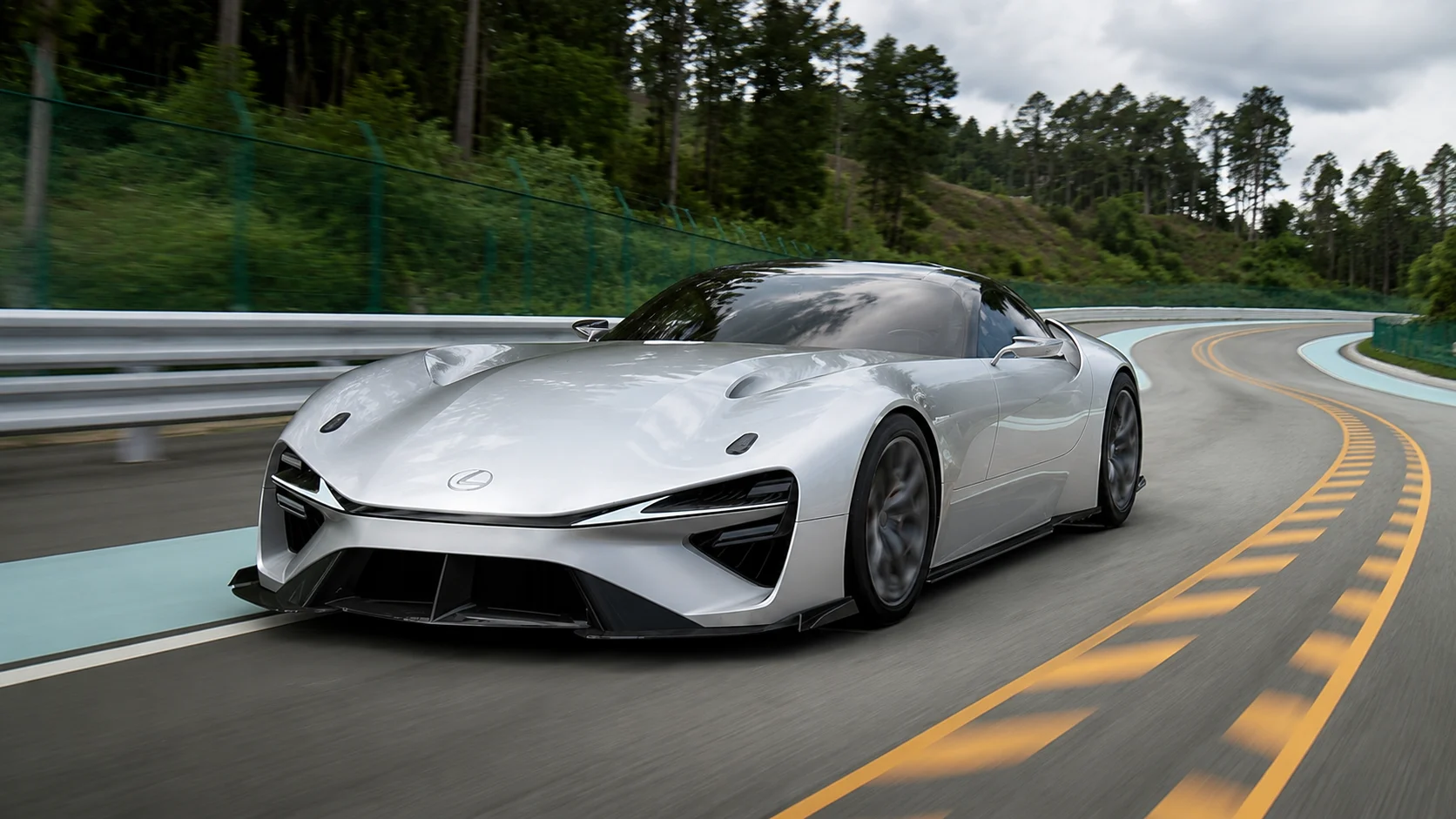
The Lexus LFA is the strangest success story of modern motoring. It sold slowly when new, lost Toyota money on every single unit, and took almost a decade to develop before the first customer car was released from the Motomachi plant. Fourteen years later, in 2026, clean examples trade hands for more than double what Ferrari asks for a new 296, and one low-mileage car just crossed $1.8 million at auction.
I have driven a lot of fast cars in my years working in this industry. Only a handful stay with you the way an LFA does, and almost all of that comes down to a 4.8-liter V10 that sounds like nothing else ever bolted into a road car. Yamaha’s engineers, the people who tune concert pianos, helped voice that engine. That detail alone tells you what kind of car this is.
The review of the Lexus LFA in 2026: what it costs in dollars and dirhams, what specifications are still relevant today, how the interior and engineering hold up, and what the long-awaited successor means for the badge.
Quick Verdict
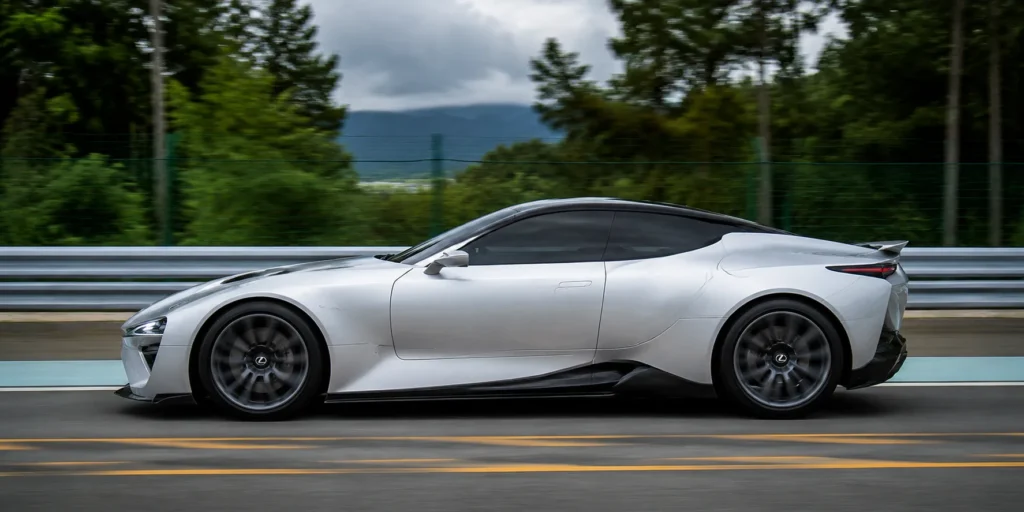
The Lexus LFA is one of the best driver’s cars ever built. Its single-clutch gearbox seems outdated in comparison to modern dual-clutch gearboxes, and the price of entry in 2026 is brutal. Everything else, from the carbon fiber tub to the 9,000 rpm V10, is world-class. Buy one if you can. Most of us can’t, and that is why values keep climbing.
| Factor | Lexus LFA |
| Production Run | 2010 to 2012, 500 units worldwide |
| Original MSRP | $375,000 approx. (AED 1.38 million) |
| 2026 Market Value | $800,000 to $1.8 million+ (AED 2.94M to AED 6.6M+) |
| Engine | 4.8L naturally aspirated V10 (1LR-GUE) |
| Power | 552 hp @ 8,700 rpm |
| Top Speed | 202 mph (325 km/h) |
| 0–60 mph | 3.6 seconds |
A Short History: Why the LFA Exists at All
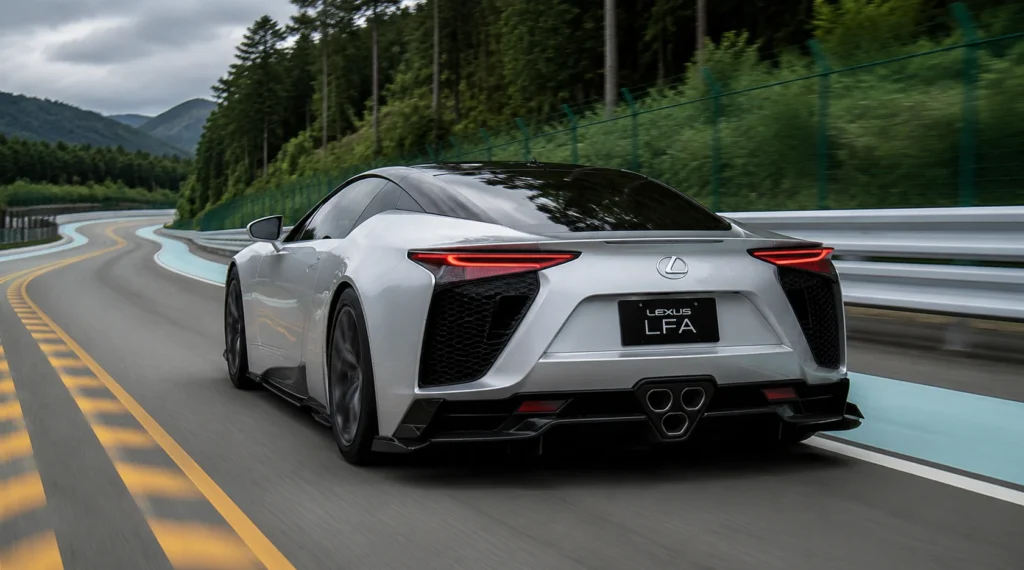
Toyota has given only three cars in its history a true blank-cheque development program: the 1960s 2000GT, the original Lexus LS, and the LFA. The project began with chief engineer Haruhiko Tanahashi in early 2000, and the brief was simple to say and almost impossible to accomplish: build a supercar that could stand next to anything from Maranello or Stuttgart, wearing a Lexus badge.
The development story reads like an obsession diary. Lexus built the first prototypes in aluminum, then scrapped years of work and started again in carbon fiber-reinforced polymer because aluminum could not deliver the stiffness-to-weight target. The company even built its own circular carbon fiber loom, a machine so unusual it looked like it belonged in a textile museum. Roughly 65 percent of the finished car’s structure is carbon composite.
Production ran from December 2010 to December 2012. A team of hand-picked takumi craftsmen at the Motomachi plant built each car, and output never exceeded 20 cars per month. There were 500 cars built, including 50 examples of the track-focused Nürburgring Package. And then Lexus closed the line, archived the tooling, and walked away.
By any commercial measure, the LFA was a flop when new. Sales peaked at 62 units in 2011, and unsold examples were in dealer inventory as late as 2019. The market has since corrected that misjudgment with interest.
Lexus LFA Price in 2026: USD and AED
Let’s get the money question out of the way, because “Lexus LFA price” is probably what brought half of you here.
What it cost new
The original Lexus LFA MSRP was $375,000, which converts to about AED 1,377,000 at today’s exchange rate. The Nürburgring Package pushed that up to around $445,000 (approx. AED 1,634,000). Even at those figures, Toyota lost money on every single car.
What it costs now
The 2026 market is quite different:
| Condition / Example | Price (USD) | Price (AED, Approx.) |
| Average Market Price (Classic.com data) | $925,000 | AED 3,397,000 |
| Clean Base Car, Typical Mileage | $765,000 – $830,000 | AED 2,810,000 – 3,048,000 |
| Record Base-Model Sale (748 miles, April 2026) | $1,810,000 | AED 6,647,000 |
| Record Nürburgring Package (November 2023) | $1,875,000 | AED 6,886,000 |
| Lowest Recent Sale (Flood-Damaged Outlier, 2024) | $517,500 | AED 1,900,000 |
A low-mileage, Japan-supplied car in absolute red is listed on Classic Driver for around $1,538,000 (AED 5,648,000). Median values have been creeping toward the million-dollar mark for two years now, and analysts covering the record sale of April 2026 said the trend shows no sign of reversing.
For context: an Lexus LFA bought new for $375,000 and kept in good condition has appreciated faster than most luxury Ferraris of the time. Only 500 exist, about 178 came to the United States, and hardly any appear for sale in any given year. Classic.com has exactly zero for sale at the time of writing. That scarcity is doing the heavy lifting.
Lexus LFA for sale: where to actually find one
Bring a Trailer has become the LFA’s de facto marketplace, with RM Sotheby’s and specialist dealers in Japan, the UK, and the UAE are taking the bulk of the work. Dubai is a surprisingly active hub; many LFAs live in Emirati collections, and regional dealers sometimes list them privately rather than at public auction. If you’re shopping in the Gulf, budget at the top of the range. Cars there tend to be low-mileage and priced accordingly.
Lexus LFA Engine: The V10 That Justifies Everything
The heart of this car is the 1LR-GUE, a 4805cc, 72-degree V10 produced by Yamaha. On paper: 552 horsepower at 8,700 rpm and 354 lb-ft of torque at 6,800 rpm with a redline of 9,000 rpm (9,500 rpm indicated on some tachometer displays). The Nürburgring Package brought the output up to 562 hp.
The numbers undersell it. Consider what this engine is:
- It is the size of a conventional V8 and lighter than most V6 engines of the era, thanks to titanium valves and connecting rods, forged pistons, and a dry-sump oiling system that allowed engineers to mount it low and far back in the chassis.
- It revs from idle to its 9,000 rpm redline in 0.6 seconds. Lexus had to fit a digital TFT tachometer because no analog needle could physically sweep fast enough to keep up.
- Each engine is hand-assembled by a single takumi builder (the signature plate is on the intake plenum).
- Yamaha’s acoustic engineers tuned the intake and exhaust resonance deliberately, bringing induction noise into the cabin through individual sound paths. Lexus called the result “the roar of an angel.” Journalists have compared it to a Formula 1 car from the V10 era, and having heard both at full throttle, I think the comparison is fair.
In 2026, this engine matters more than it did in 2012. Naturally aspirated V10s are extinct in new cars. The Lamborghini Huracán’s V10 went out of production, Audi’s R8 is gone, and everything at this level now has turbochargers, hybrid systems, or batteries. The Lexus LFA engine is a closed chapter in engineering history, and the market prices it like one.
The gearbox is the only part of the car that’s old, a 6-speed automated sequential (single-clutch) transaxle at the rear of the car that is designed to balance weight. Shifts are made in as little as 200 milliseconds in Sport mode, yet with a mechanical jolt that modern dual-clutch cars have smoothed out. Some owners love the brutality. I sit somewhere in the middle: it demands you drive around it and lift slightly on upshifts, and that involvement is in keeping with the car’s character.
Lexus LFA Specifications (Full Table)
| Specification | Detail |
| Engine | 1LR-GUE, 4.8L (4,805cc) naturally aspirated V10, 72° bank angle |
| Power | 552 hp @ 8,700 rpm (562 hp with Nürburgring Package) |
| Torque | 354 lb-ft @ 6,800 rpm |
| Redline | 9,000 rpm |
| Transmission | 6-speed automated sequential (ASG), rear transaxle |
| Drivetrain | Front mid-engine, rear-wheel drive |
| 0–60 mph | 3.6 seconds |
| Top Speed | 202 mph (325 km/h) |
| Curb Weight | 3,263 lbs (1,480 kg) |
| Weight Distribution | 48:52 front/rear |
| Chassis | Carbon fiber reinforced polymer monocoque (65% CFRP) |
| Brakes | Carbon ceramic discs, 6-piston front / 4-piston rear calipers |
| Wheels | Forged BBS alloy, 20-inch |
| Tires | 265/35 ZR20 front, 305/30 ZR20 rear |
| Fuel Tank Capacity | 19.3 gallons (73 liters) |
| Production | 500 units (2010 to 2012) |
| Nürburgring Lap Time | 7:14.64 (Nürburgring Package, 2011) |
That 7:14.64 Nordschleife lap made the Lexus LFA the fastest production car around the Green Hell at the time. Many cars have gone faster since then, but very few of them did it without turbos, hybrid assistance, or active aero trickery.
Lexus LFA Top Speed and Performance in the Real World
The headline figures: 202 mph flat out, 60 mph in 3.6 seconds, and the quarter mile in the mid-11s. By 2026 standards, a well-optioned electric SUV will match that acceleration. So why do people who have driven everything still rank the LFA among the greats?
Because straight-line numbers were never the point. The Lexus LFA performance case is built on three things modern cars are unable to replicate.
Response. With no turbos and a very small rotating mass, throttle inputs translate into thrust that is delivered with no delay. The 0.6-second wind-up to the redline sweep of the engine means overtakes happen on reflex, not planning.
Balance. The front mid-engine configuration with a rear transaxle and dry-sump lubrication creates a 48:52 weight distribution and a center of gravity low enough that the car changes direction like something on the other hand. The steering, hydraulically assisted and geared fast, generates road-surface detail that electric racks filtered out years ago.
Braking and stability. Carbon ceramic discs shrug off track abuse, and the rear wing is automatically deployed at 50 mph to keep the tail planted. On a fast road, the Lexus LFA feels calm at speeds that would leave lesser cars fidgeting.
Chris Harris famously called it one of the best cars he ever drove. Jeremy Clarkson, who has insulted more cars than most people have seen, called it the best car he had ever driven at the time. That consensus among people paid to be cynical is rare.
Fuel economy, if you care: around 11 mpg city and 16 mpg highway. Nobody who buys an LFA in 2026 will ever ask.
Lexus LFA Interior: Craft Over Theater
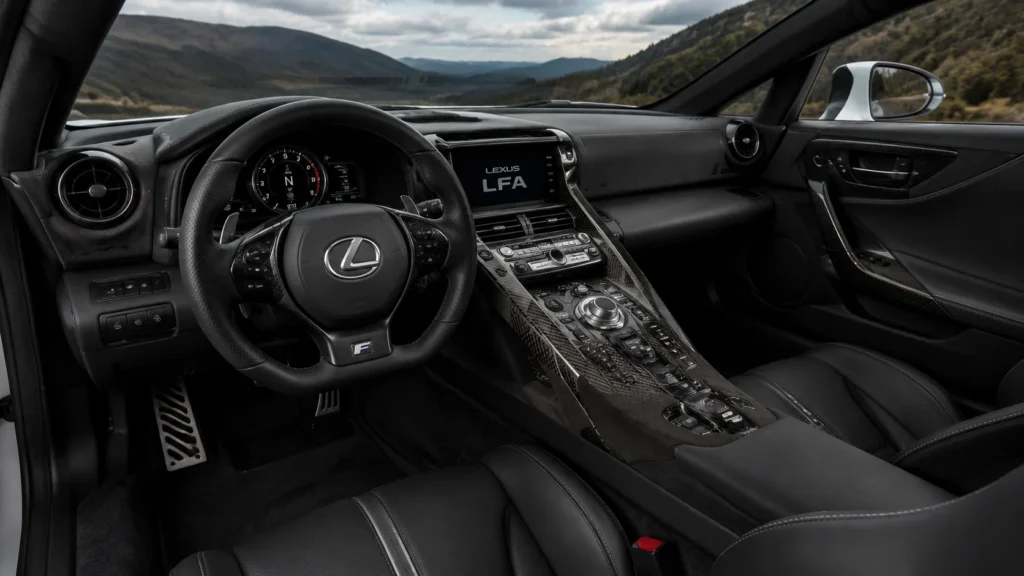
Climb inside an Lexus LFA and the first impression is restraint. There are no dramatic flying buttresses or lunar-lander switchgear. You get a driver-friendly cockpit, trimmed with hand-stitched leather and Alcantara, with every element of control pointing towards the person doing the work.
The centerpiece is that TFT digital tachometer, a single motorized ring that slides across the instrument binnacle when you change drive modes. In 2012 it was science fiction. In 2026, when every economy hatchback has a digital cluster, the Lexus LFA version still feels special because of how it moves and what it exists to display: revs, above everything else.
Details worth noting:
- The seats are carbon-shelled, supportive over long distances, and low with a good wheel-to-pedal connection.
- The remote-touch controller and shallow center stack keep distractions low. Climate and audio are acceptable, and the standard sound system is decent, but the engineers clearly considered the engine as the primary audio source.
- Build quality is Lexus-grade, which is to say better than any Italian rival of the period. Owners report interiors that look new after a decade, and that durability matters enormously now that these cars are seven-figure assets.
- Storage is nearly nonexistent, and the cabin is snug for anyone over six foot three. It is a two-seat weapon, not a grand tourer, despite the badge.
Compared to a Ferrari 599 or Mercedes SLS of that time, the Lexus LFA cabin trades flash for precision. Fourteen years after that decision has aged the best of the three.
Lexus LFA Wheels, Brakes, and the Details Underneath
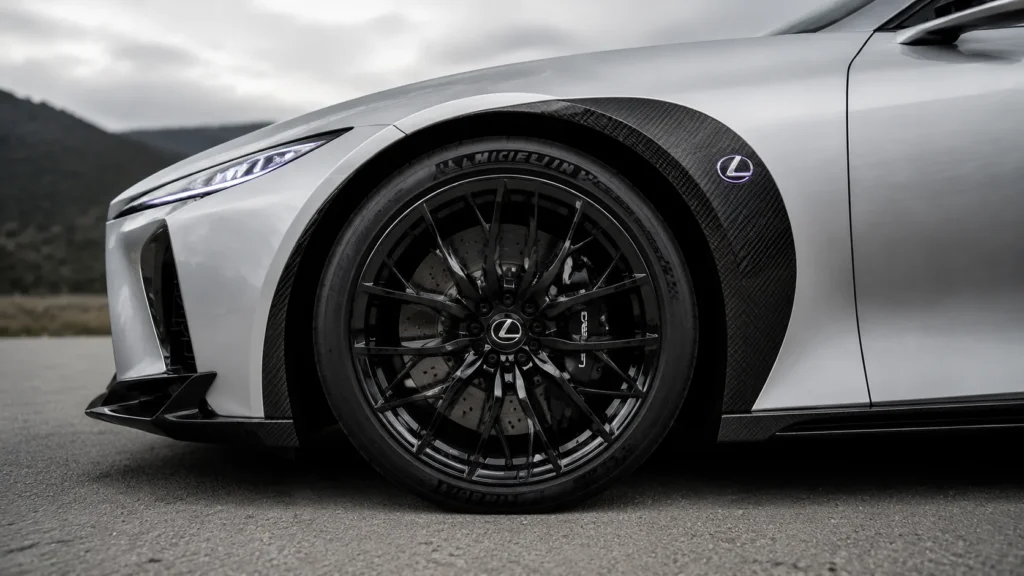
The Lexus LFA rides on forged 20-inch BBS alloy wheels staggered with 265-section front and 305-section rear tires. Forging kept unsprung mass low, and the design, a fine multi-spoke pattern, leaves the carbon ceramic brake discs and painted calipers fully visible. Nürburgring Package cars had lighter mesh-style wheels and grippier rubber.
A warning for prospective buyers: original Lexus LFA wheels and tires are getting harder to find and correct specification replacements are expensive. Consider that fact in any purchase, along with the specialist servicing the car. Lexus still supports the model, and the brand’s legendary reliability applies here too, but this is not a car you take to a regular workshop.
Other engineering details that are worth taking a closer look at: the radiators sit at the rear, fed by those distinctive side intakes, which made weight distribution and front-end styling easier. The A-pillars, roof, and floor are all structural carbon. Even the engine cover latches were designed to save grams.
Lexus LFA Features: What You Got for $375,000
The LFA is not rich by current standards in feature lists today, and that is part of its purity. Standard equipment included:
- Carbon ceramic brake package
- Active rear wing (deploys above 50 mph)
- TFT motorized instrument display with multiple drive modes (auto, normal, sport, and wet)
- Adjustable shift speed (seven settings, 200 ms at the fastest)
- Hand-trimmed leather/Alcantara cabin with carbon accents
- Remote-touch infotainment with navigation and premium audio
- Great personalization: buyers picked from a big palette of exterior colors, brake caliper colors, leather combinations, and stitching.
The Nürburgring Package (50 cars) added 10 hp, a fixed carbon rear wing, canards, a lowered and stiffened suspension, faster shift calibration, and sticky tires. These are the most valuable LFAs today by a comfortable margin.
What the Lexus LFA lacks tells its own story: no cupholders worth mentioning, no turbochargers, no hybrid system, no drift mode, no synthetic engine noise. Everything you hear is mechanical and real.
Lexus LFA Reviews: What Critics Said Then and Say Now
Period reviews were similar: skepticism about the price, and then conversion after the first full-throttle run. Reviewers picked up on the single-clutch gearbox and awkward positioning ($375,000 Lexus when the LS flagship cost $70,000), but admitted the engine, steering, and chassis were among the best they had experienced.
Today’s retrospectives are warmer still. The V10 era is done. It is now that 2026 reviews make the Lexus LFA appear less like a used supercar and more like a landmark. CarBuzz’s June 2026 analysis said that the market position of the car was the result of “conditions the market is unlikely to see again”: a huge manufacturer spending unlimited money on a custom carbon supercar with a hand-built, naturally aspirated V10, which has been tuned for sound as a design priority. And collectors clearly agree, given the trajectory of prices.
The consistent criticisms across fourteen years of reviews: the gearbox jolt, the tight cabin, and the original price. The constant praise: the engine, the noise, the steering, the build quality, and a sense of occasion few cars at any price can match.
The 2026 Chapter: LFR and the Electric LFA Concept
Here is where the LFA story is back into the picture because 2026 is the year when the badge finally gets a future.
In December 2025, Toyota and Lexus presented the GR GT, the GR GT3 race car, and a new Lexus LFA Concept together. The concept previews an all-electric interpretation of the LFA idea built on Toyota’s GR GT architecture, and Lexus leadership has described it as a genuine preview of a production halo car rather than a design study.
In parallel to that is the car the rumor mill calls the LFR: a hybrid V8 supercar developed alongside the GR GT3 racer, which has been seen repeatedly at the Nürburgring and will produce around 900 to 1,000 horsepower. The GT3 car is expected to hit international competition in 2026, with the road car following. Racing homologation suggests it will be sold in major global markets, but Lexus has not announced a final name, pricing, or production numbers.
Will the successor dilute the original LFA values? History suggests the opposite. The market knows every time you write about the new car that the original was the last of its kind. A twin-turbo hybrid V8 or an EV, however great, won’t replicate a 9,000 rpm naturally aspirated V10. If anything, the arrival of the successor is one of the reasons that the 2026 auction results are still breaking records.
Should You Buy a Lexus LFA in 2026?
If you have the means, then the case is strong. The LFA combines three things that rarely come together: genuine driving greatness, Toyota-grade dependability, and a fixed supply of 500 units in a market with growing demand. Japanese performance cars like the R34 GT-R and the Mk4 Supra have been growing in popularity for years, and the LFA sits at the very top of the pyramid.
The practical checklist: verify provenance carefully (at least one flood-damaged car has traded recently at a suspicious discount), budget for specialist servicing and increasingly scarce consumables, and understand that Nürburgring Package cars command a significant premium. Low mileage rules the market, but well-kept drivers’ cars in the $765,000 to $830,000 range (AED 2.8M to 3.05M) probably represent the best value because you can actually use them.
And you should use it. A car with this engine deserves better than a climate-controlled tomb.
FAQs
Q. How much will the Lexus LFA cost in 2026?
A. Expect $765,000 to $925,000 (AED 2.81M to 3.4M) for a clean base car, with some very low mileage examples going well beyond that. The current record is $1,810,000 (about AED 6.65M) for a 748-mile car sold in April 2026, while the Nürburgring Package record is $1,875,000 (about AED 6.89M). The original 2012 MSRP was $375,000 (approx. AED 1.38M).
Q. What is the Lexus LFA top speed and 0-60 time?
A. The LFA has a top speed of 202 mph (325 km/h) and goes from 0 to 60 mph in just 3.6 seconds, powered by its 552 hp, 4.8-liter naturally aspirated V10.
Q. Why is the Lexus LFA so expensive and collectible?
A. Only 500 were built between 2010 and 2012, each hand-assembled with a carbon fiber chassis and a Yamaha co-developed V10 that revs to 9,000 rpm. No major manufacturer has built anything comparable since; naturally aspirated V10s are now extinct in new cars, and demand for top-tier Japanese performance cars keeps rising. Scarcity plus irreplaceable engineering equals seven-figure prices.
Q. Is Lexus making a new LFA?
A. A successor is coming. Lexus revealed an all-electric LFA concept in December 2025 alongside the GR GT program, and a hybrid V8 supercar widely expected to be called the LFR has been testing at the Nürburgring, with its GT3 racing sibling due to compete in 2026. Final specifications, pricing, and the production name have not been officially confirmed.
Q. How many Lexus LFAs were produced, and how many are in the US?
A. There were approximately 500 worldwide, including 50 Nürburgring Package cars. Only 178 were allocated to the United States, and given how rarely owners sell, only a handful make it to the open market in any given year.