
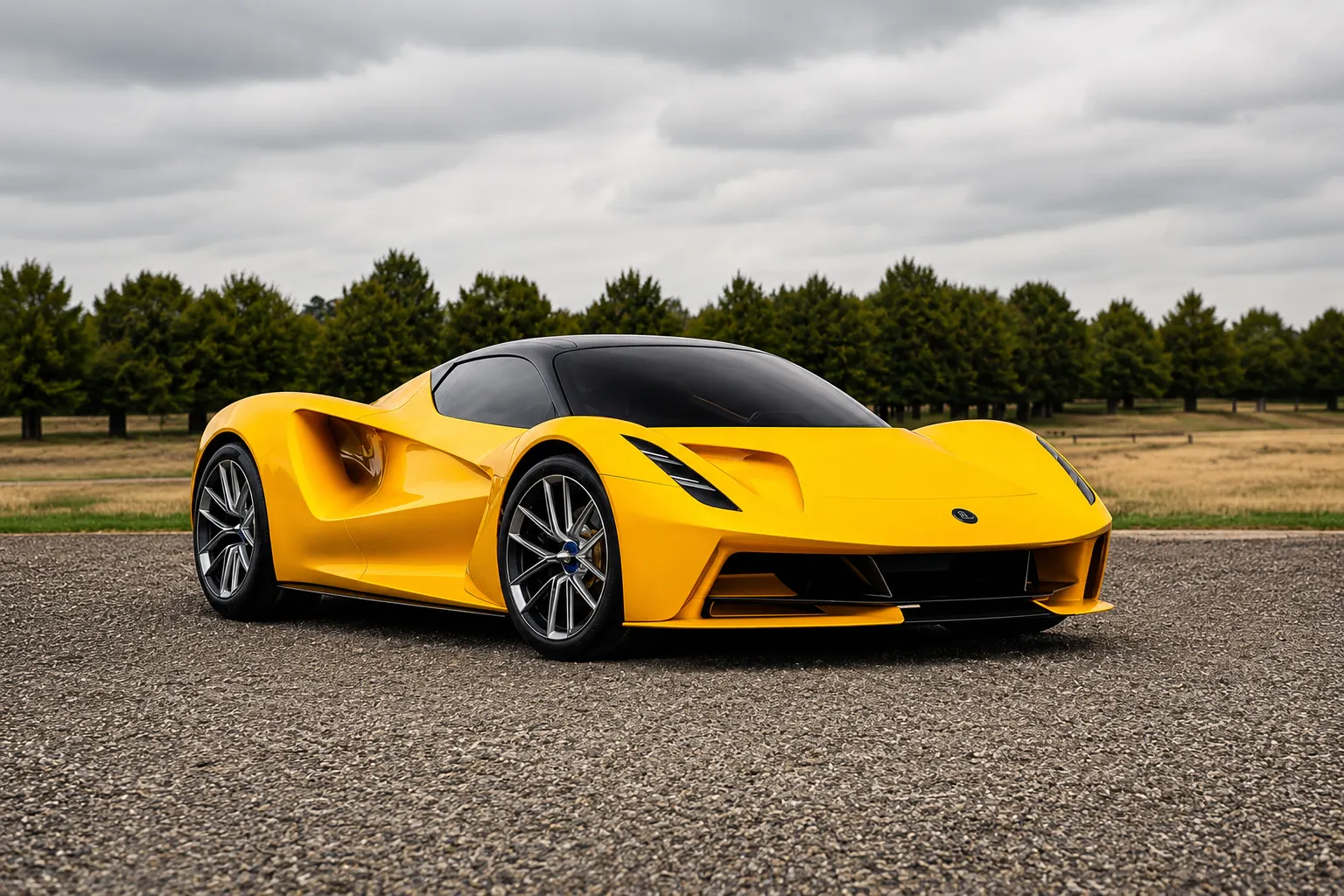
The first time you see a Lotus Evija in person, the photos suddenly make a lot more sense. But the first time, the Lotus Evija looks like a car that doesn’t have a car at all; it looks like a wind tunnel, to be sure, as if someone decided to put four wheels on. That’s the point. Lotus has been developing its first all-electric hypercar, the Lotus Evija, which was made to show that a brand that was known for being light and driver-focused could go electric and still retain its soul.
If you’ve come here to look for the Lotus Evija price, real horsepower numbers, or whether this thing actually lives up to the hype, you’re in the right place. We are going to break down everything that matters: the numbers, the engineering, the interior, and where the Evija fits into a year that’s already packed with exciting new car launch news from every corner of the industry. Out of all the new cars that are in the news in the months ahead, the Evija is one of the few that have already crossed the stage from concept to the road.
What Is the Lotus Evija, Exactly?
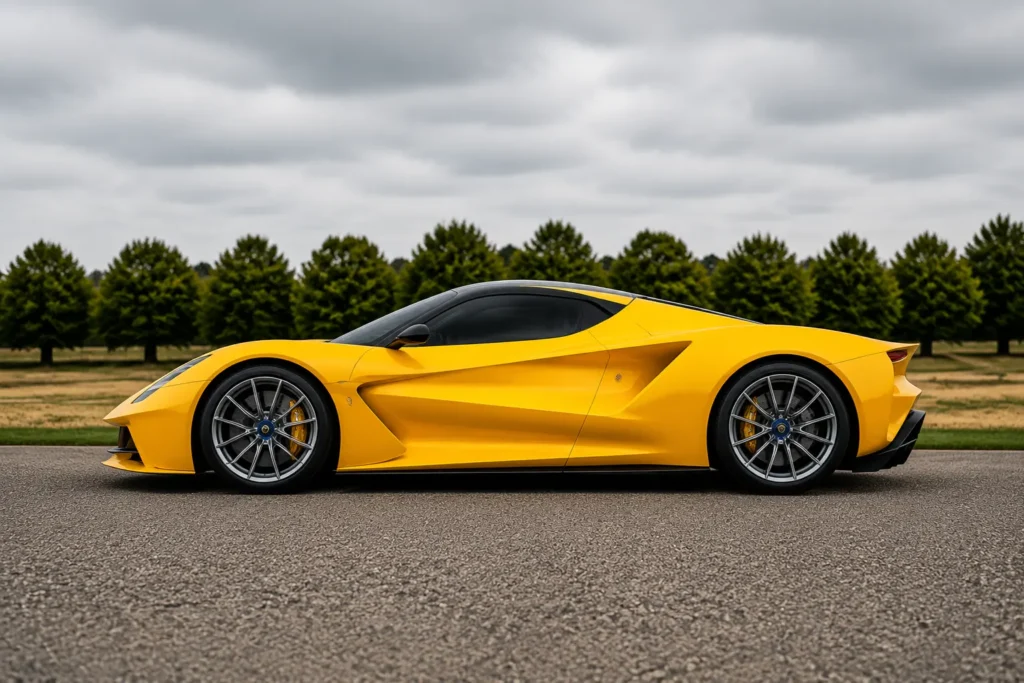
The Evija (pronounced eh-VEE-ya) is a limited-production electric hypercar based at Lotus’s historic Hethel facility in England. Production is set at 130 units, which is also the car’s internal project code Type 130. Every single example is hand-assembled, which is part of the reason that waiting lists have been so long for so many years.
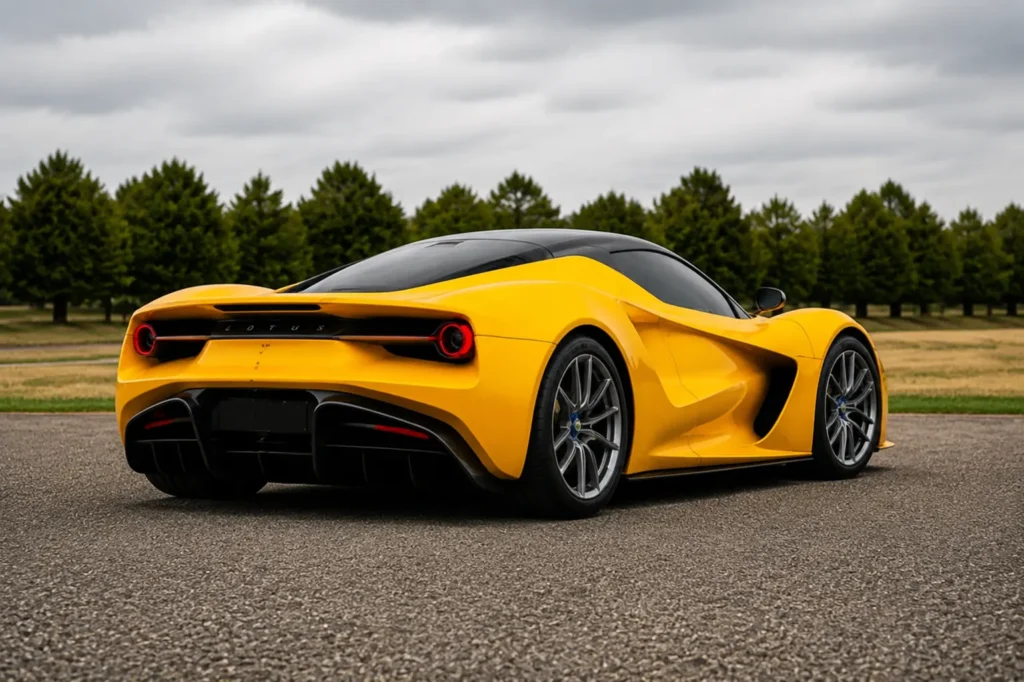
What makes the Evija stand out from so many of the upcoming new cars isn’t just the sleek design, although the Venturi tunnels carved through the rear haunches are so big as to make their own statement. But Lotus didn’t simply electrify an existing platform. The carbon-fiber monocoque, battery, and aerodynamics were designed from scratch to build the lightest, most power-dense EV hypercar possible.
Lotus Evija Price 2026: What It Actually Costs
Let’s get the key question out of the way first. The Lotus Evija price is around $2.3 million for all options and taxes and destination fees, and UK pricing is in the range of £2.4 million to £2.6 million depending on the configuration. Limited editions like the Fittipaldi tribute build go for even higher premiums.
That price tag puts the Evija well above rivals like the Rimac Nevera and Pininfarina Battista, and it’s a big part of why Lotus has kept quiet about exact sales numbers. Some buyers are treating it less as a daily driver and more like a rolling piece of art for a private collection, and honestly, given how sculptural this car looks parked in a garage, that’s not hard to understand.
Lotus Evija Horsepower 2026: Inside the Powertrain
Now for the number that gets enthusiasts buzzing: Lotus Evija horsepower output is an enormous 2,011 hp, or about 1,500 kW if you prefer the EV-native unit. That makes it one of the most powerful production cars ever built, electric or otherwise.
The Four-Motor Setup
Instead of focusing on one big motor, Lotus split the work up, and four electric motors were used, one at each wheel. Each motor produces roughly 500 hp on its own, and they produce a total of 1,704 Nm (1,257 lb-ft) of torque. This setup also allows us to have real torque vectoring at each corner, so the Evija can change power to each wheel independently in a way that a conventional engine would not be able to.
Battery and Range
Power is supplied by a 93 kWh battery pack manufactured by UK firm Hyperbat and cells from Molicell. Unlike most EVs that mount the battery low and flat under the floor, Lotus tucked this one behind the seats in a more traditional mid-engine configuration where handling balance is taken into account rather than getting more than the maximum range. The trade-off is a real-world range that falls somewhere in the 200 mile range in comparison to the 300 miles you’d get from a Tesla, yet range was never really the point of this car.
Lotus Evija Top Speed 2026 and Acceleration
How fast is a Lotus Evija in the real world? Lotus claims a 0-62 mph time of less than three seconds, while 0-186 mph takes about 9.1-9.2 seconds. The Lotus Evija top speed is electronically limited to about 217-218 mph (350 km/h), which puts it in the hypercar category along with Bugatti and Koenigsegg.
What’s truly impressive is that Evija keeps that speed. At Nürburgring testing, the track-focused Evija X variant lapped the Nordschleife in 6 minutes and 24 seconds, one of the fastest production-based EVs ever on that circuit, and Lotus engineers said the battery could run at full power for several minutes without power derating, which is an issue for high-performance EVs.
2026 Lotus Evija: What’s Changed
The 2026 Lotus Evija continues to enjoy the software improvements and battery durability testing Lotus has been doing since the car was launched. While the core specs are the same as in earlier model years, Lotus has used this time to iron out the software-defined systems that caused early development cars problems. Such technical upgrades in the backend, in a car like this, are as critical as horsepower improvements.
It’s a reminder that even in a year of flashy new car launch announcements, sometimes the most significant updates happen quietly, under the skin, rather than on a spec sheet. Plenty of upcoming cars promise big numbers on day one; far fewer follow through with the kind of long-term refinement Lotus has put into this one, which is exactly the standard other upcoming new cars in this category will need to meet.
Lotus Evija Interior 2026: A Cockpit Built for Speed
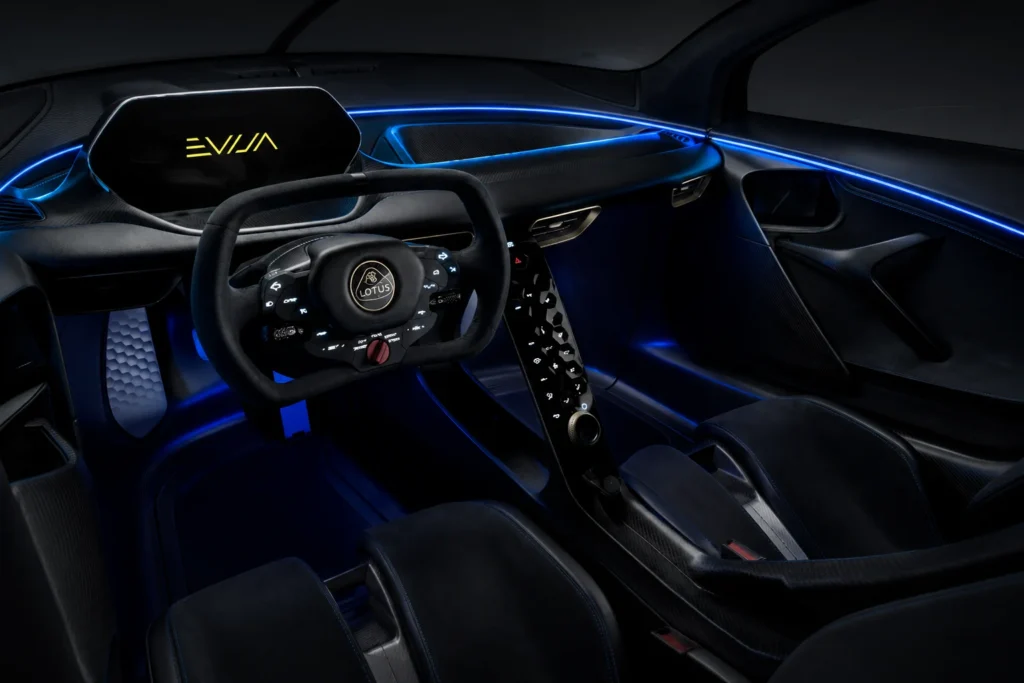
Inside, the Evija interior trades hypercar excess for something that would be more like a fighter jet. The cabin is deliberately minimalist, with a floating center console, a digital driver display, and switchgear that prioritizes function over flash. Carbon fiber is everywhere, not as decoration but because every gram saved improves performance.
Visibility is better than you’d expect for something this low and wide, and the seating position puts you right at the car’s center of mass. There’s no console screen overload here. Lotus clearly wanted drivers focused on the road, not toggling through menus.
Lotus Evija Wheels, Brakes, and Chassis
The Lotus Evija wheels are forged from magnesium to save weight at the corners and measure 20 inches up front and 21 inches at the rear. Pirelli Trofeo R tires designed for this car are specially engineered for weight and power. Stopping power is provided by AP Racing carbon-ceramic brakes, which is crucial given how fast this car is going.
The chassis itself is a full carbon-fiber tub, and Lotus engineers had to rethink standard production tolerances to fit everything inside it, with some clearances reduced to just a few millimeters. It’s the kind of detail that doesn’t appear in a brochure but tells you everything about how seriously this project was engineered.
Lotus Evija Features That Set It Apart
What are some of the best features to know about:
- Five drive modes (Range, City, Tour, Sport and Track) that completely change the car’s character
- Laser headlights, a world-first for a road car at the time of launch
- Active aerodynamics integrated into the bodywork rather than bolted-on wings
- Torque vectoring at all four corners for precision cornering
- Carbon-fiber monocoque construction is shared in spirit with Lotus’s racing heritage
How the Evija Fits Into Today’s New Car Launch Landscape
It’s worth zooming out for a second. The automotive world is awash in talk of new cars, from the cheapest EVs to seven-figure hypercars, and every new car launch seems to raise the bar a little more. The Evija is not just another addition to a list of soon-to-be cars; it’s the car that probably forced legacy manufacturers to take electric hypercars seriously in the first place. Compare that to how slowly some competitors have moved.
A lot of brands have teased new cars in this category without ever going into production, while Lotus actually delivered. That’s an important distinction when you are dealing with a space where so many big new car launch promises become a footnote. As more and more high-performance EVs come into play in the next few years, the Evija will almost certainly be remembered as the benchmark everyone else was chasing.
Lotus Evija vs. The Competition
| Model | Horsepower | 0–60 mph | Top Speed | Approx. Price |
| Lotus Evija | 2,011 hp | Under 3.0 seconds | ~217 mph | ~$2.3 Million |
| Rimac Nevera | 1,914 hp | ~1.85 seconds | ~258 mph | ~$2.2 Million |
| Pininfarina Battista | 1,900 hp | ~1.86 seconds | ~217 mph | ~$2.2 Million |
Should You Actually Buy One? Ownership Insights
In this market, the Evija is not really a daily driver decision; it is a collector’s choice. Charging infrastructure for a car like this doesn’t matter so much, because most owners aren’t using it for commuting. What matters is service network access, since Lotus’ EV expertise is still relatively new compared to brands that have built hypercars for decades.
For those who want the absolute cutting edge of what an electric hypercar can be, and who can stomach the price and limited range, the Evija brings an experience that’s genuinely unlike anything else on the road today. Lotus’ wider line-up of future cars will also be worth watching, because the technology we have here will likely eventually spill over to the next generation of vehicles from other manufacturers with the same goal.
Final Thoughts
The Lotus Evija isn’t just another name filed under future car talk; it’s already here, already setting records, and already changing what we expect from the next wave of new car launch headlines. Its 2,011 hp output, the sub-three-second sprint to 60, and a top speed of 217 mph are all testament to this. Whether you’re following the segment for curiosity or you’re buying seven-figure hypercars on the fly, the Evija is one of the most important upcoming new car stories of the electric era and already one that’s being felt.
FAQs
Q. How much does the Lotus Evija cost?
A. The price for the Lotus Evija starts at $2.3 million USD before taxes, options, and destination fees and is around £2.4 million depending on specifications.
Q. What is the Lotus Evija’s top speed?
A. The Lotus Evija top speed is electronically limited to about 217-218 mph (350 km/h).
Q. How much horsepower does the Lotus Evija have?
A. The Lotus Evija horsepower amounts to 2,011 hp from four individual electric motors, thus making it one of the most powerful production cars ever built.
Q. How many Lotus Evijas were made?
A. Production is limited to 130 units, making the Evija one of the rarest hypercars on the road.
Q. How is the 2026 Lotus Evija different from previous models?
A. The 2026 Lotus Evija has the same basic specs as earlier production cars, but now software stability and battery life are improved without a major redesign.