
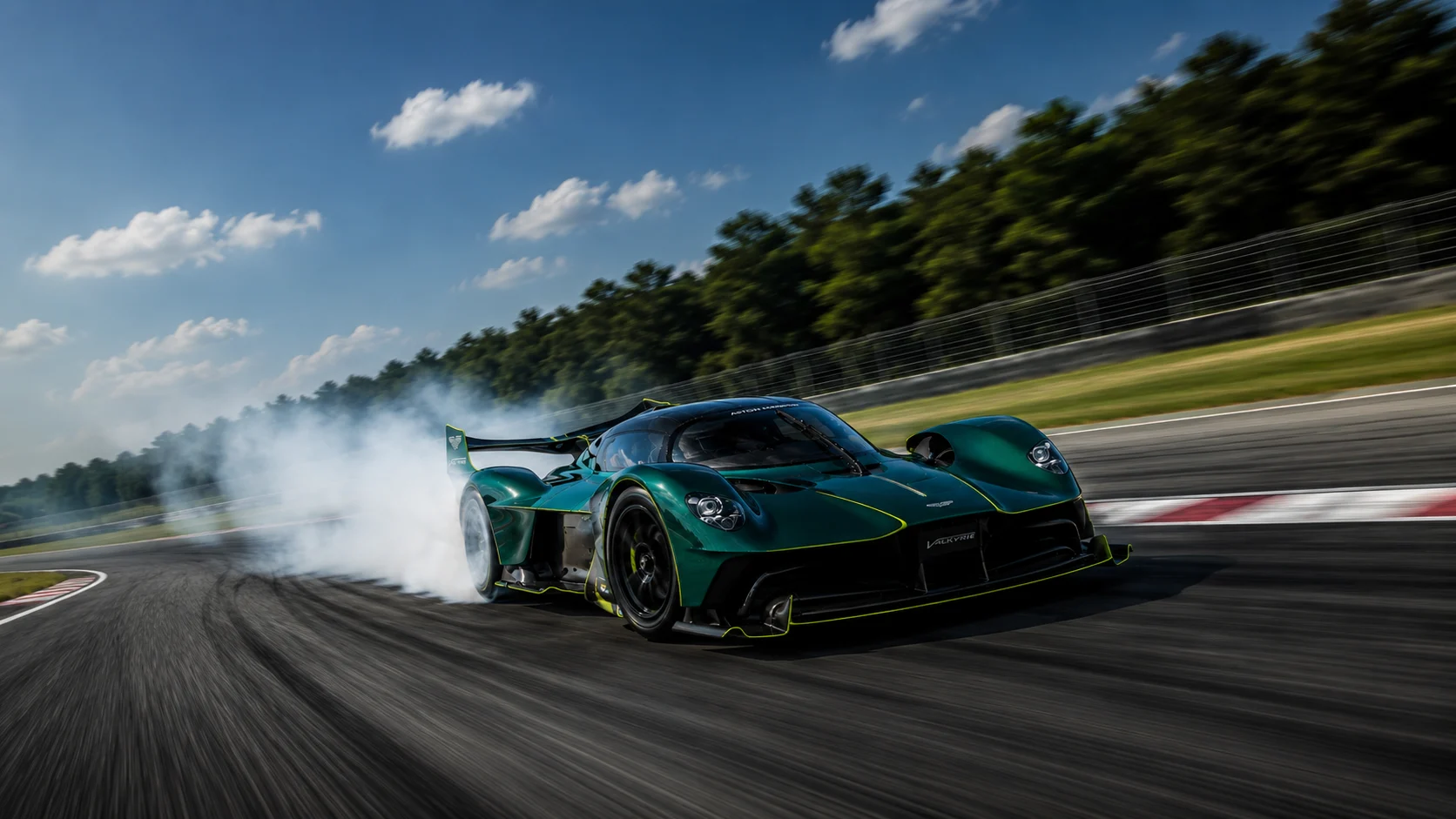
Some cars are designed for the drive. The Aston Martin Valkyrie was developed to redefine the term “driven” at all.
A product of the partnership between Aston Martin and the legendary Formula 1 aerodynamicist, Adrian Newey of Red Bull Racing, the Valkyrie isn’t just a hypercar. It’s a road-legal race car wrapped in one of the most extreme silhouettes to ever leave a British factory. From the moment you see it, you know you’re staring at something that shouldn’t be outside of a circuit.
But it does exist. Even years after its debut, the Valkyrie is discussed alongside every major new car launch and remains a benchmark for many upcoming cars and upcoming new cars entering the hypercar segment. If you are here to gauge the Aston Martin Valkyrie price, the performance numbers that have a jaw-dropping effect, the experience of driving this beast, or even just how it’s really like for you to live down through such a model, know that you might as well get a ride. Let’s get into it.
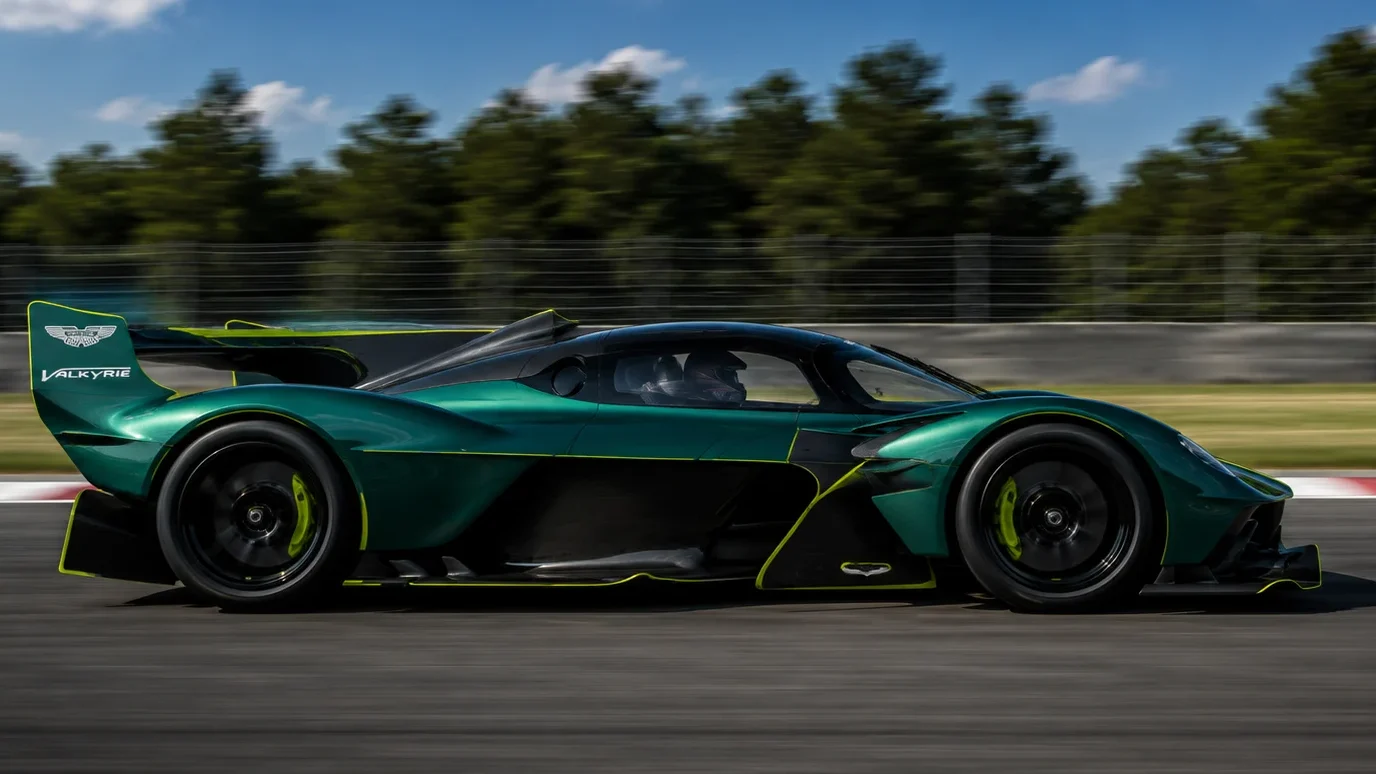
Aston Martin Valkyrie Specs: The Full Picture
| Specification | Detail |
| Engine | 6.5L NA V12 + hybrid electric motor |
| Total Output | ~1,160 hp (combined) |
| Redline | 11,100 RPM |
| Transmission | 7-speed automated manual |
| Drivetrain | Rear-wheel drive |
| Kerb Weight | ~1,000 kg (approx.) |
| Power-to-Weight Ratio | ~1:1 hp per kg |
| 0–60 mph | Under 2.5 seconds (estimated) |
| Top Speed | 250 mph (estimated) |
| Downforce | Equal to vehicle weight at speed |
| Body Construction | Full carbon fiber monocoque |
| Production Number | 150 road cars + 25 AMR Pro (limited) |
What Is the Aston Martin Valkyrie?
As manufacturers reveal more upcoming cars, the Valkyrie continues to influence engineering standards, and many enthusiasts still compare it with every high-profile new car launch and the latest upcoming new cars announced globally.
The Valkyrie, named after the mythological Norse figures who selected warriors worthy of Valhalla, is Aston Martin’s largest undertaking in the automaker’s 110-year tenure. It’s a road-going hypercar built with Red Bull Advanced Technologies, inspired by the foundational principle of one key notion: You bring F1 performance to a road car.
Every body panel, every aerodynamic surface, every gram of the carbon fiber tub was conceived with the racetrack in mind. The result is a car that produced as much downforce as it weighed, attaining the 1:1 downforce and mass ratio that no road car had done so before. And three versions: Valkyrie road car. Valkyrie AMR Pro (track only). Valkyrie Spider (open-top). The overall production is drastically reduced, and by the time that cars are sold in general, most of these were already spoken for.
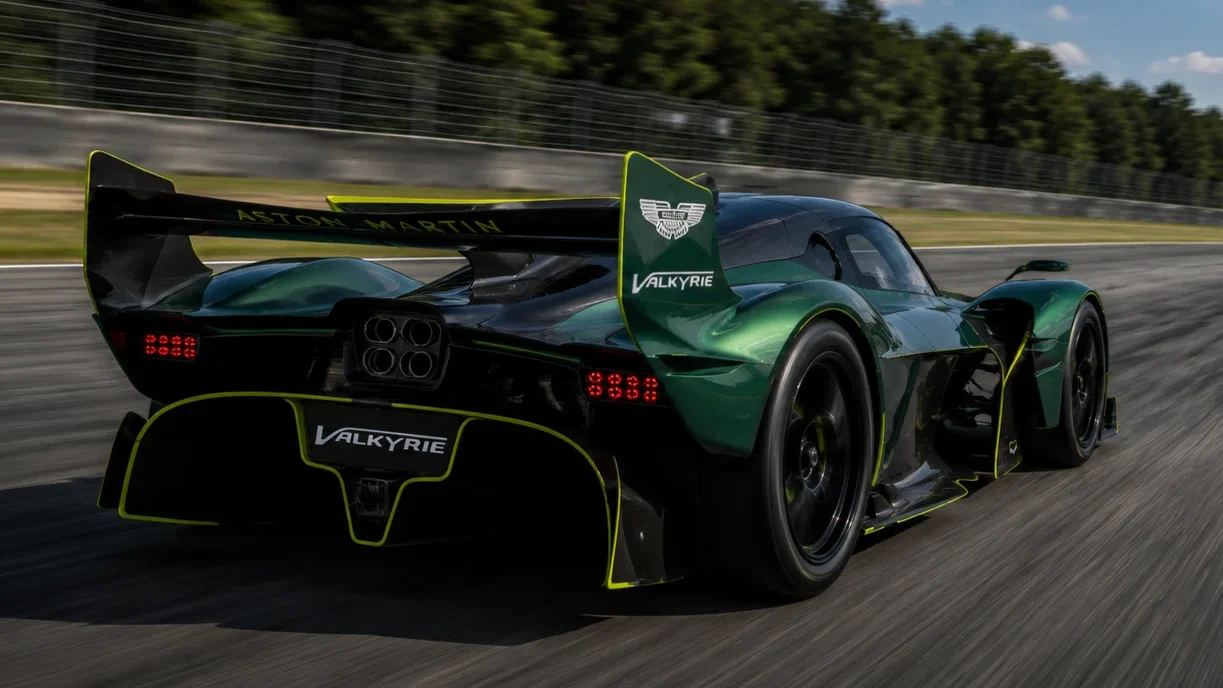
Aston Martin Valkyrie Engine: The Heart of a Norse God
If you want to know why the Valkyrie is different from anything else on the road, start with what’s under the hood. While many upcoming new cars are moving toward electrification, the Valkyrie proves that a high-revving naturally aspirated engine can still capture attention beyond any conventional new car launch.
A Cosworth V12 That Is Reving Up to 11,100 RPM
The Aston Martin Valkyrie engine is a naturally aspirated 6.5-liter V12, which has been co-designed with Cosworth. Not a turbocharger or forced induction—just pure, mechanical brute force that shouts up to 11,100 RPM. This is defiance in a world that’s fast moving away from naturally aspirated engines.
The V12 pairs well with a hybrid system featuring a kinetic energy recovery unit (akin to KERS systems used in F1) which will deliver more electric power during an acceleration burst.
Aston Martin Valkyrie Horsepower
The Aston Martin Valkyrie gets quite a bit of horsepower:
- V12 combustion engine: 1,000 hp (about)
- Hybrid electric motor : ~160 hp additional
- Combined system power: over 1,160 hp
Even among today’s most anticipated upcoming cars, very few models can match the Valkyrie’s extraordinary power-to-weight ratio and performance credentials.
The Aston Martin Valkyrie hp figure takes the Bugatti Chiron and Koenigsegg Jesko into a conversation, but with a far more distinctive flavor, raw, naturally aspirated and acoustic unlike anything money can buy.
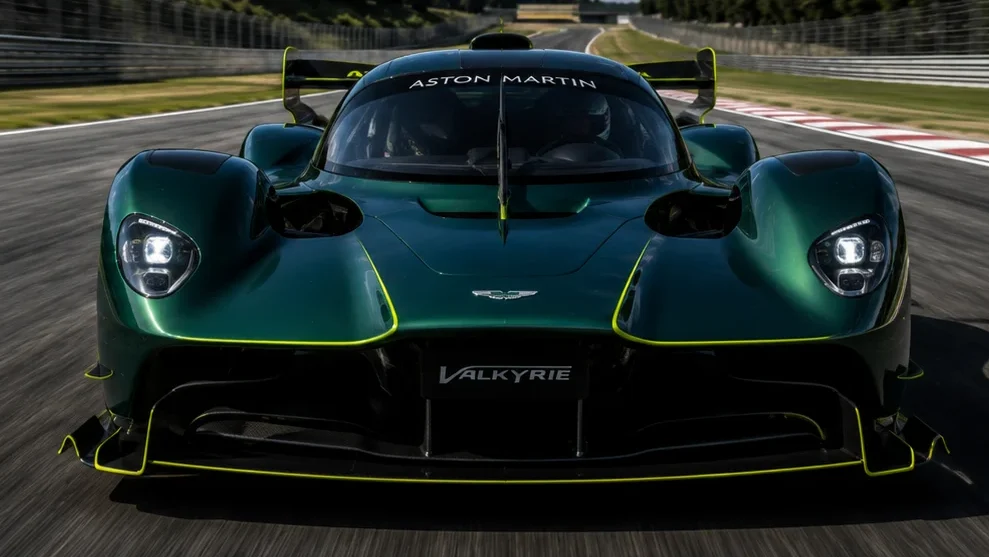
Aston Martin Valkyrie Top Speed: How Fast Can It Really Go?
Aston Martin Valkyrie has been reported to attain a speed of 250 mph (402 km/h), although Aston Martin has been historically reticent to release an official number it says it tested.
Every major new car launch in the hypercar category is inevitably compared against benchmarks set by the Valkyrie, especially when discussing top speed and aerodynamic efficiency.
But what’s even better than the top speed is the way in which the thing gets there. Because the Valkyrie doesn’t feature the conventional aerodynamic downforce elements slapped on as afterthoughts, the entire body is the aero component. The underbelly tunnels produce massive ground effect, which means the car becomes more stable as it moves faster rather than slower.
AMR Pro is to take the performance another step and will have a lighter, more extreme aero package – that makes the road car look almost restrained.
Aston Martin Valkyrie Interior: Living Inside the Machine
You don’t ‘ sit’ in a Valkyrie. You wear it.
Cockpit Design Philosophy
The Aston Martin Valkyrie interior offers no unnecessary material. There’s no standard dashboard in the traditional sense of the term. Instrumentation is projected onto the head-up display. The steering wheel comes straight out of the world of motorsport, a full-halo panel equipped with integrated controls and when you’re looking at a wraparound windscreen that gives you visibility only open-wheel racers have, you are looking through.
Seats are mounted onto the chassis itself. Your seating position is adjusted via adjustable pedal boxes and steering column, keeping the weight centralised and low. It sounds extreme because it is extreme.
Materials and Craftsmanship
For all the trackiness in the brief, Aston Martin isn’t abandoning its heritage, as a luxury brand. The materials involved, carbon fiber, Alcantara, machined aluminium controls, are chosen as much for tactile quality as they are for weight savings. All the details are a testament to the car’s dual identity, British luxury and racing violence.
Oddly, It works.
Aston Martin Valkyrie Features: What Makes It Special
Behind the headline numbers, the features of the Aston Martin Valkyrie show a car with no real competition besides:
- Fully carbon fiber monocoque chassis, the same engineering ethos as all your F1 cars.
- Active aerodynamics, moving elements balance downforce for various driving conditions.
- F1-inspired KERS-style hybrid energy recovery. Inboard pushrod suspension, same configuration used in Formula 1.
- Made-for-Valkyrie and cockpit-specific, Michelin Pilot Sport Cup 2 tyres for the Valkyrie.
- Lightweight exhaust system positioned high and centrally for optimal mass distribution. Track-derived braking system with carbon ceramic discs.
Many technologies now appearing in upcoming new cars were pioneered or popularized by vehicles like the Valkyrie, making it an important reference point for future developments.
There are also driving modes — from a reasonable setting on the road to full-attack on track, because even the most serious of hypercars has to act its way (at least occasionally).
Aston Martin Valkyrie Wheels and Exterior Design
The Aston Martin Valkyrie wheels are multi-spoke forged units designed for maximum airflow (with maximum airflow through the brakes, because at what speeds this car runs, brake cooling isn’t optional).
The exterior is simultaneously the most beautiful and most alien design Aston Martin has ever made. Beneath the car are dramatic tunnels that stand out as well as serving as functional venturi channels. The teardrop cockpit, the deep front splitter, the soaring rear diffuser; none of it is decorative. Everything has an aerodynamic role.
Designers working on upcoming cars often study vehicles like the Valkyrie to understand how aerodynamics and aesthetics can work together without compromise.
Aston Martin refers to it as “sculpture and science.” It’s hard to argue.
Aston Martin Valkyrie Price: What Does It Cost?
The Aston Martin Valkyrie price is approximately £2.5m (or around $3m USD) at the regular road car.
The Valkyrie AMR Pro: the track-only model that lacks any road-legal assets and also features even more extreme aerodynamics, sold out before deliveries began and was more than £3 million (over $3.5 million); all the 25 units sold out apparently before they began.
The Valkyrie Spider commands such a premium as the coupe due to its larger structural complexity, as well as the engineering required to retain chassis stiffness in an open top format.
For context: the Bugatti Chiron begins at about $3.3 million. The Pagani Huayra R is expected to sell for €3.1 million. This rarefied world is competitive with the Valkyrie, and the Valkyrie arguably offers more engineering purity than either.
Although newer hypercars continue to arrive with every new car launch, the Valkyrie’s exclusivity and engineering pedigree help maintain its exceptional value.
Is It Worth the Price?
Is It Worth the Price? For the collector purchasing it as a commodity: almost certainly, yes. All Valkyrie variants are already catching on in the secondary market. From the driver who really aspires to use one, too: yes, but to the right roads and the right track days. This is not a vehicle you purchase for commuting — it’s a vehicle you purchase to appreciate something no other machine on the planet has.
Aston Martin Valkyrie Review: The Driving Experience
Journalists who’ve got early drives have likened the Valkyrie to nothing that they’ve experienced on the road to anything they’ve seen in a road car. The engine note alone, that naturally aspirated V12 climbing toward 11,000 RPM, is called the closest thing to an F1 car available to a private buyer.
Few upcoming new cars are expected to deliver the same raw and immersive driving experience that has made the Valkyrie legendary among enthusiasts.
It is direct steering, to the point that at first some find it overwhelming. There’s no power, no electronic buffering, just mechanical communication between your hands and the road. The car is talking to you through everything, over and over again.
Driving quickly can be physically demanding. The seat reclined and sensory input level also need to be adjusted. But folks who have tracked it agree: once you get a groove with the Valkyrie, it creates the most joyous driving experience road-legal money can buy.
Conclusion
Even as the industry introduces more upcoming cars and celebrates each new car launch, the Aston Martin Valkyrie remains one of the most influential hypercars ever created. It’s a declaration that a world class luxury brand like this could collaborate with one of the greatest aerodynamicists of motorsport history to create a vehicle that really advances what a road car can be.
From the shriek Cosworth V12 and the F1-based chassis to the bare cockpit and the otherworldly exterior design, everything in the Valkyrie is purposeful. The price of the Aston Martin Valkyrie is very high (but you get what you want, which is a vehicle that is on the edge of road-car physics) and for those who are lucky enough to have one the Valkyrie is more than a hypercar. For buyers tracking upcoming new cars, the Valkyrie serves as a reminder of what is possible when Formula 1 technology meets road-car engineering. It is a piece of automotive history – and one you can actually drive.
Disclaimer: The specifications, performance data, and pricing are for informational purposes only. Values may vary based on condition, originality, and market trends. Prices are estimates. For accurate details, consult the website and sources.
FAQs
Q. What is the Aston Martin Valkyrie top speed?
A. The Aston Martin Valkyrie has an estimated top speed of 250 mph (402 km/h).
Q. How much does the Aston Martin Valkyrie cost?
A. The Aston Martin Valkyrie starts at around £2.5 million ($3 million USD).
Q. How much horsepower does the Aston Martin Valkyrie have?
A. It generates more than 1,160 horsepower from its V12 hybrid powertrain.
Q. How many Aston Martin Valkyries were made?
A. Aston Martin built 150 Coupes, 85 Spiders and 25 AMR Pro models.
Q. Is the Aston Martin Valkyrie street legal?
A. Yes, the Coupe and Spider are road-legal, while the AMR Pro is track-only.