
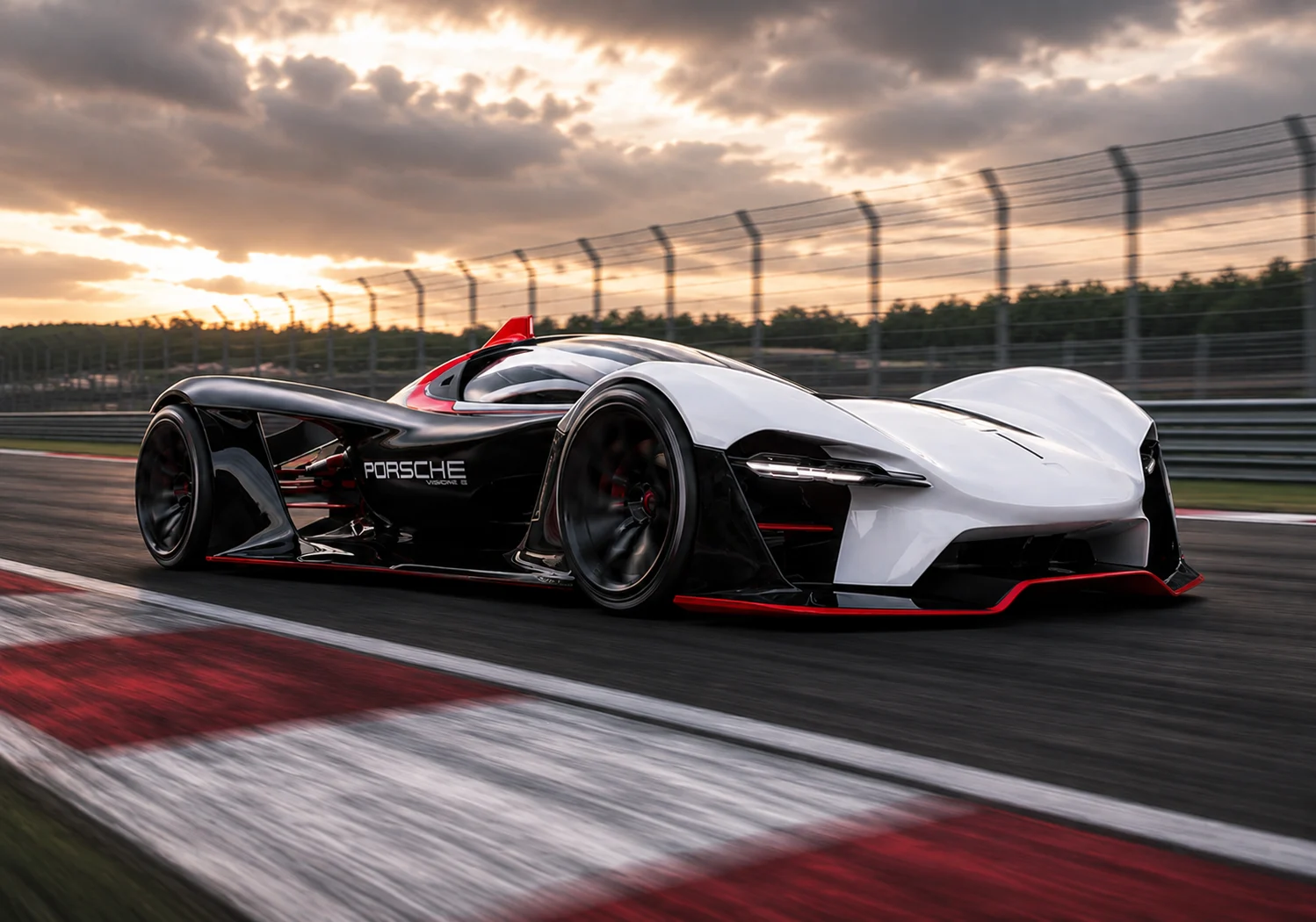
Picture yourself on the edge of the racetrack, seeing a razor-thin, one-seat electric machine accelerate past your side, silent besides a high-pitched electric whine, every curve of its body shouting intention. This visceral feeling was exactly the kind the Porsche Vision E was conceived to inspire. A 2019 concept study, conceived among the pioneers of Formula E competition, isn’t the mere design exercise of the past few years; it’s a Porsche that boldly addressed a truly incredible question: What if private car owners had the opportunity to feel the soul of Formula E, on a racetrack?
The Porsche Vision E is among the most discussed concept cars in Porsche’s ‘Unseen’ range, and for a smart reason. It’s the crossroads between factory motorsport’s elite and the everyday aspirations of serious track-day sportsmen. All I am saying is to unpack it, starting with the Porsche Vision E specs and the powertrain and getting into its interior philosophy, design language, and what that speaks to the future of Porsche’s electric aspirations.
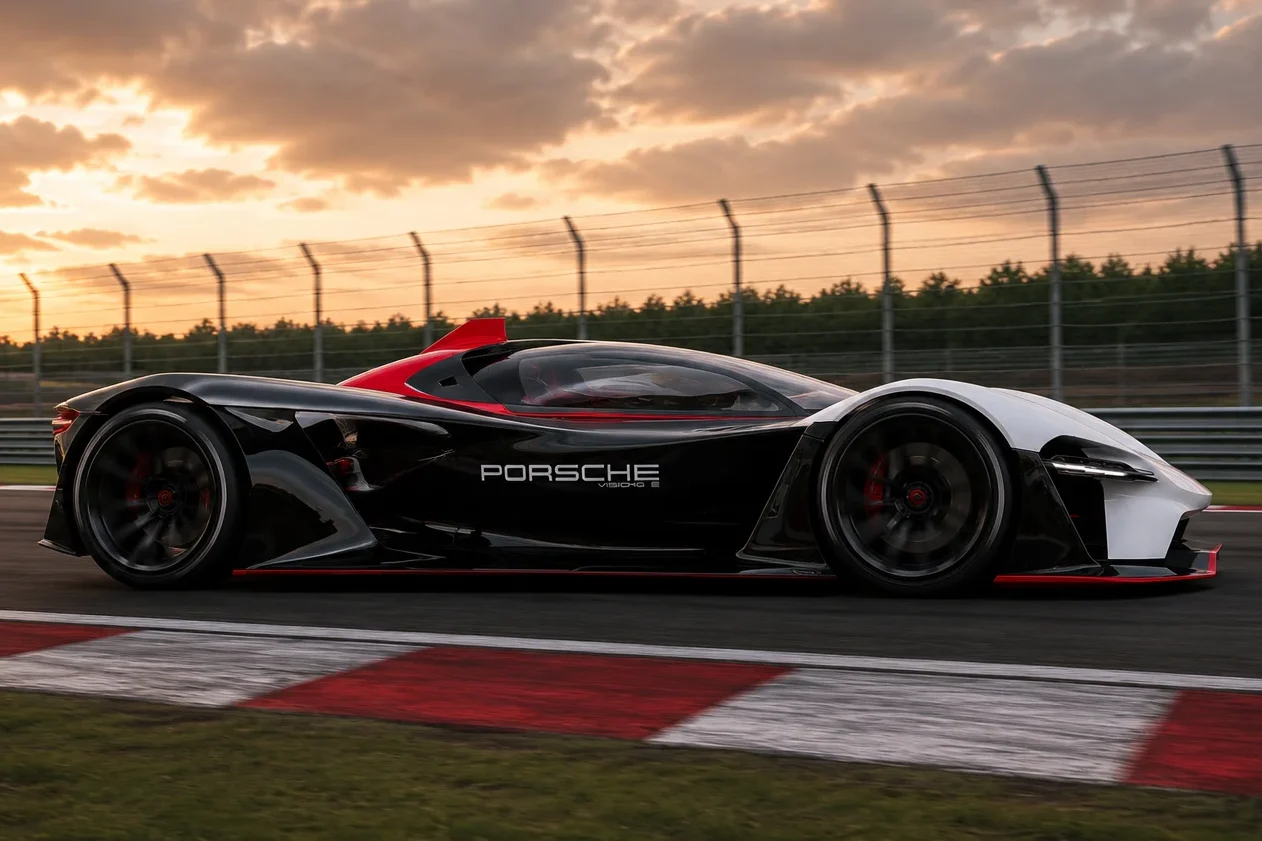
Porsche Vision E Specs: What We Know
| Specification | Details |
| Year | 2019 (Concept) |
| Body Style | Single-seat open-cockpit race car |
| Drive Layout | Central seating position |
| Powertrain | Electric (800-volt architecture) |
| Powertrain Basis | Porsche 99X Electric Formula E car |
| Motor Type | Electric motor(s), based on Formula E spec |
| Horsepower (Estimated) | ~456 hp+ (99X race-derived) |
| Architecture | 800V platform (same family as Taycan) |
| Build Type | 1:1 hard model / design study |
| Production Status | Concept only (not production confirmed) |
| Wheels | Multi-spoke race-inspired alloys |
Please be aware: The numbers above are from the powertrain family from which the Vision E is derived, and Porsche has not formally released performance numbers.
What Is the Porsche Vision E?
The Porsche Vision E is a race car idea the company conceived and constructed in 2019 as part of the brand’s introduction into the ABB FIA Formula E Championship. More specifically, it was intended as a design study and 1:1 hard model so you could test what a customer-friendly electric race car, modeled on Porsche’s Formula E technology, might look and feel like.
It wasn’t a car designed just for press releases. ‘Porsche’ said the Vision E was meant to make race car accessible to private users by bringing them “as close as possible to a modern Formula E racer in features and drive characteristics.” It does not have to be designed so with high-specifications and an official launch date. That’s an extraordinarily lofty goal, and according to the detail of the concept, it was taken with all seriousness.
Porsche Vision E Design Exterior: Razor-Sharp and Purposeful
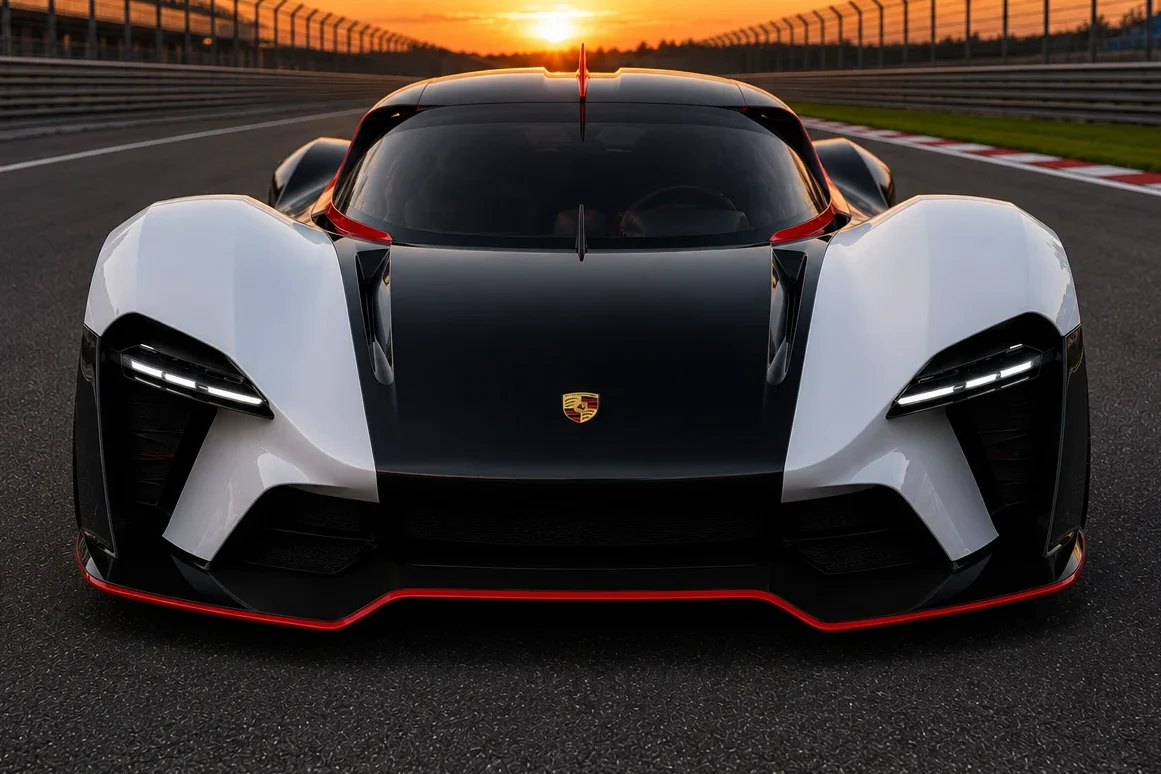
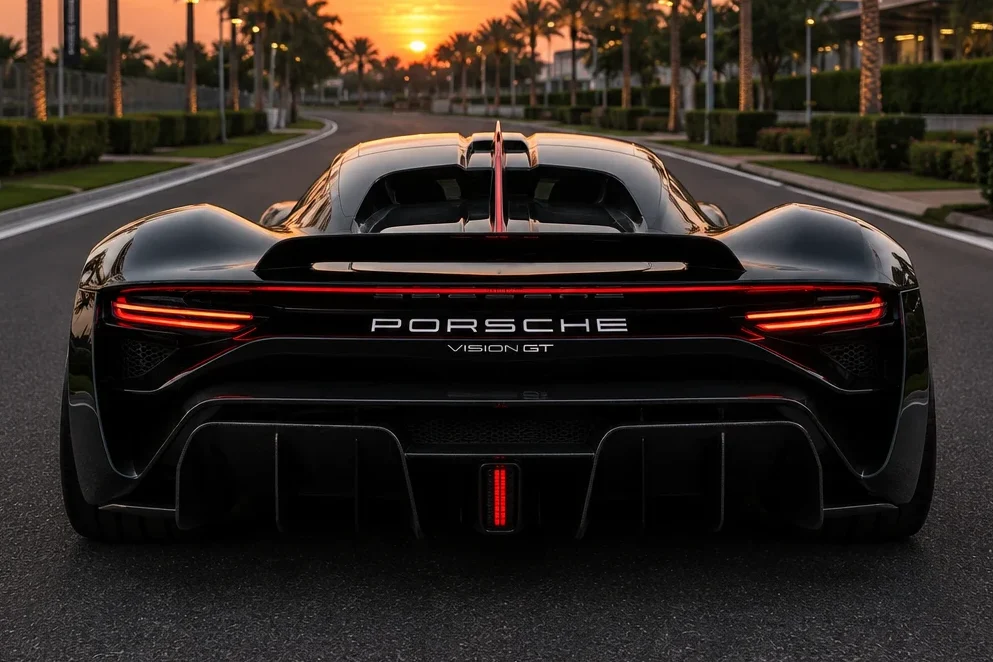
The Porsche Vision E seems on the surface something from a science fiction movie but one written by engineers themselves. Everything is stripped from the rest of the exterior, which transmutes pure function to form.
Key design highlights:
- Single-seater, open-cockpit concept: inspired by the spirit of the Formula E single-seater.
- Radical aerodynamic bodywork with sculpted channels designed to distribute airflow in a less wing-heavy manner.
- Centralized cockpit: a driver seat nestled squarely in the center of the chassis, as is the design of Formula cars.
- Lightweight construction philosophy: the concept previews a very lightweight curb weight made with advanced composite materials.
- Porsche’s trademark wide-hip posture remained, even in this radical guise.
The end result is a car that looks both strange and definitively Porsche. The DNA here runs towards the 919 Hybrid Le Mans racer and the 99X Electric Formula E—a concept that honors ancestry while thrusting it ahead.
Porsche Vision E Engine and Powertrain
Here is where it really gets exciting. The Porsche Vision E engine — or, more accurately, its electric powertrain — comes directly from the engineering developed for the Porsche 99X Electric, the brand’s official Formula E race car.
At the heart of Vision E’s powertrain concept is this:
- 800 Volt electrical architecture: The very same high-voltage platform Porsche runs the Taycan road car on, with far faster charging times, less heat buildup, and superior efficiency than conventional 400 V EV systems.
- Electric motor configuration based on the independently developed 99X Electric drivetrain.
- Track tuned performance: driving dynamics and response versus range optimization is what the focus is.
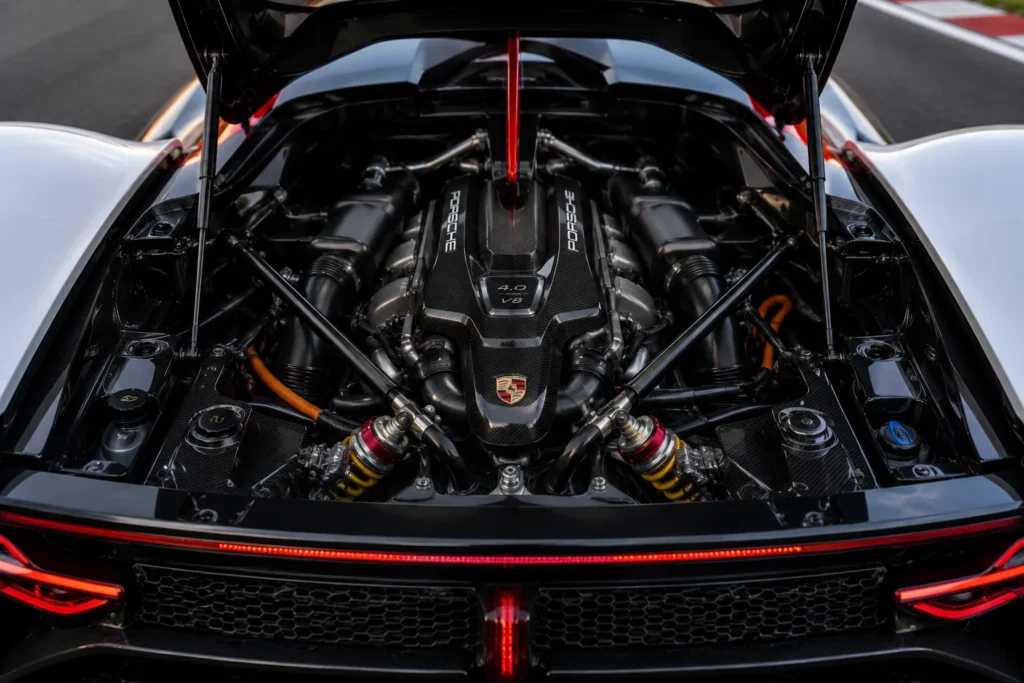
Porsche itself had said that the drivetrain for the 99X Electric “might also pave the way for future all-electric sports cars on the racetrack and road,” and the Vision E is the most concrete manifestation of that potential. Although Porsche never specified a final estimated Porsche Vision E horsepower capacity for the concept (it was a study in design, not the production vehicle itself), its 99X Electric model car it sourced produced more than 340 kW (or around 456 hp) in race-legal spec, and development iterations proved that it could run much greater than that. The 800V platform underpinning the concept should enable instantaneous torque delivery and ultra-fast speed comparable to a Formula E-inspired vehicle in theory.
Porsche Vision E Interior: The Cockpit of Tomorrow
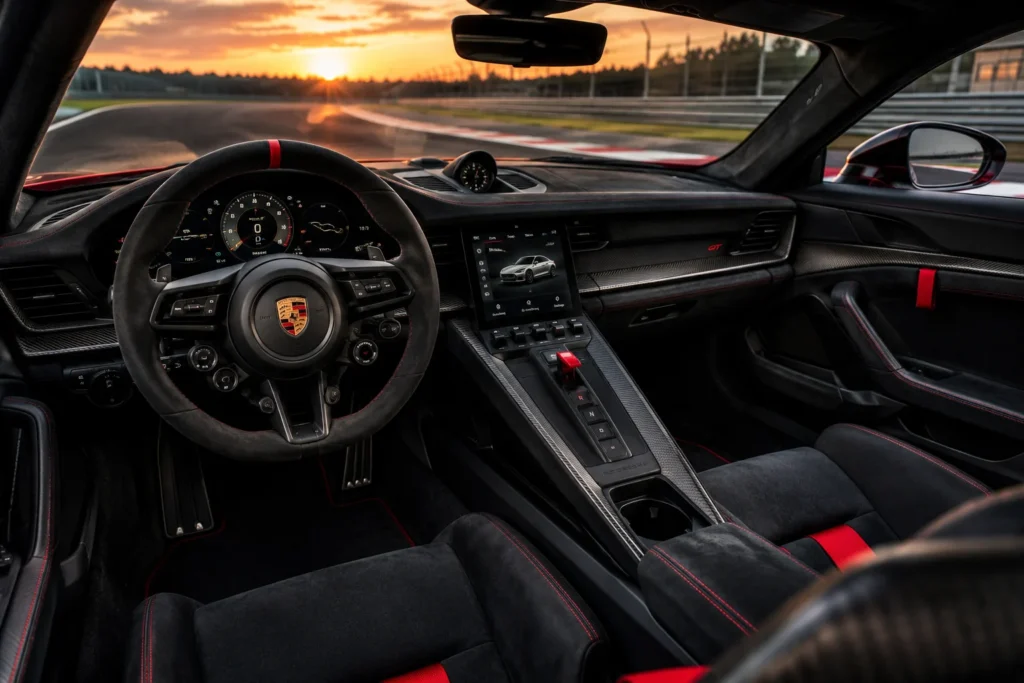
The interior of the Porsche Vision E is a study in design. No passenger back seat, no infotainment system, and no high-end leather trim. This is a cockpit—aimed at just one driver who wants nothing between them and their tracks.
These car dimensions are the central elements of the interior philosophy:
Central driving position: which is inspired both in Formula 1 and through the development of new vehicles such as Formula E cars, it places the driver at precisely the longitudinal center of the car. A single feel, giving all drivers side-to-side feedback.
A minimalist dashboard: information about instruments would be supplied through the lightest system available in the system to keep a driver’s attention on things he is trying to see.
Racing harness and bucket seat arrangement: configured to help lift sideways at the highest-G corners for maximum support.
Light cabin materials: every ingredient was the key to the car being as lightweight as possible in support of a radical weight-reduction goal.
While that might sound less than extensively straightforward, for the intended demographic—hardcore track day drivers seeking a near-Formula E experience, in other words, it works just fine. Porsche wasn’t making a luxury tourer, it was building an emotionally pure driving model.
Porsche Vision E Top Speed and Performance Potential
Porsche hasn’t released an official Porsche Vision E top speed figure, but we have reasonable reference points in the form of performance benchmarks from its technical donor, 99X Electric.
Formula E cars go up to about 225 km/h (140 mph) in race trim — not because their hardware can’t go faster, but because of rules and safety on the circuit. An 800V electric powertrain of this caliber could, to a purpose-built track car outside those regulatory limits, achieve at least:
- 0–100 km/h in under 3 seconds (similar to the Taycan Turbo S, a 2.8-sec sprint).
- Top speed potential well beyond 200 km/h max speed potential when aerodynamically set up and power delivery adapted.
- Instantaneous torque from the ground level, which is typical for the high-performance electric motor.
For the privateer driver driven in a closed circuit such numbers constitute a truly life-changing experience, one that, until now, has been the sole domain of the factory racing team.
Porsche Vision E Price: What Would It Cost?
That’s the point of that conversation because this is what makes it interesting. There have never been any official announcements for the Porsche Vision E price, as the car has yet to progress into production.
The concept exists in the form of a design concept. But context matters. Porsche’s positioning for Vision E was simply made explicitly for “privateer drivers.” That is the wealthy motorsport enthusiasts who also participated in customer racing programs. Inspired by Porsche customer racing models like the following:
- The Porsche 911 GT3 Cup will initially start at approximately $250,000–$300,000 (USD)
- The Porsche 718 GT4 Clubsport should be around $160,000–$180,000
- An electric, 800V E-adjacent machine would logically lie over both.
According to the automotive community, a production version of the Vision E, once green-lit, could come in at roughly $400,000–$600,000, making it an ultra-exclusive track weapon for Porsche’s finest customer racers.
Porsche Vision E vs. The Taycan: Same DNA, Different Worlds
It’s worth connecting the dots that so many readers are interested in: What does the Vision E have to do with the Porsche Taycan, Porsche’s production version of the electric car?
| Feature | Porsche Vision E | Porsche Taycan Turbo S |
| Type | Track-only race concept | Road-legal EV sports sedan |
| Seats | 1 (central) | 4 |
| Horsepower | ~456 hp+ (est.) | 938 hp |
| 0–100 km/h | Sub-3 sec (est.) | 2.4 seconds |
| Architecture | 800V (race-derived) | 800V |
| Purpose | Privateer racing | Daily/performance driving |
| Status | Concept only | In production |
Both have their 800V philosophy, but they cater to vastly different audiences. The Taycan brings Porsche’s electrification to the road and democratizes it. The Vision E asks: What if the same technology were taken back out onto the track in its finest form, purest, most uncompromising?
Porsche Vision E Wheels and Exterior Details
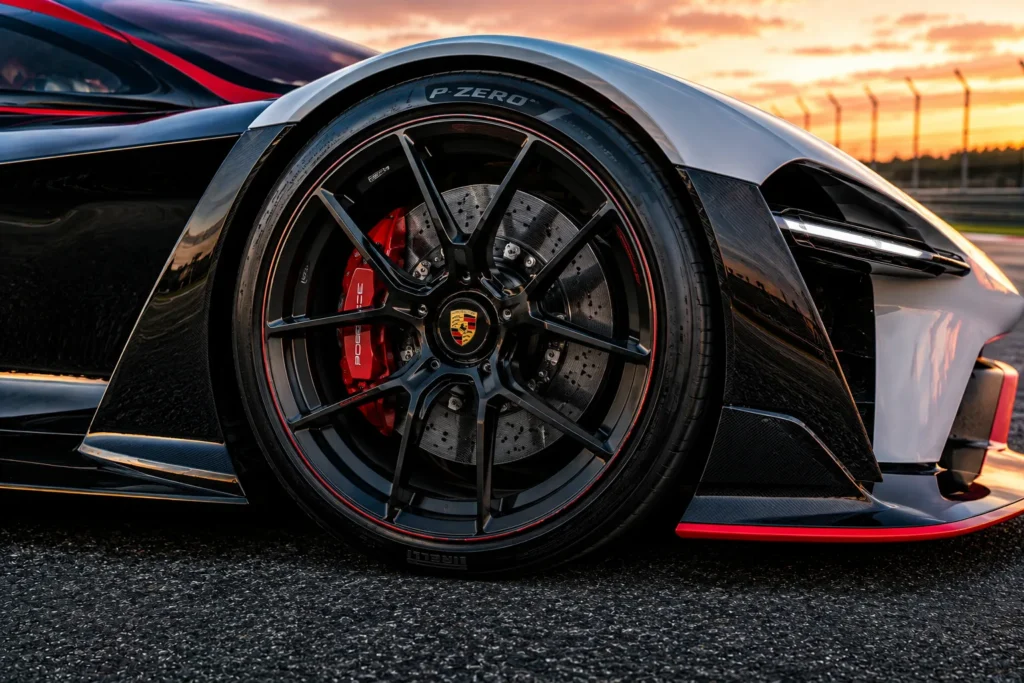
Porsche Vision E wheels are a key point in general design language. Porsche chose an inspired multi-spoke alloy design derived from race design, well-balanced to encompass the dramatically flared arches, thus giving the ultra-low platform with a sleek yet balanced appearance a kind of picture-perfect look. The wheel design prioritizes cooling airflow to the electric powertrain components — function and form working in harmony, as Porsche always intends.
The tire specification would be a high-performance slick or semi-slick set-up appropriate for track – as is the case with such a car.
Conclusion: A Vision Worth Waiting For
The Porsche Vision E review highlights a major pivot point for the Stuttgart brand. It teaches us removing gas tanks and exhaust notes doesn’t necessarily mean that the soul of a racing car is removed. Combining the pure, technically dazzling elegance of Formula E with the emotional appeal conveyed by an uncompromising track toy, Porsche seems to have set out a bar.
You won’t see this model lining up again on your local track day anytime soon, but the aerodynamic profiles, high-voltage battery lessons, and aggressive design language found here are already infiltrating the next generation of electric sports cars. The future of racing is a still, silent thing but something like this will guarantee it’s super fast.
Disclaimer: The specifications, performance data, and pricing are for informational purposes only. Values may vary based on condition, originality, and market trends. Prices are estimates. For accurate details, consult the website and sources.
FAQs
Q. Is the Porsche Vision E a real production car?
A. No. The car is a hard model concept with a 1:1 scale, produced for the “Porsche Unseen” series. It’s a design study to put a spin on what a private, fully electrified customer race car might look like.
Q. What is the horsepower (hp) of the Porsche Vision E?
A. It’s predicted to produce between 340 hp and 600 hp (depending on the configuration of the electric motor and power release modes) on its Formula E 99X base.
Q. Does the Porsche Vision E have an engine?
A. No, it lacks an internal combustion engine. It’s entirely driven by a top-notch electric motor backed by an enhanced battery pack straight out of Porsche’s Formula E training set-up.
Q. What is the Porsche Vision E expected top speed?
A. Engineered for best track acceleration to a maximum top speed of around 174 mph (280 km/h).
Q. What does the Porsche Vision E price look like?
A. It has no commercial price because it is a one-off museum concept. Production-capable Porsche electric race concepts typically require development sums topping $1 million, however.